Word of the Day

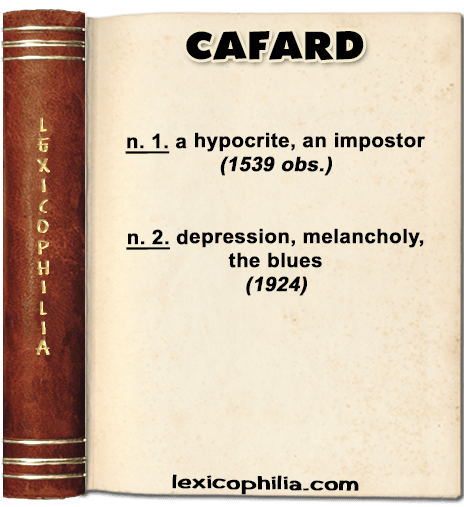
Word of the Day: CAFARD


ETYMOLOGY
from French cafardcaphard, of doubtful origin:
some have proposed to identify it with Catalan cafre (infidel), Spanish, Portugese cafre (cruel), which are apparently adapted from Arabic kafir


PRONUNCIATION
kaff-AR


EXAMPLE
“…wherat he woundred, and sayd that he thought Your Grace the Prince best furnished thereof in Christendom. We commoned of the cafart, Cornibus, that slanderose frere. He said that Your Majesties Ambassadour, the Bishop of Hereford, hath sued and proposed certayn articles against him, athe copie whereof he hath promessed to sende unto me…”

From: State Papers Published Under the Authority of His Majesty’s Commission
King Henry the Eighth, 1830
Crumwell to King Henry VIII, 1539

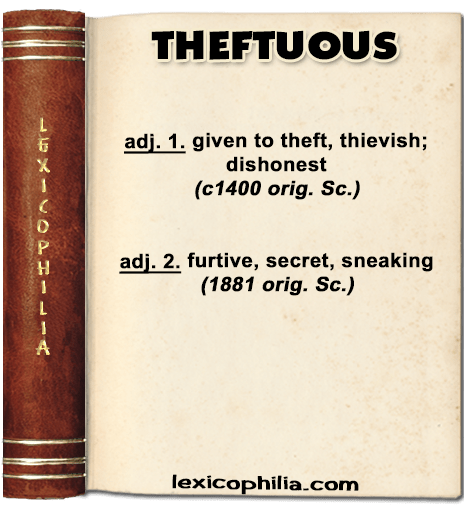
Word of the Day: THEFTUOUS


ETYMOLOGY
alteration (influenced by -uous) of Middle English thiftwis,
from thifte (theft) + wis (wise)


PRONUNCIATION
THEFF-tyoo-uhss


EXAMPLE
“…It is declared, that whosoever intercommuns with Thieves, or assists them in their theftous stealings, or deeds, either in going, or coming, or gives them meat, harbour, or assistance, or trysts with them any manner of way, they shall be pursued, either Civilly, or Criminally; but this act strikes not against such as have entertained the Thief any considerable time, after the committing of the Theft, and before Letters of Intercommuning were execute…”

From: The Laws and Customes of Scotland
By Sir George Mackenzie, 1678

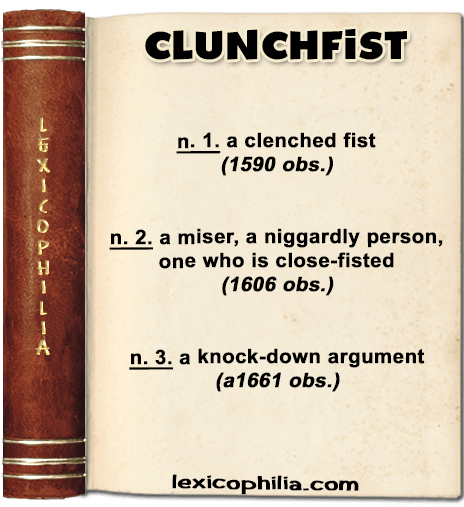
Word of the Day: CLUNCHFIST


ETYMOLOGY
from clunch (to clench) + fist


EXAMPLE
“…such a quoile with pro and con, such vrging of Ergoes, til they haue gone fro Art togither by the eares, and made their conclusions end with a Clunchfist, right like the old description of Logicke…”

From: Plaine Percevall, the Peace-maker of England:
Being a Reply to Martin Mar-Prelate
By Richard Harvey, 1590

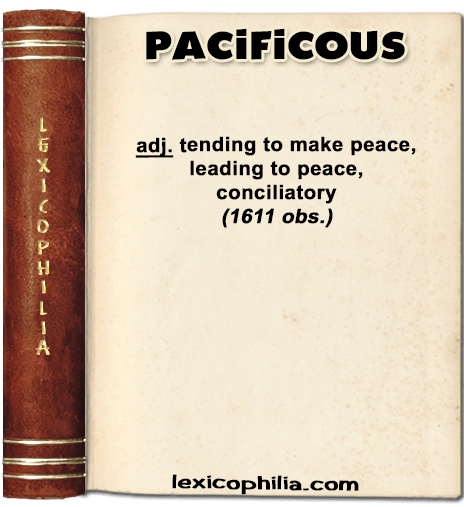
Word of the Day: PACIFICOUS


ETYMOLOGY
from Latin pacificus (peace-making, peaceful) + -ous,
from paxpacem (peace) + -ficus (-fic)


EXAMPLE
“…These, belike, were not acquainted with the Exploits of the Graecian Xenophon, the Roman Caesar, the English Sidney, Montjoy and Ra∣leigh, Gentlemen that were renowned both in Arms and Letters. Yet such as were transported with Warmth to be a sighting, prevail’d in Number, before the Pacificous…”

From: Scrinia Reserata A Memorial offer’d to the Great Deservings of John Williams
By John Hacket, 1693

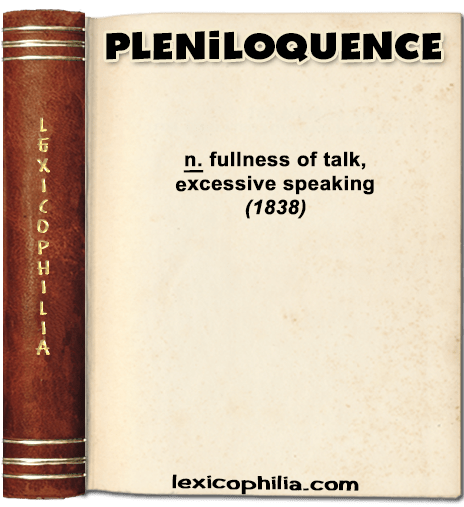
Word of the Day: PLENILOQUENCE


ETYMOLOGY
from Latin plenus (full) + loquentia (talking)


PRONUNCIATION
plen-I-luh-kwuhns


EXAMPLE
“…Mr. Emerson, writing to his friend Carlyle, August 6, 1838, thanking him for his “friendliest seeking of friends for the poor oration” (“The American Scholar”) says: I have written and read a kind of sermon to the Senior Class of our Cambridge Theological School a fortnight ago; and an address to the Literary Societies of Dartmouth College, for though I hate American pleniloquence, I cannot easily say No to young men who bid me speak also. … The first, I hear, is very offensive. I will now try to hold my tongue till next winter…”

From: The Complete Works of Ralph Waldo Emerson: Nature addresses and Lectures
Notes, 1838

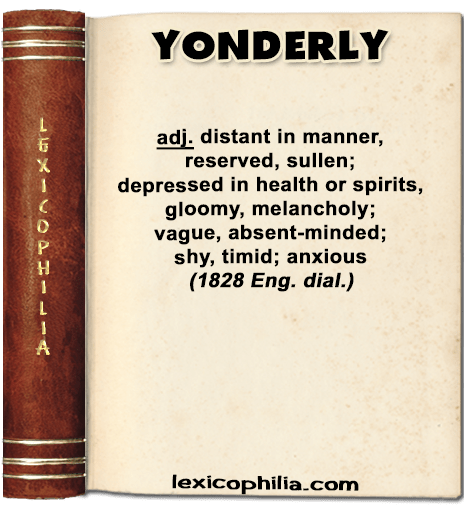
Word of the Day: YONDERLY


ETYMOLOGY
from yonder (adv., adj., pron., & n.) + -ly


EXAMPLE
“…Poor lass, hoo were kinder becose aw were quare;
“Come, Jamie, an’ sattle thisel in a cheer;
Thae’s looked very yonderly mony a day;
It’s grievin’ to see heaw thae’rt wearin’ away,
            An’ trailin’ abeawt,
            Like a hen at’s i’th meawt;
    Do, pritho, poo up to thi tay!
…”

From: Lancashire Songs
By Edwin Waugh, 1863
Jamie’s Frolic