Word of the Day

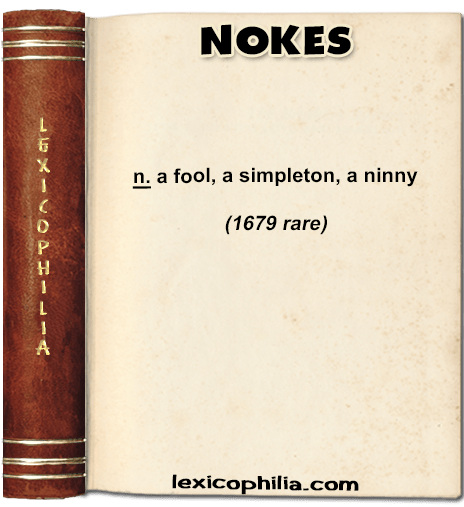
Word of the Day: NOKES


ETYMOLOGY
of uncertain origin


EXAMPLE
“…Foster could make an Irish Lord a Nokes,
And Betty Morris had her City Cokes.
A Woman’s nere so ruin’d, but she can
Be still reveng’d on her Undoer Man:
How lost so e’re, she’ll find some Lover more
A lewd abandon’d Fool, then she’s a Whore…”

From: Artemisa to Cloe.
A letter from a lady in the tovvn to a lady in the country; concerning the loves of the tovvn.
John Wilmot Rochester, 1679
Word of the Day: UNDERFIND


ETYMOLOGY
from under-;
(From E-NED: In Old English, various secondary meanings of under- are represented by such verbs as under(be)ᵹinnan (to begin or attempt), underfón (to receive), underᵹietan-niman-standan (to understand), undersécan (to investigate))


EXAMPLE
“…Ȝif hie cumeð fram mannen, hie cann hwatliche underfinden, an hwos half he is icumen, and ðar after hie hine underfengð …”

From: Vices and Virtues : a Soul’s Confession of its Sins with Reason’s Description of the Virtues,
A Middle-English Dialogue of about 1200 A.D.

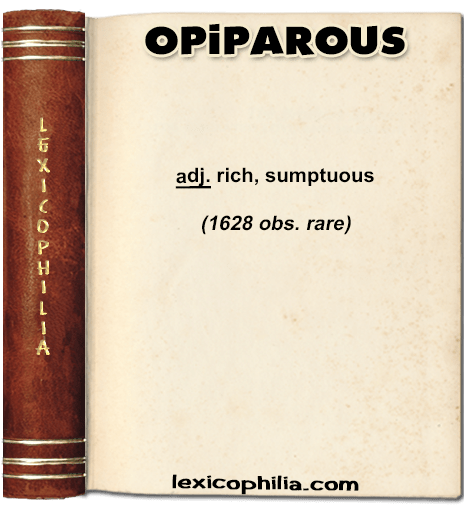
Word of the Day: OPIPAROUS


ETYMOLOGY
from Latin opiparus (richly furnished, sumptuous),
from opem (wealth, means) + parāre (to prepare, furnish, equip) + -ous


EXAMPLE
“…With sweet odours and perfumes, generous wines, opiparous fare, &c., besides the gallantest young men, the fairest virgins, puellae scitulae ministrantes, the rarest beauties the world could afford, and those set out with costly and curious attires…”

From: The Anatomy of Melancholy
By Democritus Junior (Robert Burton)
The Cure of Melancholy. Memb. IV. Exercise Rectified of Body and Mind

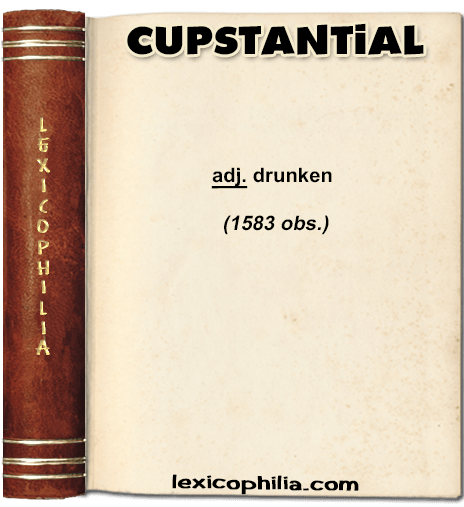
Word of the Day: CUPSTANTIAL


ETYMOLOGY
a humorous perversion of substantial, intended to suggest ‘drunken’


EXAMPLE
“…He that is borne vnder Capricornus shall be a slouenly, ill-fauoured, and vncleane fellowe, bicause the gote is a beast filthie, stinking and vncleane. He that is borne vnder Aquarius and Pisces shall be fortunate by water, bicause watermen haunt the waters, and fishes swim in the same. These be cupstantiall reasons and well seasoned arguments, and as strong to prooue their purpose, as a castell of paper to resist the enimie…”

From: Phillip Stubbes’s Anatomy of the Abuses in England in Shakspere’s Youth, A.D. 1583
Folly of the Zodiacal Signs influencing men.

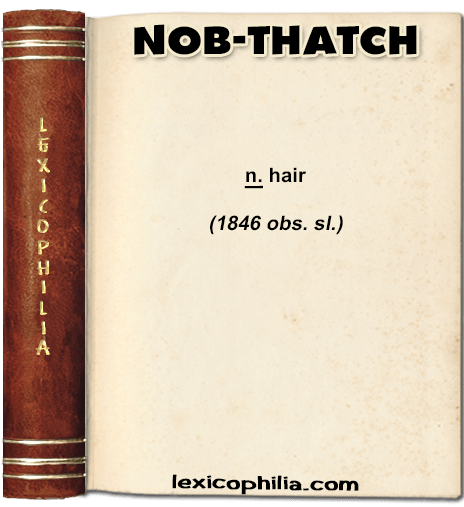
Word of the Day: NOB-THATCH


ETYMOLOGY
from nob (the head) + thatch (covering)


EXAMPLE
“…Sir, I have been three months in the House of Correction, and was discharged yesterday. Mr Chesterton’s “nick” is yet fearfully visible among my hair, whence a great paucity of nob-thatch…”

From: Littell’s Living Age
Volume 11, 1846
The Complaint of a Pickpocket; John Sheppard

Word of the Day: THRENETIC


ETYMOLOGY
from Greek θρῆνος (funeral lament)


EXAMPLE
“…Threnetic odes are also ascribed to Sappho, among which a lament of Adonis is alluded to; but these poems are not classed under any separate head; and in an extant passage, she plainly intimates that his gloomier style of composition was little to her taste…”

From:  A Critical History of the Language and Literature of Ancient Greece
By William Mure, Volume III, 1850
Biography of Lyric Poets. Sappho, 600 B.C.

Word of the Day: DETESTATE


ETYMOLOGY
from Latin detestat-, ppl. stem of detestare (-arī) (to detest)


EXAMPLE
“…the whiche in all kinde of liuing and conuersacion is vtterly geuen and married vnto this worlde, whiche as a mortall enemy, the doctrine of the gospell doeth detestate and abhorre? with cleane handes and verye reuerentlye we vse to touche the holy boke of the gospell…”

From: The First Tome or Volume of the Paraphrase of Erasmus vpon the Newe Testamente
By Erasmus, Desiderius
Translated by Nicholas Udall, 1548