Word of the Day: DISTROUBLE

ETYMOLOGY
Middle English from Old French destrobler‑troubler, from des-, Latin dis- + troblertroubler (to trouble)

EXAMPLE
“… Debonairly, and nothing loude,
He sayde, `I prey thee, be not wrooth,
I herde thee not, to sayn the sooth,
Ne I saw thee not, sir, trewely.’
`A! goode sir, no fors,’ quod I,
`I am right sory if I have ought
Destroubled yow out of your thought;
Foryive me if I have mistake.’
`Yis, th’amendes is light to make,’
Quod he, `for ther lyth noon ther-to;
Ther is nothing missayd nor do,’
Lo! how goodly spak this knight,
As it had been another wight;
…”

From: The Book of the Duchesse
By Geoffrey Chaucer, c1369

Word of the Day: BABBART

ETYMOLOGY
probably from a first element of uncertain origin + ‑ard (suffix)

EXAMPLE
“… The hare, the scotart,
The bigge, the bouchart,
The scotewine, the skikart,
The turpin, the tirart,
The wei-betere, the ballart,
The go-bi-dich, the soillart,
The wimount, the
babbart,
The stele-awai, the momelart,
The evil-i-met, the babbart,
The scot, the deubert,
The gras-bitere, the goibert,
The late-at-hom, the swikebert,
The frendlese, the wodecat,
The brodlokere, the bromcat,
…”

From: The Middle English “Names of the Hare
(Bodleian Library MS Digby 86)

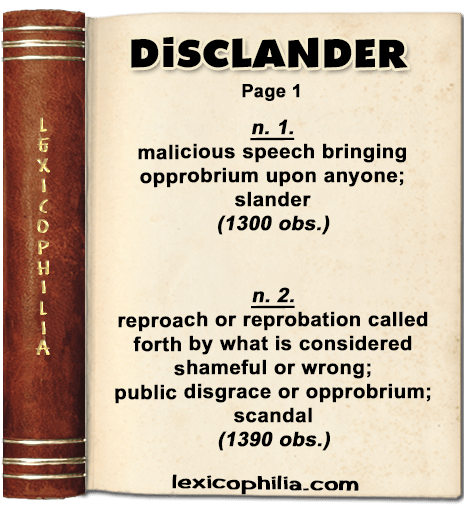
Word of the Day: DISCLANDER

ETYMOLOGY
noun: from Anglo-Norman desclandredesclaundredisclaunderdisclaundre (slander, slanderous statement, scandal, public outrage)
verb: from disclander (noun)

EXAMPLE (for vb. 1.)
“… Þis gode men with ioie inov : heore leue of him heo nome,
And þannes heo wenden sone i-nouȝ : to þe court of rome.
Þare neren heo nouȝt faire onder-fonge : for þe bischopes comen bi-fore
And desclaundreden seint thomas : þat he was fals and for-suore.
Ake naþeles þe grace heo hadden : þat to þe pope heo miȝten go.
him-sulue heo tolden in priuete : al seint thomases wo: …”

From: Laud Manuscript, c1300
In The Early South-English Legendary ; or, Lives of Saints
Edited by Carl Horstmann, 1887

Word of the Day: THRUMBLE

ETYMOLOGY
vb. 1: of uncertain origin
vb. 2, 3, 4: apparently from thrum (to press, to condense) + -le
vb. 5: apparently from thrum (to play on a stringed instrument) + -le

EXAMPLE (for vb.3)
“…PETER, quho was ever maist sudden, answers, and sayis: Thou art thrumbled and thrusted be the multitude, and ʒit thou speeris quha hes twitched thee, hee answers againe and he sayis, it is not that twitching that I speak of: It is ane vther kinde of twitching …”

From: Sermons vpon the Sacrament of the Lords Supper
By Robert Bruce, ?1591

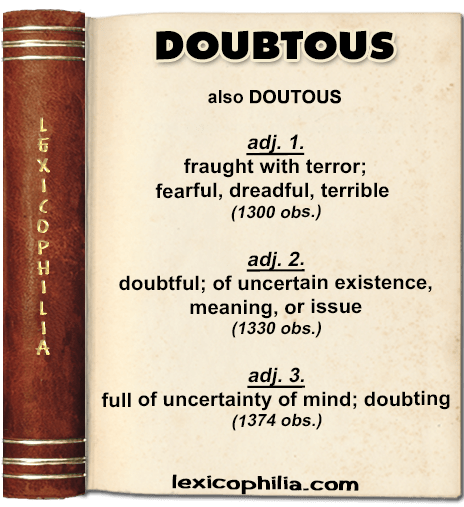
Word of the Day: DOUBTOUS

ETYMOLOGY
Middle English from Old French dutusdotusdoutous;
from modern French douteux, from doute (doubt n.)

EXAMPLE 1 ( for adj. 1)
“…no for al is moch honoure
þat he ne worþ wel sone dede
Þe eiȝt dai so is
dotus 
and þat ful wel þou salt se
ful of tene and angus
…”

From: Early English Poems and Lives of Saints with those of the wicked birds Pilate and Judas
Edited by Frederick James Furnivall, 1862
Fifteen Signs before Judgment‘, a1300

EXAMPLE 2 (for adj. 1)
“… And she said to hym: ‘My swete frend̛, yf it were possyble, soo wold I fayne doo, but it may not be. And wete it wel, that my departyng fro you is more gryeuous & doubtous a thousand tymes to me than to you, but it is the wyƚƚ & playsire of hym that can do & vndoo al thinges.’ and, with these wordes, she embraced & kyssed hym fuƚƚ tenderly, sayeng: ‘Farwel, myn owne lord & husbond̛; Adieu, myn herte, & al my joye; Farwel, my loue, & al myn wele …”

From: Melusine
By Jean d’Arras, c1500
(Published by Early English Text Society, 1895)

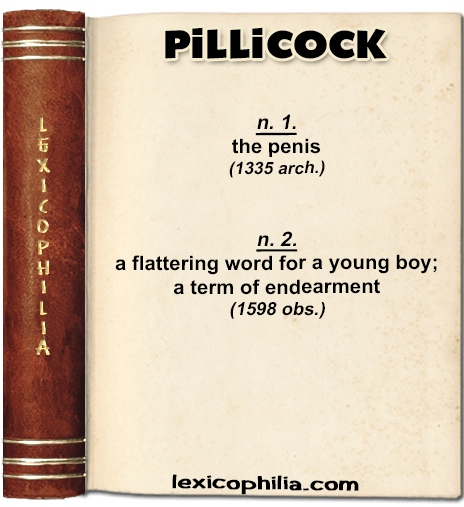
Word of the Day: PILLICOCK

ETYMOLOGY
from a first element of uncertain origin (see note below) + cock (mature male of the domestic chicken)

EXAMPLE (for n. 1.)
“…Lear.
Death traytor, nothing could haue subdued nature
To such a lownes, but his vnkind daughters,
Is it the fashion that discarded fathers,
Should haue thus little mercy on their flesh,
Iudicious punishment twas this flesh
Begot those Pelicane daughters.

Edg.
Pilicock sate on pelicocks hill, a lo lo lo.

Foole.
This cold night will turne vs all to fooles & madme
n. …”

From: True Chronicle Historie of the Life and Death of King Lear and his three daughters
By William Shakespeare, 1608

Word of the Day: BESWINK

ETYMOLOGY
from Old English beswincan, from be- swincan (to toil, to labour)
definition 2: probably for beswinge (as per OED)

EXAMPLE (for vb. 2.)
“… “Here now,” quod hunger “and holde it for a wisdome:
Bolde beggeres and bigge þat mowe her bred
biswynke,
With houndes bred and hors bred holde vp her hertis,
Abate hem with benes for bollyng of her wombe;
And ȝif þe gomes grucche bidde hem go swynke,
And he shal soupe swettere whan he it hath deseruid
….”

From: The Vision of William concerning Piers the Plowman
By William Langland, 1377

Word of the Day: MISEASY


ETYMOLOGY
from Anglo-Norman meseisémiseisémysesé (sick, unhappy, suffering, painful),
from mesaiser (misease, to trouble, to distress)


EXAMPLE 1
“…A lodlich musel he þouȝte al-so : and þe fouleste þat miȝte beo—
A Miseisiore man þane he þouȝte : no man ne miȝte iseo
…”

From:
The early South-English legendary ; or, Lives of Saints
Edited by Carl Horstmann, 1887
Vita sancti Iuliani boni hospitis (The life of St. Julian the Hospitable). c1300


EXAMPLE 2
It had been a long, hard day, and I went to bed that night feeling miseasy and heart-sick.

Word of the Day: BOINARD


ETYMOLOGY
from Old French buisnartbuinard (silly fellow)


EXAMPLE
“…”Wat! nou const þou no god?
Me þinkeþ þat þou art wod:
Ȝeuest þo þe welpe mustard?” 
“Be stille, boinard!
…”

From: Dame Siriz (Dame Sirith),
A late thirteenth-century Middle English poem.

nou const þou no god? = can you do no good?
þinkeþ = thinketh
wod = mad, crazy
Ȝeuest þo þe welpe = give you the whelp
Be stille, boinard = hold your tongue fool

Word of the Day: FAMATION


ETYMOLOGY
? aphetic from defamation (n.)


EXAMPLE 1
“…Ich wile þat y ben hanged & drawe
Boute y defende me wiþ þe lawe
Of þis famacioun,
Þat þow seist y scholde selle
Me lordes sone þat ich of telle,
Þat men clepede Reinbroun
…”

From: The Romance of Guy of Warwick
The first or 14th-century version, c1325


EXAMPLE 2
The well-known actor brought a legal action against the magazine for famation of character.