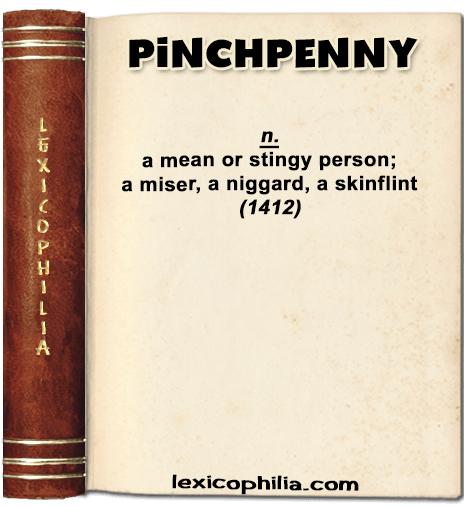
Word of the Day: PINCHPENNY

ETYMOLOGY
from pinch- (comb. form) + penny

EXAMPLE
“… A prince & kyng of al a regioun
Mot avarice thrist a-doune to grounde;
To hym þat lith in helle depe I-bounde,
The, auarice, by-take I to kepe;
Thow
pynepeny, [pynchepeny] ther ay mot þou slepe! …”

From: Hoccleve’s Works,
Edited by Frederick J. Furnivall, 1892
De Regimine Principum
By Thomas Hoccleve, Composed c1412

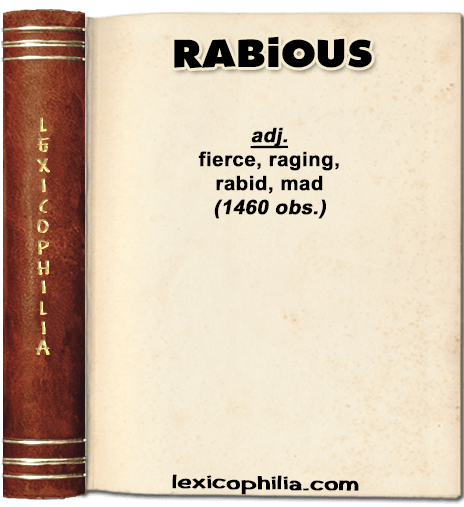
Word of the Day: RABIOUS

ETYMOLOGY
from Latin rabiosus (rabid, mad, frenzied, furious), from rabies (rabies) + –osus (-ous)

EXAMPLE
“… Ethelred, languishing in minde and body, Edmond his sonne, surnamed Ironside (to oppose youth to youth) was imployed against this rabious inuador. A Prince worthy of a better time, and had he found faith, had made it so, and deliuered his country at that turne, from the worst of miseries, the conquest by strangers. …”

From: The First Part of the Historie of England
By Samuel Daniel, 1612

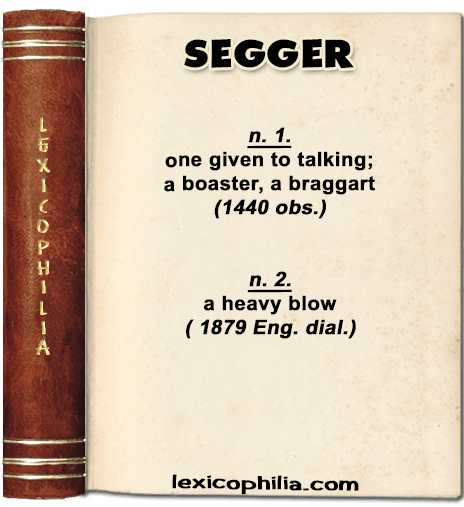
Word of the Day: SEGGER

ETYMOLOGY
from segge (to say) + -er

EXAMPLE (for n.1.)
“… As yoe are a lorde most lofsom of lyre
Vndir sir Pilate that lyfis in this empire,
Ȝone
segger that callis hymselffe a sire
With tresoure and tene sall we taste hym.
Of yoone losell his bale schall he brewe,
Do trottes on for that traytoure apas
In hast.
…”

From: York Mysteries, c1440
The Agony and Betrayal

Word of the Day: GAINSTAND

ETYMOLOGY
from gain- (against, in opposition to) + stand (vb.)

EXAMPLE (for vb.)
“… Throuch his falsheid and craftynes
He sall flow in to welthynes
The Godlye pepyll he sall noye
By creuell deith, and thame distroye
The kyng of Kyngis, he sall ganestand
Syne be distroyit withouttin hand. …”

From: Ane Dialog Betuix Experience and ane Courteour off the Miserabyll Estait of the Warld
By David Lindsay, 1554

Word of the Day: ORGULOUS

ETYMOLOGY
from Anglo-Norman orguillous, orgeillus, orgoilous, orgullous,
orgulous, orgulus, orgilousorgillus and Old French orguillus,
orgoillus, orguilleus, orgueilleux;
from  orgueil (pride, haughtiness) + ‑ous 

EXAMPLE 1 (for adj. 1.)
“… yet habbeþ manitime maked of watere wyn; gostliche. wanne þurch his grace maked of þo euele manne good man. of þe orgeilus umble. of þe lechur chaste. of þe niþinge large. and of alle oþre folies; so ha maket of þo watere wyn. þis his si signefiance of þe miracle. …”

From: An Old English miscellany containing a bestiary, Kentish sermons, Proverbs of Alfred, religious poems of the thirteenth century
Edited by Richard Morris, 1872


EXAMPLE 2 (for adj. 1)
”…I was banished from my own country, and was dishonoured, and with hard labour gained I what I have got ; and now I stand in the King’s favour, and he asketh of me my daughters for the Infantes of Carrion. They are of high blood and full orgullous, and I have no liking to this match ; but if our Lord the King adviseth it we can do no other-wise: …”

From: Chronicle of the Cid
By Robert Southey, 1808

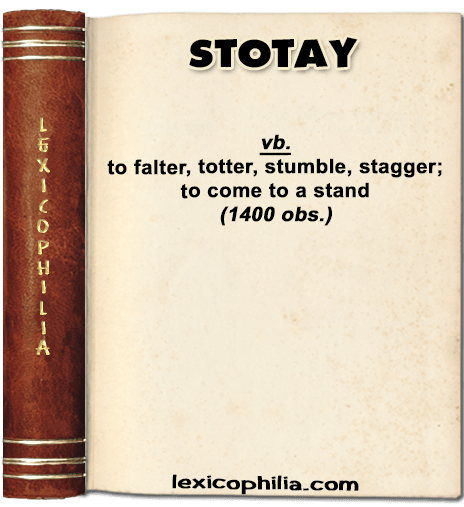
Word of the Day: STOTAY

ETYMOLOGY
possibly from Old French estoutoierestoteier (to fall into disorder)

EXAMPLE
“… Þo cried þat freoly foode:
“Whi spille ȝe innocens bloode?”
And alle þei stoteyd and stoode,
Þis ferlys to frayne. …”

From: The Pistill of Susan – a Middle English adaptation of the Old Testament Apocryphal book The History of Susanna, a1400

Word of the Day: RIGENT

ETYMOLOGY
from Latin rigent-rigens (stiff, rigid), present participle of rigere (to be stiff)

EXAMPLE
“… An hous [y]maad of aller is but shent; 
Yet ther the ground is myre, weet, vnsure,
Pile in aller as for the fundament.
Ek elm & asshe ydried beth rigent,
And while they beth vndried, so curuable,
ffor shippis that they beth right profitable. …”

From: Middle-English translation of Palladius De Re Rustica. ?1440
Edited by Mark Liddell, 1896

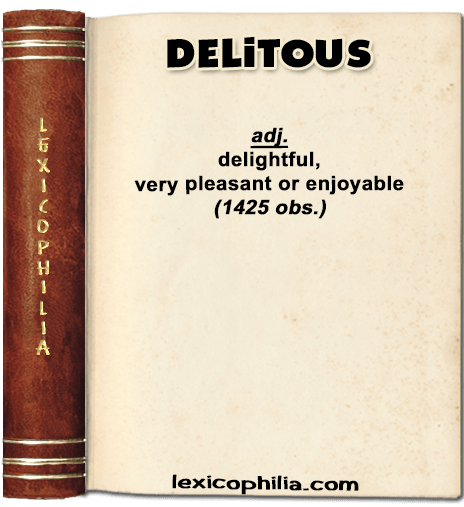
Word of the Day: DELITOUS

ETYMOLOGY
from Anglo-Norman delitous, Middle French deliteux;
from delit (delight) + ‑ous 

EXAMPLE
“… For sich solace sich ioie and play
I trowe that neuere man ne say 
As was in that place delytous
The gardeyn was not daungerous
To herberwe briddes many oon
So riche a yeer was neuer noon …”

From: The Romaunt of the Rose
By Guillaume de Lorris and Jean de Meun
Translated by Geoffrey Chaucer, a1425