Word of the Day: PRICK-ME-DAINTY

ETYMOLOGY
from prick (to attire a person with clothes and ornaments fastened by pins, bodkins, etc.) + me + dainty

EXAMPLE
“… But, syr, among all
That sat in that hall,
There was a
pryckemedenty,
Sat lyke a seynty,
And began to paynty,
As thoughe she would faynty ;
She made it as koy
As a lege de moy ;
She was not halfe so wyse
As she was peuysshe nyse.
She sayde neuer a worde,
But rose from the borde,
And called for our dame,
Elynour by name.
…”

From: Here after foloweth Certayne Bokes
By John Skelton, ?1545
The Tunnyng of Elynour Rummyng, a1529

Word of the Day: EXPLORATE

ETYMOLOGY
adj.: from Latin exploratus past participle of explorare (to explore)
vb.: from Latin explōrāt- past participial stem of explorare (to explore)

EXAMPLE
“…The consideration whereof (most iudicious Men) though I looke not to be of that weigh with you, as to moue you ac­tually to implant your selfs in our Catholicke Church; yet since you are wyse, learned, and loth (no dowbt) to commit any such explorate errours, as the force of Naturall Reason and your owne Consciences may freely check; I am in good hope, that the serious perusall of the poynts aboue disputed, will at least preuayle thus far with diuers of you; …”

From: The Converted Jew
By John Clare, a1628

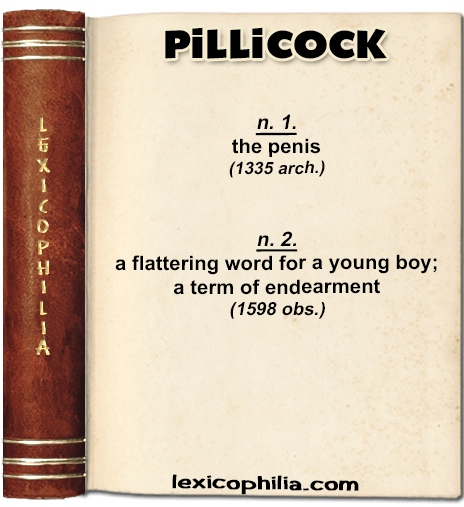
Word of the Day: PILLICOCK

ETYMOLOGY
from a first element of uncertain origin (see note below) + cock (mature male of the domestic chicken)

EXAMPLE (for n. 1.)
“…Lear.
Death traytor, nothing could haue subdued nature
To such a lownes, but his vnkind daughters,
Is it the fashion that discarded fathers,
Should haue thus little mercy on their flesh,
Iudicious punishment twas this flesh
Begot those Pelicane daughters.

Edg.
Pilicock sate on pelicocks hill, a lo lo lo.

Foole.
This cold night will turne vs all to fooles & madme
n. …”

From: True Chronicle Historie of the Life and Death of King Lear and his three daughters
By William Shakespeare, 1608

Word of the Day: SWASIVIOUS

ETYMOLOGY
from Italian suasivo (suasive, having the power of persuading or urging) + -ious

EXAMPLE
“…Who is most merciful, bountiful, and liberal, and willing to helpe and further you, in your intended loues, burning desires, and high conceites. Plucke vp a good heart, man, come let vs goe on.
With pleasurable actions, maydenly iestures,
swasiuious behauiours, girlish sportes, wanton regardes, and with sweet vvords they ledde mee on thither, beeing vvel content vvith euerie present action, but that my Polia vvas not there to the suppliment of my felicitie, and to haue been the sixt person in the making vp of a perfect number. …”

From: Hypnerotomachia: The Strife of Loue in a Dreame
By Francesco Colonna
Translated by Robert Dallington, 1592

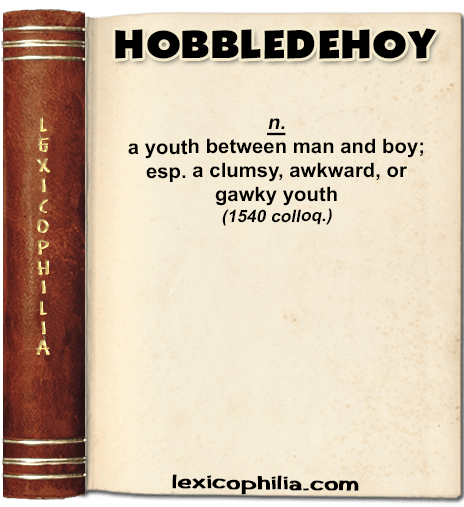
Word of the Day: HOBBLEDEHOY

ETYMOLOGY
of uncertain origin;
the first element is possibly hob (clown, prankster);
the second element may be from French de haye (worthless, untamed, wild, literally ‘of the hedge’)

EXAMPLE
“…he began to clayme or chalenge his right more and more, and to cal in good lawes … and to desyre to haue the benefite or the succour of the lawes, whiche (were good and reasonable) by whiche they stryue … men vpholde or maynteyne suche as haue ouer shotte … ouer passed theyr fyrste parte of youthe … theyr hobledehoye tyme … the yeres that one is neyther a man nor a boye, at which yeres our voyce chagetij … that suche as haue passed theyr nonage, and be no longer berdelesse boyes, be to be loused from theyr fathers right … that theyr fathers haue no longer the guyding or correction of them, but that they be set at theyr lybertie…

From: The Comedye of Acolastus
By Gulielmus Gnaphaeus
Translated by John Palsgrave, 1540

Word of the Day: HEART-QUAKE

ETYMOLOGY
from heart (n.) + quake (n.)

EXAMPLE
“…This disease taketh somtyme the one membre, as hand or fote, somtyme the halfe body, or the tonge, so that a man can not speake: somtyme cometh it of ouermuche ioye, heuinesse, meate or drincke, ouermuche laboure, reste, slouthfulnesse, feare,  swounynge, hartequake, and of superfluitye of bloode, flegma, colera or melancoly. …”

From: A Most Excellent and Perfecte Homish Apothecarye or Homely Physik Booke, for all the grefes and diseases of the bodye
By Hieronymus Brunschwig
Translated by Ihon Hollybush, 1561

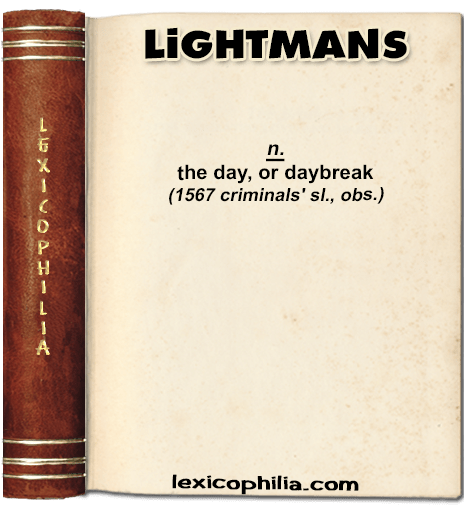
Word of the Day: LIGHTMANS

ETYMOLOGY
from light (adj.) + –mans (suffix forming nouns from adjectives and nouns in 16th century and early 17th century cant)

EXAMPLE
“…Bene lyghtmans to thy quarromes in what lipkē hast thou lipped in this darkemanes; whether in a lybbege or in the strummell? …”
(God morrowe to thy bodye, in what house hast thou lyne in all night whether in a bed, or in the strawe?)

From: A Caueat for commen Cvrsetors vulgarely called Uagabones
By Thomas Harmon, 1567

Word of the Day: NIPFARTHING

ETYMOLOGY
from nip (to pinch, bite, squeeze tightly) + farthing

EXAMPLE
“…A goodlye dishe, who taughte the this?
why doste thou thus compare
Extremyties? Is there no shifte,
all spende, or els all spare?
I woulde the not a 
nipfarthinge,
nor yet a niggarde haue,
Wilte thou therefore, a drunkard be,
a dingthrifte, and a knaue?…”

From: A Medicinable Morall, that is, the two bookes of Horace his satyres
By Horace
Translated by Thomas Drant, 1566

Word of the Day: MALEFICIOUS

ETYMOLOGY
from Latin maleficium (malefice, a wicked enchantment, sorcery)  + -ious

EXAMPLE
“…Or again, the foresaid change of a sound into a morbid body proceeds from the breath, or from the depraved spirit and aspect of the eyes, permeating, dissipating or infecting, or any other way changing the very tender substance of the Child. At which time, if any thing superstitious or maleficious come from the wickedness of the Devil, the Assistence of Holy Church being first desired, we must proceed to such Remedies as may dissipate, dissolve and weaken the breath, wind, or foul and contagious spirit …”

From: A Guide to the Practical Physician shewing, from the most approved authors, both ancient and modern, the truest and safest way of curing all diseases, internal and external, whether by medicine, surgery, or diet
By Theophile Bonet, Translated from Latin, 1684

Word of the Day: GROUT-HEAD

ETYMOLOGY
from grout (sediment, dregs, lees), taken as the type of something big and coarse; 
for definition 2: there is confusion with great; perhaps the sound recalled the Dutch groot

EXAMPLE
“…professed her self a nonne in the yeare of our lord a. M. and. lxxv. to serue the deuyll in the monkes hypocresy, & in ye burnynge heates of Sodome. So daynty mowthed wer these greasy grouteheades, and so crafty in their generacyon, that they could fynde out kynges doughters to serue their lustes, and yet apere chast ghostly fathers to the world. Thurstinus a monke of Cane in Normandy…”

From: The First Two Partes of the Actes or vnchast examples of the Englysh Votaryes gathered out of their owne legenades and chronycles
By John Bale, 1551