Word of the Day: DETESTATE


ETYMOLOGY
from Latin detestat-, ppl. stem of detestare (-arī) (to detest)


EXAMPLE
“…the whiche in all kinde of liuing and conuersacion is vtterly geuen and married vnto this worlde, whiche as a mortall enemy, the doctrine of the gospell doeth detestate and abhorre? with cleane handes and verye reuerentlye we vse to touche the holy boke of the gospell…”

From: The First Tome or Volume of the Paraphrase of Erasmus vpon the Newe Testamente
By Erasmus, Desiderius
Translated by Nicholas Udall, 1548

Word of the Day: VOUST


ETYMOLOGY
of unknown origin


EXAMPLE
“…Circuland abowt with swift fard of the cart
The feildis our all quhar in euery art,
And schew hir bruthir Turnus in his char,
Now brawland in this place, now voustand thar;
Na be na way wald scho suffir that he
Assembill hand for hand suld with Enee…”

From: The Æneid of Virgil
Translated Into Scottish Verse
By Gavin Douglas, 1513

Word of the Day: FLANTITANTING


ETYMOLOGY
a reduplicated formation on flanting (flaunting)


EXAMPLE
“…An old Doctor of Oxford shewd me Latine verses of his in that flourishing flantitanting goutie Omega fist, which he presented unto him (as a bribe) to get leave to playe, whe hee was in the heighth or prime of his Puer es cupis atque doceri…”

From: Have with You to Saffron-Walden Or, Gabriell Harveys Hunt is Up
By Thomas Nashe, 1596

Word of the Day: SPLENDICANT


ETYMOLOGY
from present pple. of Latin splendicare to shine


EXAMPLE
“…and yet cast into a curious desire to vnderstand and knowe what should be the reason and cause that the purple humiditie in the touch of hir bodie, in the smoothnes of hir hand should be as white as pure milke: and by what meanes that nature had bestowed in hir faire bodie the fragrant sweetnes of Arabia. And by what industrie in hir starrie forehead pampynulated with threds of gold aptly disposed, she had infixed the fairest part of the heauens, or the splendycant Heraclea…”

From: Hypnerotomachia: The Strife of Loue in a Dreame
By Francesco Colonna
Translated by Robert Dallington, 1592

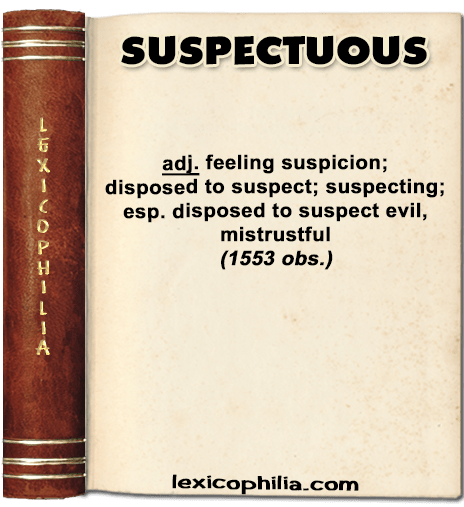
Word of the Day: SUSPECTUOUS


ETYMOLOGY
from Latin suspectus (u-stem) (suspect n.) + -ous


EXAMPLE
“…I thynke as our Cytezens be suspectuous and full of coniectoures; so dyd hee feare the comodyte of the place, and woulde eschewe the occasyon …”

From: The goodli history of the moste noble and beautyfull Ladye Lucres of Scene in Tuskane, and of her louer Eurialus verye pleasaunt and delectablevnto ye reder
By Pope Pius II, 1553

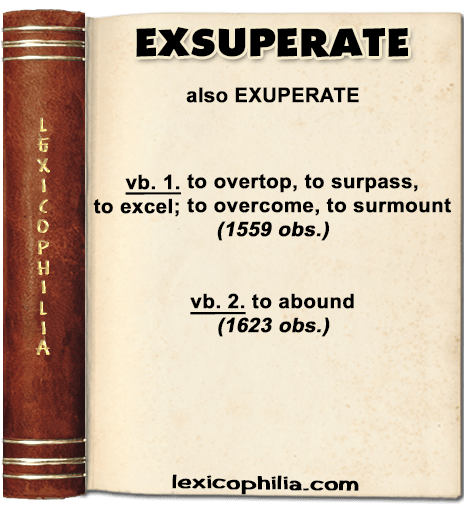
Word of the Day: EXSUPERATE


ETYMOLOGY
from Latin ex(s)uperat- ppl. stem of ex(s)uperare
from ex- + superare (to rise above), from super (above)


EXAMPLE
“…And if bewtie breed such blisfulnesse
Euamouring both God and man
Good Lady let no wilfulnesse
 Exuperate  your bewtye then
To slaye the hertes that yeld & craue
ladye ladye
The graunt of your goodwil to haue
My deare ladye…”

From: The Panges of Loue and Louers Fittes
By William Elderton, 1559

Word of the Day: DECURTATE


ETYMOLOGY
adjective: from Latin decurtatus, pa. pple. of decurtare (to cut off, curtail)
verb: from participial stem of Latin decurtare + -ate


EXAMPLE
“…hee sendes for his Barber to depure, decurtate, and spunge him, whome hauing not paide a twelmonth before, he now raines downe eight quarter angels into his hande…”

From: Lenten Stuffe
By Thomas Nashe, 1599

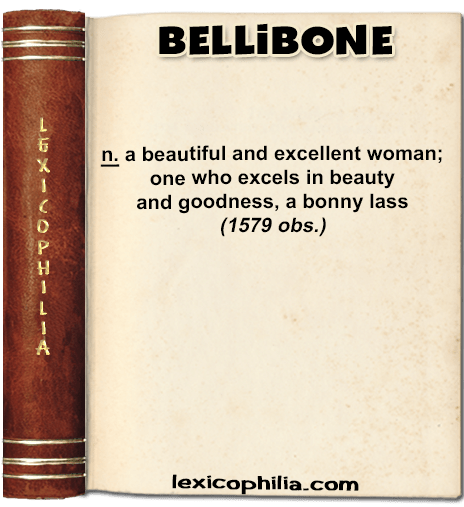
Word of the Day: BELLIBONE

ETYMOLOGY
possibly a corruption of French belle bonne or belle et bonne (fair and good);
if not a humorous perversion of bonnibel (fair maid, bonny lass)

EXAMPLE
“…PERIGOT. The while my Flock did feed thereby,
WILLY. The while the Shepherd self did spill:
PERIGOT. I saw the bouncing Bellibone;
WILLY. Hey ho Bonnibel!
PERIGOT. Tripping over the Dale alone,
WILLY. She can trip it very well
…”

From: The Shepheardes Calender
VIII: August
By Edmund Spenser, 1579