Word of the Day: CLUSTERFIST


ETYMOLOGY
from cluster in sense of lump, clumsy mass + fist


EXAMPLE
“…Saturday Night passed with much Perplexity to the Monks, who were at their Wits Ends, and Lives too (they could not hope better things) about the Charter, which was no where extant but in the Noddles of these Cluster-fists. But Day and Comfort broke out together upon them; suddenly this Overflow of Pride, and Arrogancy abated, their Loftiness fell, and their Bristles were somewhat laid…”

From: The Works of Mr. John Cleveland
By John Cleveland, 1687
The Rustick Rampant, or Rural Anarchy Affronting Monarchy, a1658
Word of the Day: OPINIASTROUS


ETYMOLOGY
either from French opiniastre (adj. – opinionated) + -ous,
or from opiniastre (n. – an opinionated person) + -ous 


EXAMPLE
“…Next, in matter of death, the Laws of England, wherof you have intruded to bee an opiniastrous Sub advocate, and are bound to defend them, conceave it not enjoyn’d in Scripture, when or for what cause they shall put to death, as in adultery, theft, and the like; your minor also is fals, for the Scripture plainly sets down for what measure of disagreement a man may divorce…”

From: Colasterion
A Reply to a nameless Answer against the Doctrine and Discipline of Divorce
By John Milton, 1645

Word of the Day: HALF-HEADED


ETYMOLOGY
from half + headed


EXAMPLE
“…And there is not a man that is for Paritie, all Fellows in the Church, but he is not for Monarchie in the State. And certainly either he is but Halfe-headed to his owne Principles, or he can be but Halfe-hearted to the House of David…”

From: Seven Sermons Preached Upon Severall Occasions
By William Laud, 1625

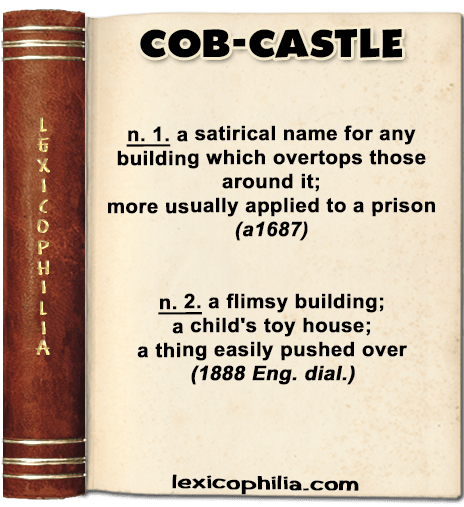
Word of the Day: COB-CASTLE


ETYMOLOGY
? from cob (a big man, a great man, a leading man) + castle


EXAMPLE
“…’Twixt the wood and the castle they see at high water
The storm, the place makes it a dangerous matter;
And besides, upon such a steep rock it is founded,
As would break a man’s neck, should he’scape being drowned:
Perhaps though in time one may make them to yield,
But ’tis prettiest Cob-castle e’er I beheld
…”

From: Poems on Several Occasions written by Charles Cotton, 1689
A Voyage to Ireland in Burlesque

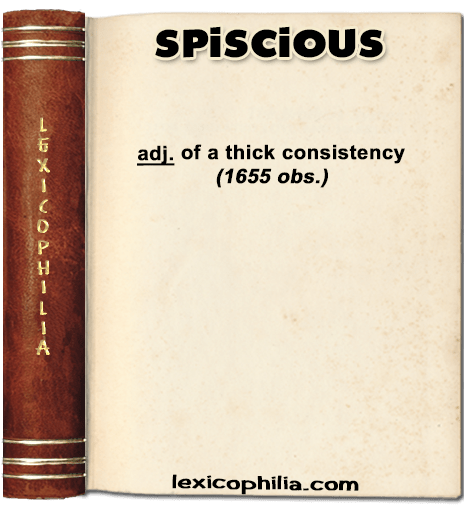
Word of the Day: SPISCIOUS


ETYMOLOGY
from Latin spissus (thick, close, compact)


EXAMPLE
“…Methought this Drink had a kind of a sweet taste, like Asses Milk, yet it could not properly be called a liquor, but rather a certain concreted Mist or spiscious Froath; for being with no small paine got out againe, I found it had not so much as moistned my Cloaths…”

From: The Comical History of Francion
By Charles Sorel, 1655

Word of the Day: SNUFFY


ETYMOLOGY
from snuff + -y


EXAMPLE
“…I’m sure she makes a very Tarquinius Sextus of me, and all about this Serenade,—I protest and vow, incomparable Lady, I had begun the sweetest Speech to her—though I say’t, such Flowers of Rhetorick—’twou’d have been the very Nosegay of Eloquence, so it wou’d; and like an ungrateful illiterate Woman as she is, she left me in the very middle on’t, so snuffy I’ll warrant…”

From: Sir Patient Fancy
By Aphra Behn, 1678

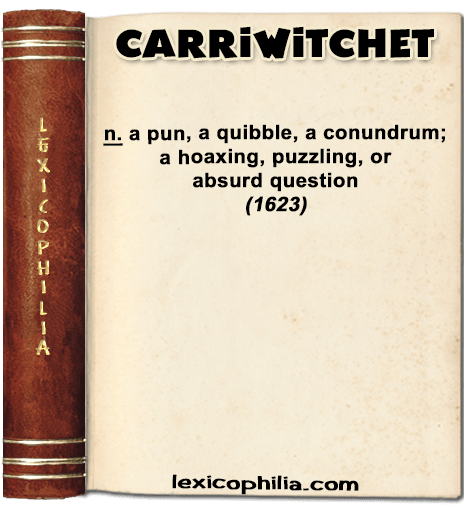
Word of the Day: CARRIWITCHET


ETYMOLOGY
of unknown origin


EXAMPLE
“…That tells vs of Proiects beyond the Moone, of Golden Mines, of Deuices to make the Thames run on the North side of London (which may very easily be done, by remouing London to the Banke-side) of planting the Ile of Dogs with Whiblins, Corwhichets, Mushromes and Tobacco. Tut I like none of these, Let mee see, as I take it, it is an inuectiue against Coaches, or a proofe or tryall of the Antiquitie of Carts and Coaches…”

From: All the vvorkes of Iohn Taylor the Water-Poet 
By John Taylor, 1623
The VVorld runnes on VVheeles

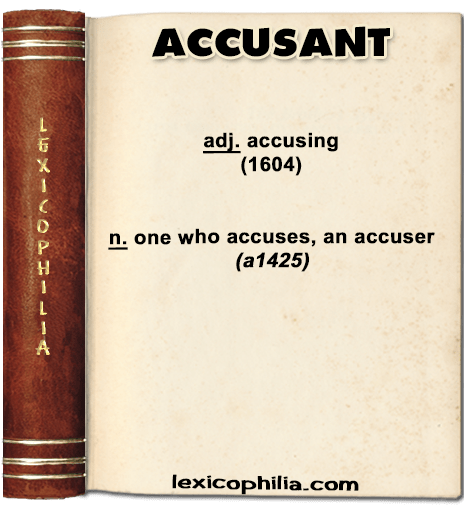
Word of the Day: ACCUSANT


ETYMOLOGY
from French accusant (n. person who accuses), (adj. that accuses)


PRONUNCIATION
uh-KYOO-zuhnt


EXAMPLE
“…The whole Councell beeing afterward called together, they gaue them-selues to the vnderstanding of the matter. As for the crime and the punishment, was of the accusant called vpon in these wordes: The Iudgement of death is due to this man, because hee hath done this or that. But the Defendant repelled it, with these wordes. The Iudgement of death is not due this man, because hee hath not done it, or because hee hath doone it righteously …”

From: A Defence of the Government Established in the Church of Englande
By John Bridges, 1587

Word of the Day: MACROBIAN


ETYMOLOGY
formed on Greek.µακρόβιος (long-lived (from µακρός (long) + βίος (life)) + -an


PRONUNCIATION
muh-KROH-bee-uhn


EXAMPLE
“…Nor did we think it more reasonable to doubt of the Transmogrification of the Macrobian Children into Swans, or that of the Men of Pallene in Thrace into Birds, as soon as they have bath’d themselves in the Tritonie Lake. After this the Devil a word we could get out of him but of Birds and Cages…”

From: The Fifth Book of The Works of Francis Rabelais, M.D.
Translated by Peter Anthony Motteux, 1694