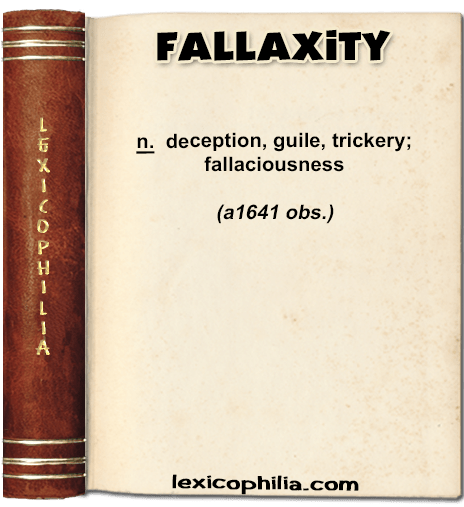
Word of the Day: FALLAXITY


ETYMOLOGY
from Latin fallax: from fallere (to deceive) + -ity


EXAMPLE
“...saying that then it shall appear before his Counsell the great deceit fallaxity and crafty waies cast and invironed to destroy and holy to an nyntyssement of your honor for ever…”

From: The Berkeley Manuscripts
The Lives of the Berkeleys
Lords of the Honour, Castle and Manor of Berkeley
In the County of Gloucester, From 1066 to 1618
John Smyth, a1641

Word of the Day: MINACIOUS


ETYMOLOGY
from Latin minac-minax (threatening), from minae (threats) + -ax + -ous


EXAMPLE
“…or with a pleasant horrour and chilness look upon some silent Wood, or solemn shady Grove; whether the face of Heaven smile upon us with a chearfull bright azure, or look upon us with a more sad and minacious countenance, dark pitchy Clouds being charged with Thunder and Lightning to let fly against the Earth; whether the Aire be cool, fresh and healthful, or whether it be soultry, contagious and pestilential, so that while we gasp for life we are forc’d to draw in a sudden and inevitable Death…”

From: An Explanation of the Grand Mystery of Godliness
By Henry More, 1660

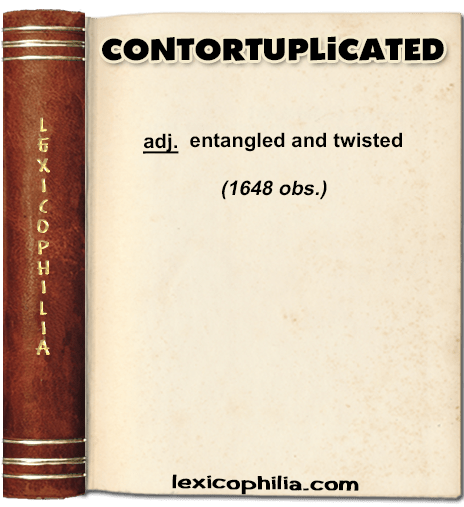
Word of the Day: CONTORTUPLICATED


ETYMOLOGY
from Latin contortuplicatus, from contortus (twisted together) + plicatus (folded)


EXAMPLE
“…Cruspini, who, in spite of his selfishness, is a shrewd dog, for a foreigner, says it is allowing to his violin; and he takes care that its influence shall not be wanting, for he eviscerates as much noise from its contortuplicated bowels, every day, as would disconcert a herd of swing remonstrating against a high wind…”

From: Thurlston Tales
“Grey Joan”
Robert Pierce Gillies, 1835

Word of the Day: INDEXTROUS


ETYMOLOGY
from in- + dexterous


EXAMPLE
“…An Issue must also be made with the hand of a skilfull Artist, for I have often observed from an indextrous way of making an Issue in the occiput a thousand mischiefs and death has followed: for if the Chirurgeon try to burn all the Skin with the Iron, I have often seen a Convulsion follow, and the child die of a most cruel death…”

From: Mercurius compitalitius;
Or, A Guide to the Practical Physician
By Theophill Bonet, 1684

Word of the Day: PLACIDIOUS


ETYMOLOGY
from Latin placidus (pleasing, favourable, gentle, mild, calm),
from root of placēre (to please)


EXAMPLE
“…There was never any thing more strange in the nature of Dogs, then that which happened at *Rhodes besieged by the Turk, for the Dogs did there discern betwixt Christians and Turks; for towards the Turks they were most eager, furious, and unappeaseable but towards Christians, although unknown, most easie, peaceable and placidious, which thing caused a certain Poet to write thus…”

From: The History of Four-footed Beasts, and Serpents
By Edward Topsell, 1607

Word of the Day: INCOLIST


ETYMOLOGY
from Latin incolere (to inhabit) + -ist


EXAMPLE
“…which maladyes much molest the Germanes, and Septentrionall incolists; the like whereof hapned upon Caesars Souldiers when they came beyond Rhene, who there finding a River, drunk of the water, which within two dayes caused their teeth to fall out, and resolved the joynts of their knees, but the herb Britannica will help such as are thus infested…”

From: A Medicinal Dispensatory
Composed by the Illustrious Renodaeus,
Englished and Revised by Richard Tomlinson, 1657
Section 6. Of Fruits. Chapter XVII.

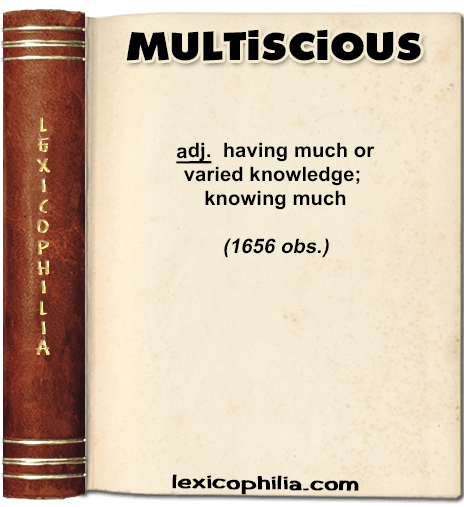
Word of the Day: MULTISCIOUS


ETYMOLOGY
from Latin multisciusmultus (much) + scius (knowing), from scire (to know)


EXAMPLE
“…His somatic structure was procere and feateous; and his ostent, debonair. Multiscious in vitilitigation, omnipercipient, pansophical, emissitious, and obversant with anthroposophy, he was without dubitancy, a dabster…”

From: Letters to Squire Pedant, in The East
By Lorenzo Altisonant, an Emigrant to the West 
By Samuel Klinefelter Hoshou. 1870
No. IX. Rixationville, July 7, 1843

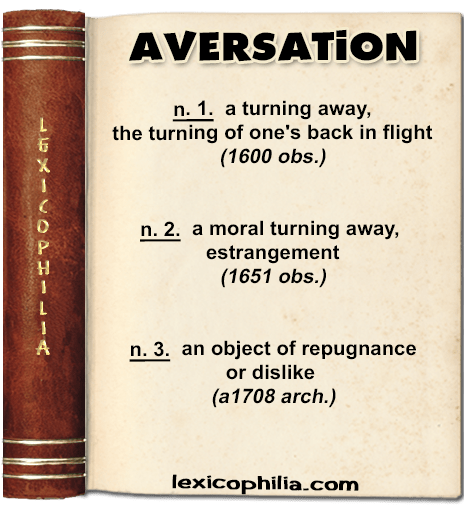
Word of the Day: AVERSATION


ETYMOLOGY
rom Latin aversationem, noun of action from aversat-


EXAMPLE
“…He can bear glory to their fleet, or shut up all their toils In his one suff’rance on thy lance.” With this deceit she led, And, both come near, thus Hector spake: “Thrice have I compassed This great town, Peleus’ son, in flight, with aversation That out of fate put off my steps; but now all flight is flown, The short course set up, death or life. Our resolutions yet Must shun all rudeness, and the Gods before our valour set For use of victory;…”

From: The Whole Works of Homer in his Iliads and Odysses
Translated by George Chapman, 1616

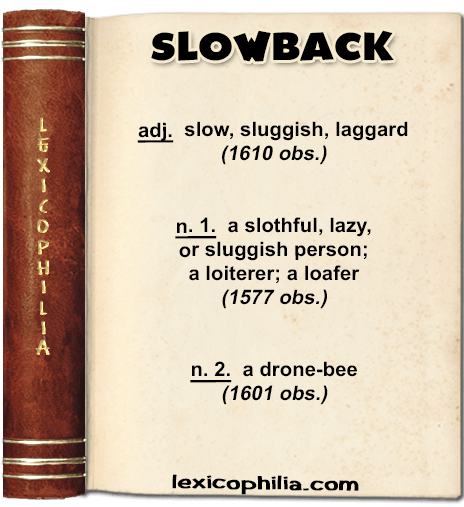
Word of the Day: SLOWBACK


ETYMOLOGY
from slow (adj.) + back (n.)


EXAMPLE
“…For God doth not assiste slouthfull persons and idle slowbackes. Now I call those needelesse occupations, whiche idle and ill disposed people do vse, thereby to be troublesome to their neighbours and to deceiue other men, exercising, I confesse, an occupation, but such an one as is vtterly vnlawfull & vnprofitable to all men…”

From: Fiftie Godlie and Learned Sermons Diuided into Fiue Decades
By Heinrich Bullinger, 1577