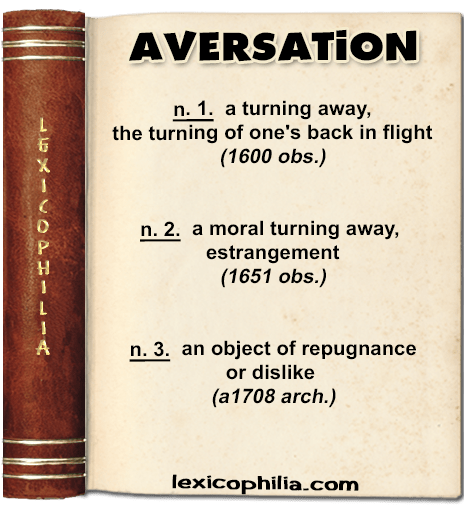
ETYMOLOGY
from Latin obacerat-, past participial stem of obacerāre (to contradict),
probably from ob- (ob-) + a second element of uncertain origin
EXAMPLE
He coughed loudly in the hopes of obacerating the hysterical, babbling woman.

ETYMOLOGY
from Latin obacerat-, past participial stem of obacerāre (to contradict),
probably from ob- (ob-) + a second element of uncertain origin
EXAMPLE
He coughed loudly in the hopes of obacerating the hysterical, babbling woman.

ETYMOLOGY
from Greek θρῆνος (funeral lament)
EXAMPLE
“…Threnetic odes are also ascribed to Sappho, among which a lament of Adonis is alluded to; but these poems are not classed under any separate head; and in an extant passage, she plainly intimates that his gloomier style of composition was little to her taste…”
From: A Critical History of the Language and Literature of Ancient Greece
By William Mure, Volume III, 1850
Biography of Lyric Poets. Sappho, 600 B.C.

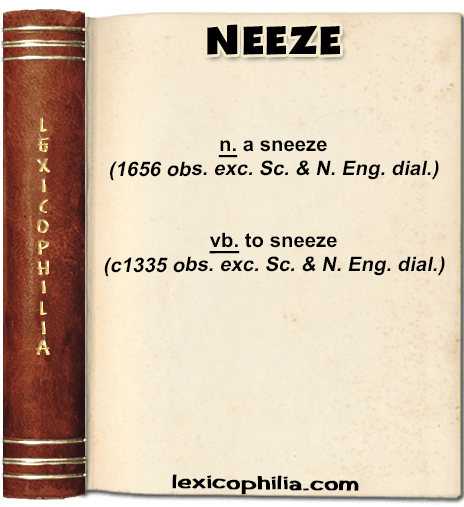
ETYMOLOGY
of unknown origin;
perhaps from nice (obsolete adj. foolish, stupid senseless)
EXAMPLE
“…Susan, I this Letter send thee,
Let not sighs and tears attend thee,
We are on the Coast of France;
Taking prizes from those Nizeys,
my sweet Jewel to advance.
Since we London have forsaken, five rich
Prizes have we taken,
Two of them Nantz Brandy Wine;
Chests of money, my sweet Honey! with
rich silks and sattin fine…”
From: The Roxburghe Ballads
Love and Loyalty:
Or, A Letter from a Young-man on Board of an English Privateer, to his beloved Susan in the City of London.
To the Tune of, Tender Hearts of London City
c1689

ETYMOLOGY
from Italian leggiadro (elegant, graceful) + -ous
EXAMPLE
“…Her Motions and her Gestures travers’d are
By thy attending thoughts, and ravish’d thou
Think’st silver Venus through her limpid sphere
Swims with less gagliardise, and knows not how
So well to justify her Stile, and prove
Her self the Queen of soft leggiadrous Love…”
From: Psyche, or, Loves Mysterie
By Joseph Beaumont, 1648

ETYMOLOGY
adj.: from Latin trepidatus, past participle of trepidare
vb.: participial stem of trepidare (to hurry, bustle, be agitated or alarmed)
EXAMPLE
“…The celestiall spheres in continuall volubilitye..their diurnall or daylye course from the East to the West, their retrograde and vyolent motion from the West to the East, their trepidat motion from the South to the North…”
From: A Confutation of Atheisme
By John Dove, 1605

ETYMOLOGY
from Latin obgannire (to speak menacingly, to mutter or growl) + -ate
EXAMPLE
As the night went on, and the more wine she consumed, she started to ramble and obganiate herself.

ETYMOLOGY
from Latin confragosus (broken, rough, uneven),
from Latin confringere and fragosus, from stem frag- of frangere (to break)
EXAMPLE
“…But, what appeared most stupendous to me, was the rock of St. Vincent, a little distance from the towne, the precipice whereof is equal to any thing of that nature I have seene in the most confragose cataracts of the Alpes, the river gliding between them at an extraordinary depth. Here, we went searching for diamonds, and to the Hot Wells, at its foote…”
From: The Diary of John Evelyn
27 June 1654

ETYMOLOGY
from Latin desinentem, present participle of desinere (to leave off, close),
from de- + sinere (to leave)
EXAMPLE
“… In front of this sea were placed six tritons, in moving and sprightly actions, their upper parts human, save that their hairs were blue, as partaking of the sea-color: their desinent parts fish, mounted above their heads, and all varied in disposition. From their backs were borne out certain light pieces of taffata, as if carried by the wind, and their music made out of wreathed
shells…”
From: The Masque of Blackness in Characters Two Royall Masques
By Benjamin Jonson, 1608

ETYMOLOGY
irregular from indulge or Latin indulgere + -ate
EXAMPLE
“…Sergius Oratus was the first that made pits for them about his house here; more for profit, then to indulgiate his gluttony. For by such devices he purchased much riches…”
From: A Relation of a Journey Begun an Dom. 1610
By George Sandys, 1615

ETYMOLOGY
from Latin fatiloquus (prophesying, prophetic) + -ist
EXAMPLE
“…Fate, and Fatories, and Fatiloquists, and Fooles, all taken from talking they know not what …”
From: Πῦς-μαντία. The Mag-astro-mancer,
Or The Magicall-Astrologicall-Diviner posed, and puzzled
By John Gaule, 1652