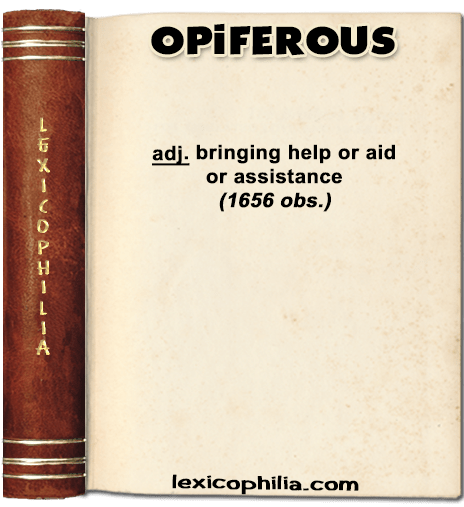
Word of the Day: OPIFEROUS

ETYMOLOGY
from Latin opifer (help-bringing),
from opem (help) + -fer


EXAMPLE
“…I heard that a hardy little band tried to read it through , but fell asleep after having read the opiferous leaves of the first chapter . I speak not of the puffs , profusely given to it by generous friends , interested or stipended parties…”

From: Critical Dialogue Between Aboo and Caboo On A New Book:
Or A Grandissime Ascension
Edited by E. Junius (A.E. Rouquette), 1880
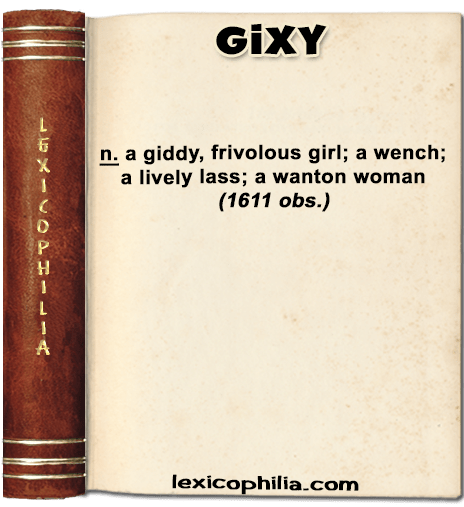
Word of the Day: GIXY

ETYMOLOGY
? possibly connected with gig (an eccentric person)


EXAMPLE
“…Hereupon it fell out, after the expiring of a scantling of Weeks, that Master Carvel became as jealous as a Tygar, and entred into a very profound suspition, that his new-married Gixy did keep a Buttock-stirring with others: to prevent which inconveniency, he did tell her many tragical Stories of the total Ruine of several Kingdoms by Adultery…”

From: The Third Book of the Heroick Deeds and Sayings of the good Pantagruel.
By Francois Rabelais
Translated by Thomas Urquhart, 1693

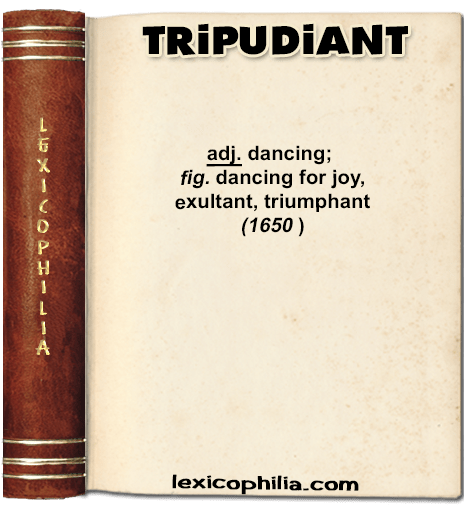
Word of the Day: TRIPUDIANT

ETYMOLOGY
from Latin tripudiāntem, pres. pple. of tripudiare from tripudium (a beating the ground with the feet, a leaping or dancing, a religious dance)

EXAMPLE
“…All which I mention with a kinde of tripudiant joy, and exultation of spirit, belonging so skilfull a Pilot…”

From: An Exposition vvith Notes, On The whole Fourth Chapter To The Romanes
By W. Sclater, 1650

Word of the Day: PHILOXENY


ETYMOLOGY
from Latin philoxenia (love of strangers; eagerness to show hospitality);
or: from Greek ϕιλοξενίζειν from ϕιλόξενος (philoksenos) (loving hospitality or strangers), from ϕιλο- (philo-) + ξένος (xenos) (stranger) + -ia (-y)


EXAMPLE
“…for by this philoxeny, the virtue inclining and disposing the mind to the entertainment of strangers, is in the first place intended…”

From: An Exposition of the Epistle to the Hebrews
By John Owen, 1814

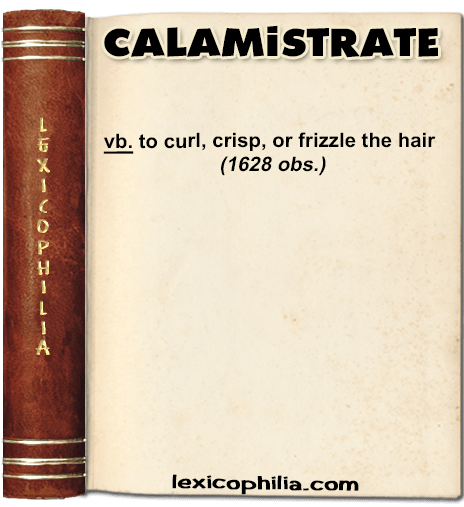
Word of the Day: CALAMISTRATE

ETYMOLOGY
from Latin calamistratus (crisped, curled with the curling iron), 
from calamistrum (curling iron)

EXAMPLE
“…Which belike makes our Venetian Ladies at this day, to counterfeit yellow haire so much, great women to Calamistrate and curle it up, vibrantes ad gratiam crines, & quot orbibus in captivitatem flexos, to adorne their heads with spangles, pearles, and made flowres, and all Courtiers to affect a pleasing grace in this kinde…”

From: The Anatomy of Melancholy
By Robert Burton, 1628

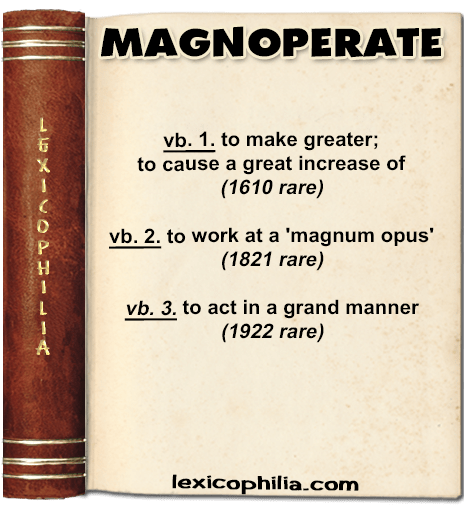
Word of the Day: MAGNOPERATE

ETYMOLOGY
from Latin magnopere (greatly) (short for magno opere [with great labour, especially, much]) + -ate

EXAMPLE
“…so that after-ages may rightly admire what noble Mecaenas it was that so inchayned the aspiring wits of this understanding age to his only censure, which will not a little magnoperate the splendor of your well knowne honor to these succeeding times…”

From: Baculum Geodæticum 
By Arthur Hopton, 1610

Word of the Day: DEVENUSTATE

ETYMOLOGY
from late Latin devenustare (to disfigure, deform),
from de- venustare (to beautify), venustus (beautiful)

EXAMPLE
“…but that Christ and his Servants may have comfort and stability amongst us, that those who Rule would fence the Vine, Learning, against beasts of Prey, and Foxes of spoil, who would rejoyce to see what yet remains of beauty and order, devenustated and exposed to shame and dishonour…”

From: An Humble Apologie for Learning and Learned men
By Edward Waterhouse, 1653

Word of the Day: EDULIOUS

ETYMOLOGY
from Latin edulis, from edere (to eat)

EXAMPLE
“…That the Prodigal Son desired to eat of Husks given unto Swine, will hardly pass in your apprehension for the Husks of Pease, Beans, or such edulious Pulses; as well understanding that the textual word or Ceration, properly intendeth the Fruit of the Siliqua Tree so common in Syria, and fed upon by Men and Beasts…”

From: Certain Miscellany Tracts
By Sir Thomas Brown, a1682

Word of the Day: MENTIMUTATION

ETYMOLOGY
from Latin menti-mens (mind) + mutation

EXAMPLE
“…I..shall be allowed the full benefit of all the..illaqueations, extrications,..mentimutations, rementimutations,..that I..can devise…”

From: Discolliminium: Or, A Most Obedient Reply to a Late Book, Called, Bounds & Bonds, So Farre as Concerns the First Demurrer and No Further
By Nathaniel Ward, 1650