Word of the Day: POTHERY


ETYMOLOGY
from pother (disturbance, turmoil, bustle; noise, tumult) + -y


EXAMPLE
“…Meer Heat and Cold are very different things from that Pothery and Sultry, that Frosty and Congealing Weather, which alternately in Summer and Winter, at the Line and the Poles we usually now feel….”

From: A New Theory of the Earth
By William Whiston, 1696
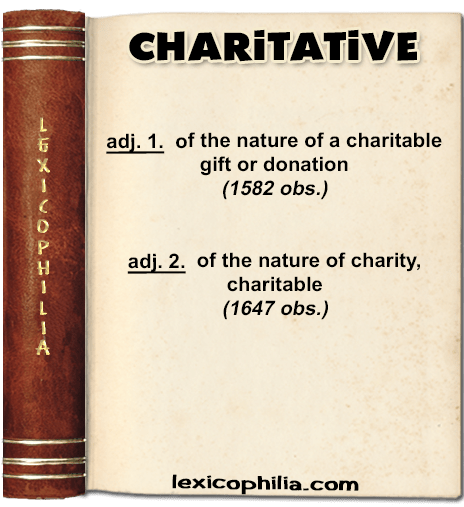
Word of the Day: CHARITATIVE


ETYMOLOGY
from Old French charitatif-ivecaritatif-ive, medieval Latin caritativus (charitable)


EXAMPLE
“…And  for  that  this  only  controversy  is  the  cause  of  this visitation,  I  do  mean  that  it  shall  be  merely  charitative,  and not  to  burden  the  clergy  of  any  procurations  as  yet;  and withal  not  to  trouble  your  lordship  much  longer  about  this matter  there,  than  you  shall  be  occasioned  otherwise  to  tarry for  the  speeding  of  the  visitation  of  the  church…”

From: The Remains of Edmund Grindal, 1843

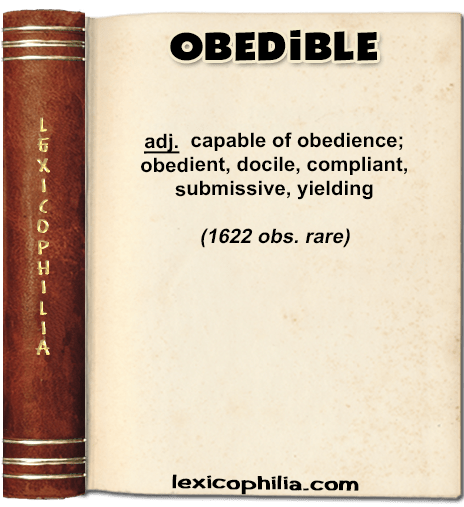
Word of the Day: OBEDIBLE


ETYMOLOGY
from Latin oboedire (to obey) + -bilis (-ble)


EXAMPLE
“…though Spirits have nothing material in their nature which that fire should work upon, yet by the judgment of the Almighty Arbiter of the world, justly willing their torment, they may be made most sensible of pain, and, by the obedible submission of their created nature, wrought upon immediately by their appointed tortures; besides the very horrour which ariseth from the place whereto they are everlastingly confined?…”

From: Contemplations upon the Remarkable Passages in the Life of the Holy Jesus
By Joseph Hall, 1623

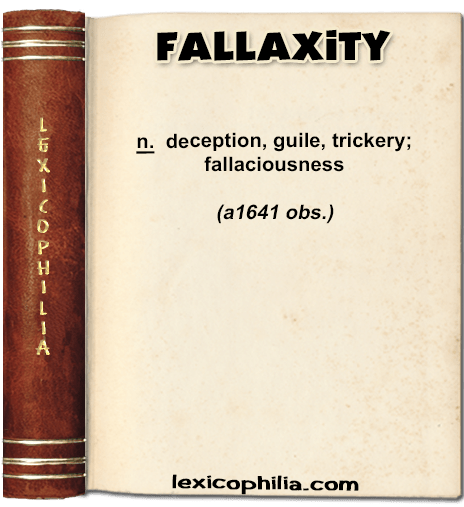
Word of the Day: FALLAXITY


ETYMOLOGY
from Latin fallax: from fallere (to deceive) + -ity


EXAMPLE
“...saying that then it shall appear before his Counsell the great deceit fallaxity and crafty waies cast and invironed to destroy and holy to an nyntyssement of your honor for ever…”

From: The Berkeley Manuscripts
The Lives of the Berkeleys
Lords of the Honour, Castle and Manor of Berkeley
In the County of Gloucester, From 1066 to 1618
John Smyth, a1641

Word of the Day: MUBBLE FUBBLES


ETYMOLOGY
of uncertain origin; possibly imitative


EXAMPLE
“…for there is no more sullen beast, than a he drab. Ile make him pull his powting croscloath over his beetle browes for melancholie, and then my next booke, shall be Martin in his mubble fubbles…”

From: Pappe with a Hatchet: 
Being a Reply to Martin Mar-prelate 
By John Lyly, 1589

Word of the Day: MINACIOUS


ETYMOLOGY
from Latin minac-minax (threatening), from minae (threats) + -ax + -ous


EXAMPLE
“…or with a pleasant horrour and chilness look upon some silent Wood, or solemn shady Grove; whether the face of Heaven smile upon us with a chearfull bright azure, or look upon us with a more sad and minacious countenance, dark pitchy Clouds being charged with Thunder and Lightning to let fly against the Earth; whether the Aire be cool, fresh and healthful, or whether it be soultry, contagious and pestilential, so that while we gasp for life we are forc’d to draw in a sudden and inevitable Death…”

From: An Explanation of the Grand Mystery of Godliness
By Henry More, 1660

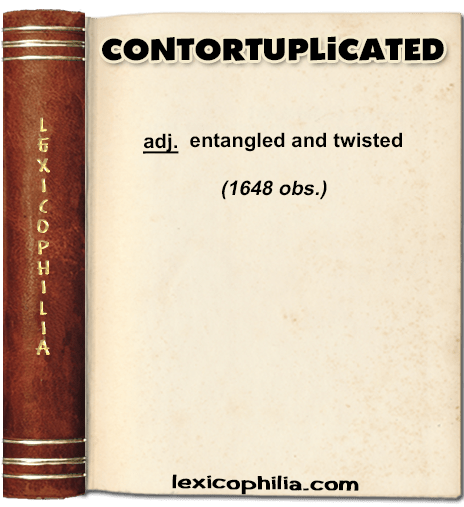
Word of the Day: CONTORTUPLICATED


ETYMOLOGY
from Latin contortuplicatus, from contortus (twisted together) + plicatus (folded)


EXAMPLE
“…Cruspini, who, in spite of his selfishness, is a shrewd dog, for a foreigner, says it is allowing to his violin; and he takes care that its influence shall not be wanting, for he eviscerates as much noise from its contortuplicated bowels, every day, as would disconcert a herd of swing remonstrating against a high wind…”

From: Thurlston Tales
“Grey Joan”
Robert Pierce Gillies, 1835

Word of the Day: INDEXTROUS


ETYMOLOGY
from in- + dexterous


EXAMPLE
“…An Issue must also be made with the hand of a skilfull Artist, for I have often observed from an indextrous way of making an Issue in the occiput a thousand mischiefs and death has followed: for if the Chirurgeon try to burn all the Skin with the Iron, I have often seen a Convulsion follow, and the child die of a most cruel death…”

From: Mercurius compitalitius;
Or, A Guide to the Practical Physician
By Theophill Bonet, 1684