Word of the Day

Word of the Day: UNPLAUSIVE

ETYMOLOGY
from un- + plausive (expressive of approval or praise),
from Latin plaus-, ppl. stem of plaudere (to applaud) + -ive

EXAMPLE
“… Achilles stands i’th entrance of his Tent;
Please it our Generall to passe strangely by him,
As if he were forgot: and Princes all,
Lay negligent and loose regard vpon him;
I will come last,’tis like heele question me,
Why such vnplausiue eyes are bent? why turn’d on him?
If so, I haue derision medicinable,
To vse betweene your strangenesse and his pride,
Which his owne will shall haue desire to drinke;
It may doe good, pride hath no other glasse
To show it selfe, but pride: for supple knees,
Feede arrogance, and are the proud mans fees. …”

From: The Tragedy of Troylus and Cressida
By William Shakespeare, 1609
Word of the Day: PLEASURANCE

ETYMOLOGY
from pleasure (vb.) + -ance

EXAMPLE
“… With a mighty noise, noye for to here,
Playnond with pytie, no
pleasurance at all,
With sykyng & sorow said on this wise:—
“A! fonnet folke, why fare ye thus now,
With solas full sore, and sanges of myrthe,
At the weddyng of the weghes, þat shall to wo turne.
…”

From: The “Gest Hystoriale” of the Destruction of Troy
from Guido de Colonna’s “Hystoria troiana.”, a1400

PRONUNCIATION
PLEZH-uh-ruhns

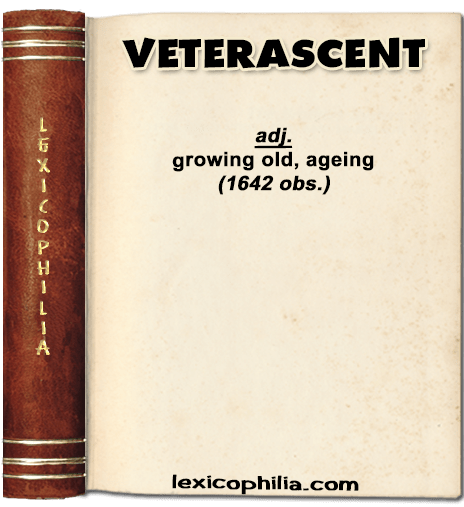
Word of the Day: VETERASCENT

ETYMOLOGY
from Latin veterascent-veterascens (present participle of veterascere to grow old),
from veter-vetus (old) + ‑ascere

EXAMPLE
“… This Vestis animae (as Tertullian calls it,) our body, the clothing of our soules, is daily veterascent and mouldring away; notwithstanding all the art wee use to patch up our obsolete faces and withered carkasses. O let our minds, that inward man, as the Eagle, be renewed daily …”

From: Three Sermons preached upon severall publike occasions by John Gauden, 1642

PRONUNCIATION
vet-uh-RASS-uhnt

Word of the Day: EMPTITIOUS

ETYMOLOGY
from Latin empticius (obtained by purchase), from empt- ppl. stem of emere (to buy) + ‑icius (‑itious)

EXAMPLE
“… but, diverted twixt fear of detection and zeal of working more good (upon the Presbyter) for the Catholike cause, we wheel’d about and got us to Newcastle; where we found the Gentleman that ran away from Oxford playing at Stowball with his Sodalitia, his guid chapmen; who (as emptitious as he was) though they valued him not, because sese inscendi passus est, he suffered himself to be fool ridden, yet knew well enough how to overvalue him. …”

From: Mutatus Polemo. The horrible strategems of the Jesuits, lately practised in England, during the Civil-Wars, and now discovered by a reclaimed Romanist.
By A.B., 1650

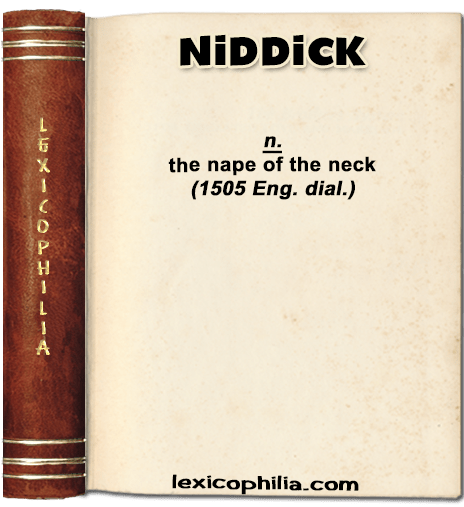
Word of the Day: NIDDICK

also NEDDICK, NIDDOCK, NODDOCKE, NUDDICK, NUDDOCK

ETYMOLOGY
of unknown origin

EXAMPLE
“… Like Almain rutters, borespeares longe they whirle, or foynyng forks,
Their nuddockes bolstred ben, and skulles of heads with barkes of corks
Thei shine with brasen sheeldes, thei shine with swords, & rapiers bright.
And thée to warres thy countrey Nursa sent, O noble knight,
O Vfens, much renowmed both of déedes, and great good chaunce,
Whose mountayne people strong, with practise longe of sworde & launce,
And huntyng still in woods, and breakyng clottes ben hard of flesh …”

From: The whole .xii. Bookes of the Æneidos of Virgill
Translated by Thomas Phaer, 1558

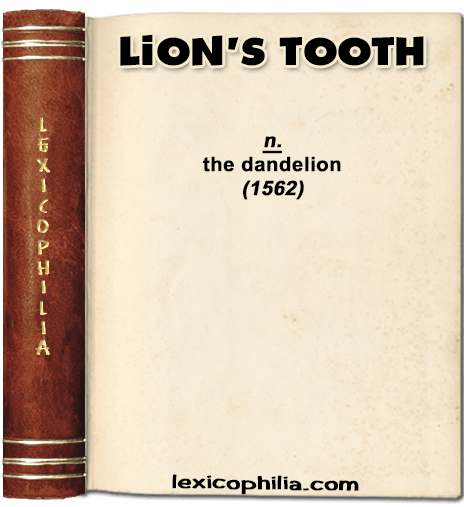
Word of the Day: LION’S TOOTH

also LION’S TEETH

ETYMOLOGY
from the French Dent de lion (lion’s tooth) (Latin Dens leonis)

EXAMPLE
“… It is temperate, cold, and drye with Roses and Uineger tepered togeather, it helpeth the hed in hotte diseases, the sowthistle called Sonchos hath ye same vertue & so hath Cicory: if they be sodden, the loose the belly & quencheth heat which burneth in the stomacke and defendeth the head from hot smoking vapoures, and purgeth yellow choller, and rebateth venerous & fleshly heat, & is good to be sodden & dronk in hote burning Agues: though this herbe be commonly knowen and counted of many as a vile wede, yet it is reported of Dioscorides to be an excellent herbe, & is called Lyons teeth. …”

From: Bulleins Bulwarke of Defence against all Sicknesse, Soarenesse, and VVoundes that doe dayly assaulte mankinde
By William Bullein, 1562
“The Booke of Simples”

Word of the Day: SHROWARDLY

ETYMOLOGY
perhaps from shrow (shrew, a wicked or malignant person), after frowardly

EXAMPLE
“… Now have I most unmanfully fallen foul upon some
Woman, I’le warrant you, and wounded her
Reputation
shrowardly: Oh drink, drink! thou
Art a vile enemy to the civillest sort of curteous
Ladies.
…”

From: The Comical Revenge, or, Love in a Tub
By George Etherege, 1664

Word of the Day: DISTROUBLE

ETYMOLOGY
Middle English from Old French destrobler‑troubler, from des-, Latin dis- + troblertroubler (to trouble)

EXAMPLE
“… Debonairly, and nothing loude,
He sayde, `I prey thee, be not wrooth,
I herde thee not, to sayn the sooth,
Ne I saw thee not, sir, trewely.’
`A! goode sir, no fors,’ quod I,
`I am right sory if I have ought
Destroubled yow out of your thought;
Foryive me if I have mistake.’
`Yis, th’amendes is light to make,’
Quod he, `for ther lyth noon ther-to;
Ther is nothing missayd nor do,’
Lo! how goodly spak this knight,
As it had been another wight;
…”

From: The Book of the Duchesse
By Geoffrey Chaucer, c1369

Word of the Day: SEVIDICAL

ETYMOLOGY
from Latin sævidicus; from sævus (fierce, furious) + dic- stem of dicere (to say, speak) + -al

EXAMPLE
“… Carolyn smiled and gave a crafty wink, “It means a filthy, slobbering person. That’s the way you left him wasn’t it? And I think we can assume he was quite sevidical in his comments about you, don’t you think? …”

From: Something to Crowe About
By E. W. Nickerson, 2013