
ETYMOLOGY
from participial stem of Latin coquinare (to cook), from coquinus( adj.), from coquus (cook)
EXAMPLE
Most chefs on reality cooking shows appear to be quite capable of coquinating, but like all reality shows, they’re probably scripted.
ETYMOLOGY
from participial stem of Latin coquinare (to cook), from coquinus( adj.), from coquus (cook)
EXAMPLE
Most chefs on reality cooking shows appear to be quite capable of coquinating, but like all reality shows, they’re probably scripted.
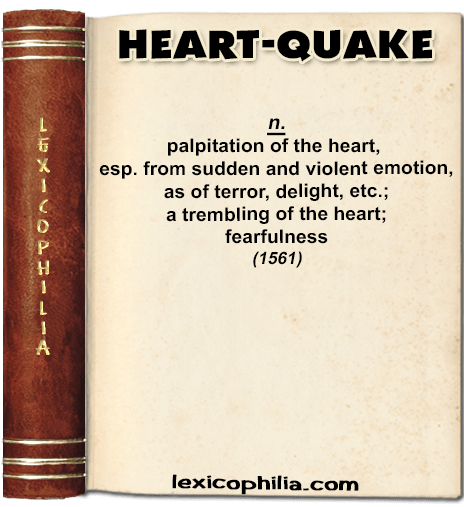
ETYMOLOGY
from heart (n.) + quake (n.)
EXAMPLE
“…This disease taketh somtyme the one membre, as hand or fote, somtyme the halfe body, or the tonge, so that a man can not speake: somtyme cometh it of ouermuche ioye, heuinesse, meate or drincke, ouermuche laboure, reste, slouthfulnesse, feare, swounynge, hartequake, and of superfluitye of bloode, flegma, colera or melancoly. …”
From: A Most Excellent and Perfecte Homish Apothecarye or Homely Physik Booke, for all the grefes and diseases of the bodye
By Hieronymus Brunschwig
Translated by Ihon Hollybush, 1561
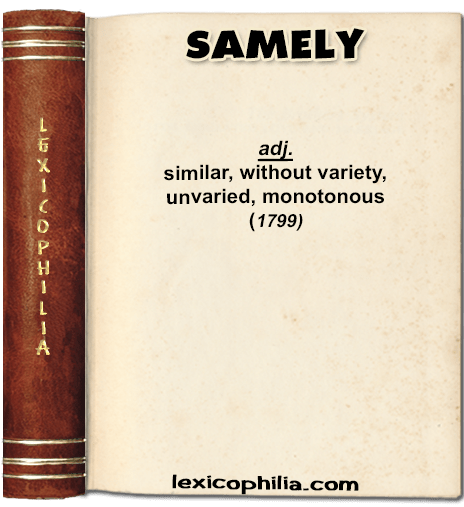
ETYMOLOGY
from same (adj.) + -ly
EXAMPLE
“…and by making judicious openings, so as to break straight lines, and separate parts that were in some places too heavy and samely: so that the same extent of land has now not only a much larger appearance, but exhibits a much greater variety of ground …”
From: Transactions of the Society of instituted at London for the Encouragement of Arts, Manufactures, and Commerce;
with Premiums offered in the Year 1799. Vol. XVII.
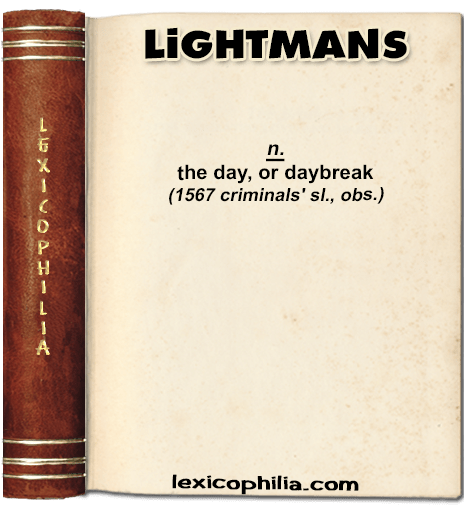
ETYMOLOGY
from light (adj.) + –mans (suffix forming nouns from adjectives and nouns in 16th century and early 17th century cant)
EXAMPLE
“…Bene lyghtmans to thy quarromes in what lipkē hast thou lipped in this darkemanes; whether in a lybbege or in the strummell? …”
(God morrowe to thy bodye, in what house hast thou lyne in all night whether in a bed, or in the strawe?)
From: A Caueat for commen Cvrsetors vulgarely called Uagabones
By Thomas Harmon, 1567

ETYMOLOGY
from Old English beswincan, from be- + swincan (to toil, to labour)
definition 2: probably for beswinge (as per OED)
EXAMPLE (for vb. 2.)
“… “Here now,” quod hunger “and holde it for a wisdome:
Bolde beggeres and bigge þat mowe her bred biswynke,
With houndes bred and hors bred holde vp her hertis,
Abate hem with benes for bollyng of her wombe;
And ȝif þe gomes grucche bidde hem go swynke,
And he shal soupe swettere whan he it hath deseruid ….”
From: The Vision of William concerning Piers the Plowman
By William Langland, 1377

ETYMOLOGY
from nip (to pinch, bite, squeeze tightly) + farthing
EXAMPLE
“…A goodlye dishe, who taughte the this?
why doste thou thus compare
Extremyties? Is there no shifte,
all spende, or els all spare?
I woulde the not a nipfarthinge,
nor yet a niggarde haue,
Wilte thou therefore, a drunkard be,
a dingthrifte, and a knaue?…”
From: A Medicinable Morall, that is, the two bookes of Horace his satyres
By Horace
Translated by Thomas Drant, 1566
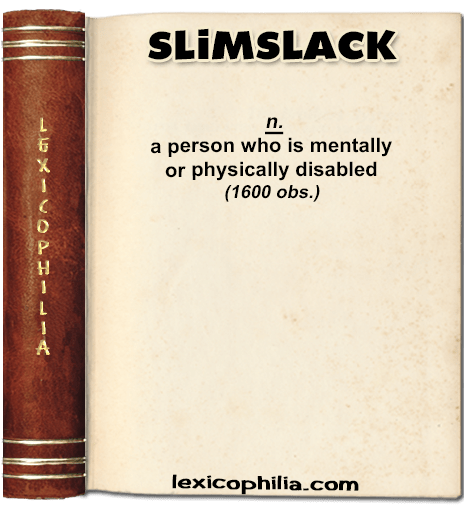
ETYMOLOGY
from slim (adj.) + slack (adj.)
EXAMPLE
“…Thou planter of Amfrisus, inhabiter of Parnassus, louer of Helicone; lord of fount Caballyne, patrone of the Laurell, inuentor of the Harpe, master of Astrologie, and prince of Phisicke, helpe these poore slimslacks, who haue need of internal remedies, for the restitution of their disturbed braine, destitute witte, obfuscate vnderstanding, lost memorie: …”
From: translation of The Hospitall of Incurable Fooles
By Tomaso Garzoni, 1600

ETYMOLOGY
corruption of ‘dubious’
EXAMPLE
“…The Squire,” said he, ” hadn’t a-made him no proposal at all, and was duberous if his charackter would serve. Now, says I to myself, seeing as how the cat jumps, if so be as I steps in, before nothing and scrape of pen, where ‘s the harm ? …”
From: Lawrie Todd, or, The Settlers in the Woods
By John Galt, 1830
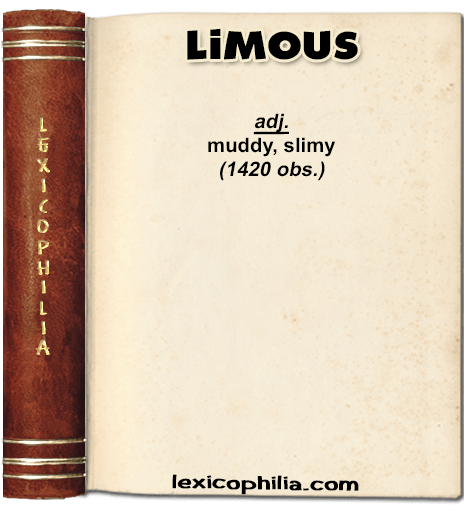
ETYMOLOGY
from Latin limosus, from limus (mud, slime)
EXAMPLE
“…This doon, the sydes make up with structure,
And footes VIII it hold in latitude.
With barres bigge is goode to make it sure ;
Or wall it well with ragge or flyntes rude.
In square or round this werk thai may conclude.
If water ther be lymous or enfecte
Admyxtion of salt wol it correcte. …”
(Make it eight feet wide and secure it with courses of wood, the walls being of ragstone or flint. A mixture of salt will correct muddiness.)
From: Palladius on Husbondrie: from the unique MS. of about 1420 A.D. in Colchester Castle
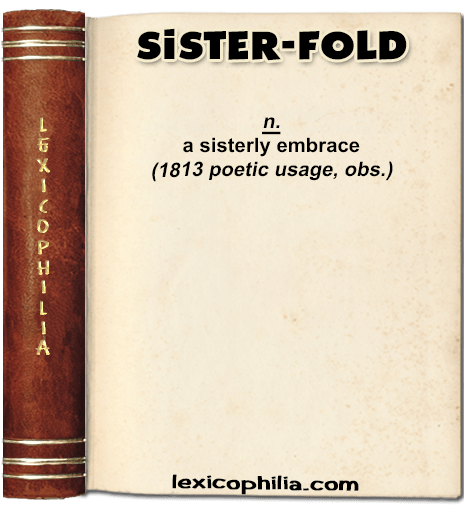
ETYMOLOGY
from sister + fold (a clasp or embrace, obs.)
EXAMPLE
“…Are these of such fantastic mould,
Seen distant down the fair arcade,
These Maids enlink’d in sister-fold,
Who late at bashful distance staid,
Now tripping from the greenwood shade,
Nearer the musing champion draw,
And, in a pause of seeming awe,
Again stand doubtful now? …”
From: The Bridal of Triermain
By Walter Scott, 1813
 Lexicophilia