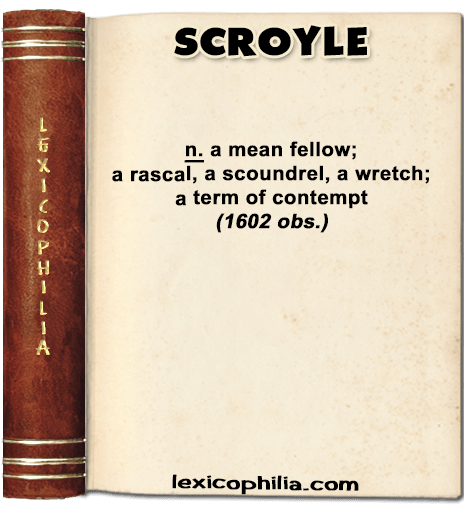
ETYMOLOGY
of unknown origin
EXAMPLE
“…Albius. For fault of a better, Sir.
Tucca. A better; prophane Rascall? I cry thee mercy (my good Scroile?) was’t thou?
Albius. No Harme, Captaine…”
From: Poetaster, or the Arraignment
By Ben Jonson, 1602
ETYMOLOGY
of unknown origin
EXAMPLE
“…Albius. For fault of a better, Sir.
Tucca. A better; prophane Rascall? I cry thee mercy (my good Scroile?) was’t thou?
Albius. No Harme, Captaine…”
From: Poetaster, or the Arraignment
By Ben Jonson, 1602
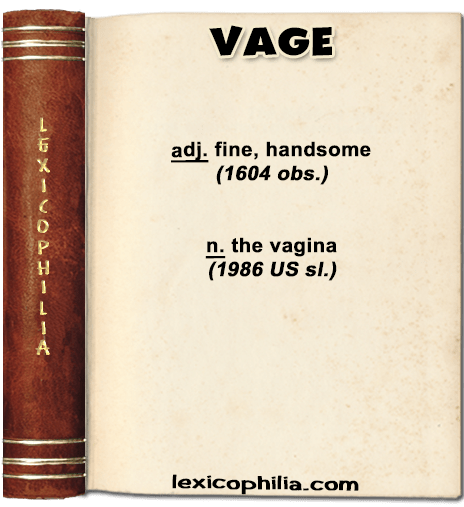
ETYMOLOGY
adj,: apparently from Italian vago
EXAMPLE
“…no doubt but better parts, finer colours, purer lights proportionably combined, cause a more excellent beautie, shew, and lustre: as the siner gold, the richer stones (if art bee correspondent) the more vage and beautifull iewell…”
From: The Passions of the Minde in Generall
By Thomas Wright, 1604
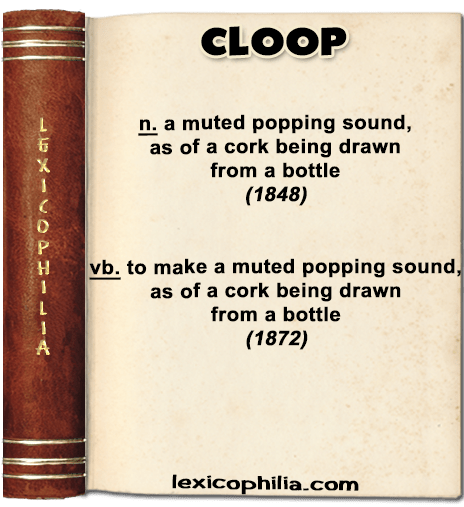
ETYMOLOGY
imitative
EXAMPLE
“…As she was speaking I heard a sort of cloop, by which well-known sound I was aware that somebody was opening a bottle of wine, and Ponto entered, in a huge white neckcloth, and a rather shabby black suit …”
From: The Book of Snobs
By William Makepeace Thackeray, 1848

ETYMOLOGY
for adj.: of obscure origin
for n.1.: from teat () + -y
EXAMPLE
“…but if they loose, though it be but a trifle, two or three games at tables, or a dealing at Cards for 2d a game, they are so cholericke and tetty that no man may speake with them, and breake many times into violent passions, oaths, imprecations, and vnbeseeming speeches, little differing from mad men for the time…”
From: The Anatomy of Melancholy
By Robert Burton, 1621
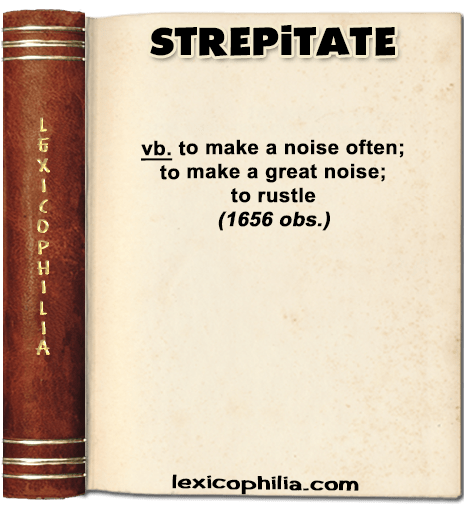
ETYMOLOGY
from Latin strepitat-, ppl. stem of strepitare (to make a repeated noise),
frequentative of strepere (to make a noise)
EXAMPLE
“…It’s yet, I say, to be mentioned to Uncle Harcourt, who’ll blow a stout gale, I know, enough to wreck some of us, when it is mentioned. He’ll strepitate finely, to use one of his own great words…”
From: Farquhar Frankheart; Or, Incidents in the Introduction of Methodism into Yorkshire
By Farquhar Frankheart, 1860

ETYMOLOGY
from merry (adj.) + thought (n.)
‘The name alludes to the custom of two persons pulling the furcula of a fowl until it breaks; according to the popular notion, the one who gets the longer (in some districts, the shorter) piece will either be married sooner than the other, or will gain the fulfilment of any wish he may form at the moment.‘
EXAMPLE
“…Fetherstone. O youle make her sicker then.
Greeneshield. I warrant you; would all women thought no more hurt then thou doost now, sweet villaine, Kate, Kate.
Kate. I longd for the merry thought of a phesant.
Greeneshield. She talkes in her sleepe….”
From: North-ward Hoe
By Thomas Dekker & John Webster, 1607
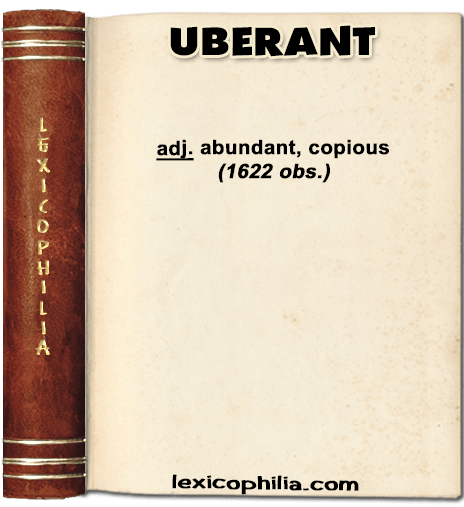
ETYMOLOGY
from Latin uberant-, uberans, pres. pple. of uberare, from uber (rich, plentiful)
EXAMPLE
“…Where the fountaine is vberant, needs must the streames bee fluent. This double compellation argue the double affection, and that produceth doubled lamentation…”
From: Elisha His Lamentation
By Charles Fitz-Geffry, 1622
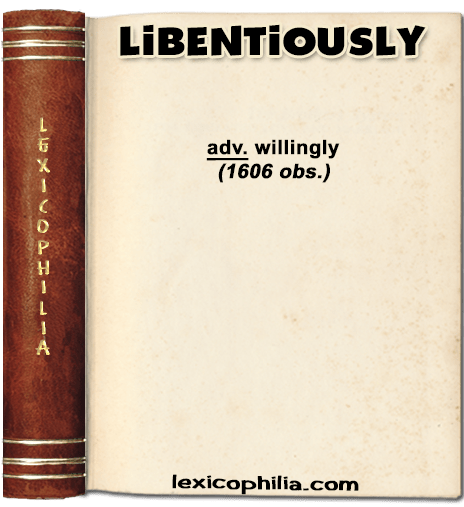
ETYMOLOGY
as if from libentious (from Latin libentia, from libentem, libens (willing)) + -ous + -ly
EXAMPLE
“…Most-what by Women, sillie Girles, youths, firie-wits, Ambitious,
By great, by needy Mal-Contents, by Credulous, and Vitious,
Work Romes Committees, & from flesh to fare much more delicious
Penance their Puples: whitest Sons these Seedsters and Seditious.
And, that for them libentiously Fooles-Catholike should erre,
Pensions, Canonizing at least, on Rome-wrights they conferre…”
From: A Continuance of Albions England
By William Warner, 1606
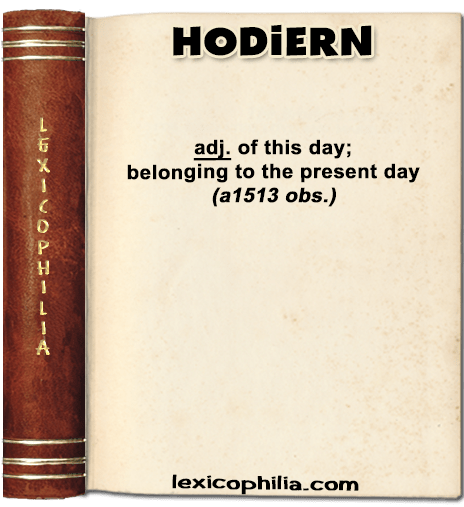
ETYMOLOGY
from Latin hodiernus, from hodie (to-day)
EXAMPLE
“…Hale, sterne superne, hale, in eterne
In Godis sicht to schyne,
Lucerne in derne for to discerne,
Be glory and grace devyne.
Hodiern, modern, sempitern,
Angelicall regyne,
Our tern inferne for to dispern,
Helpe, rialest rosyne…”
From: The Poems of William Dunbar (1998)
Ballad of our Lady, a1513
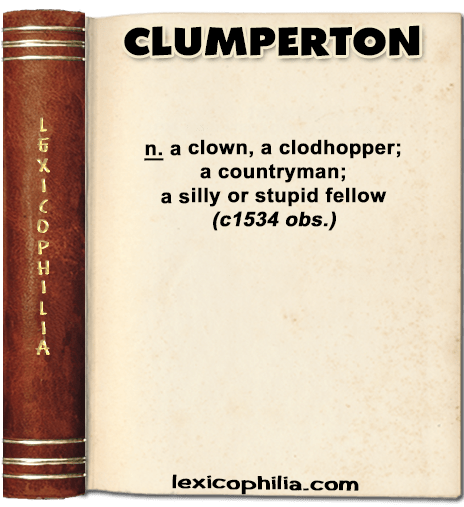
ETYMOLOGY
from clump or clumper (a lump, mass);
possibly on model of simpleton
EXAMPLE
“…Thus departinge from thence it chaunced him to stray asyde from his companie, and, fallinge into reasoninge and so to altercation with a stronge stubberne clomperton, he was shrowdlie beaten of him, yeat hee kepte him from beinge hurte of his menne, grauntinge that hee hadd well deserved those stripes…”
From: Polydore Vergil’s English History, c1534
from an early translation preserved among the mss. of the old royal library in the British museum
 Lexicophilia