Word of the Day

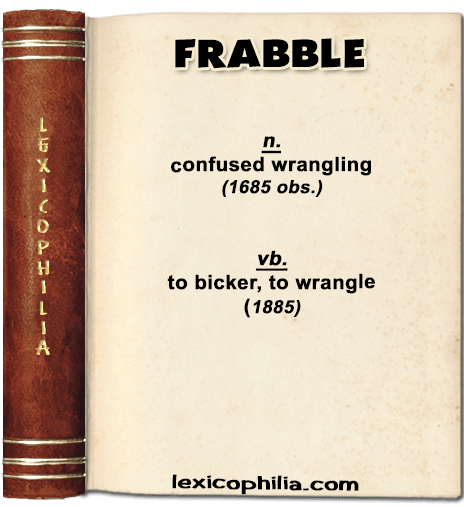
Word of the Day: FRABBLE

ETYMOLOGY
n. of unknown origin
vb. diminutive or frequentative of frab (to harass, worry)

EXAMPLE (for n.)
“… And those more refined Arians, how near they were to the Truth, or how near they might be understood to have come to the Truth, and that it might be proved to be rather a frabble of words than a distinct disagreement of senses, it were too operose a matter to declare here. How much some Fathers have cryed out against the over-much curiosity of Definitions by Councils, History will teach us. …”

From: Paralipomena Prophetica containing several supplements and defences of Dr Henry More his expositions of the Prophet Daniel and the apocalypse
By Henry More, 1685
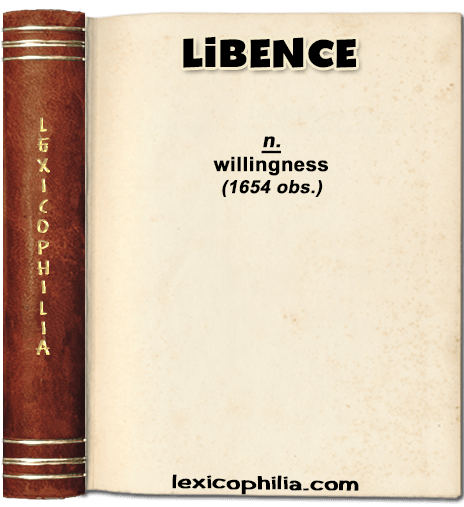
Word of the Day: LIBENCE

ETYMOLOGY
from Latin libentia, from libentemlibens (willing)

EXAMPLE
“… They say the appetit confined to good is volent, and therfore free: but this volence is a meer libence, free from coactiv violence; no tru liberty to chus several objects; and therfore not arbitrary, becaus bar’d of indifferency. …”

From: Theoremata Theologica: = Theological Treatises.:
Octo theses theologicæ: eight theses of divinity
By Robert Vilvain, 1654

Word of the Day: DIMICATION

ETYMOLOGY
from Latin dimicationem, noun of action, from dimicare (to fight)

EXAMPLE
“… At this time there was one Alexander, a godly and worthy man, Bishop of Constantinople. He in the dimication which arose about Arius, shewed himself a very prudent and pious man: For as soon as Arius came to Constantinople, he presently raised divisions amongst the people there also, so that great tumults ensued whilest one part of the people stood for the Faith confirmed by the Nicene Council: …”

From: The Marrow of Ecclesiastical History contained in the lives of one hundred forty eight fathers, schoolmen, first reformers and modern divines which have flourished in the Church since Christ’s time to this present age
By Samuel Clarke, 1654

Word of the Day: FLISKY

ETYMOLOGY
from flisk (to move or dance about in a frolicsome way, to frisk) + -y

EXAMPLE
“… An’ nane can nature’s charms enjoy, or manage weel the day’s employ,
Wha ay gang donarin nidy noy
To houſes
flisky,
An bletherin’ gie douse fock annoy,
Whan ramm’d wi Whisky
…”

From: Poems Pastoral, Satirical, Tragic, and Comic
By John Learmont, 1791
The Condemnation of Whisky

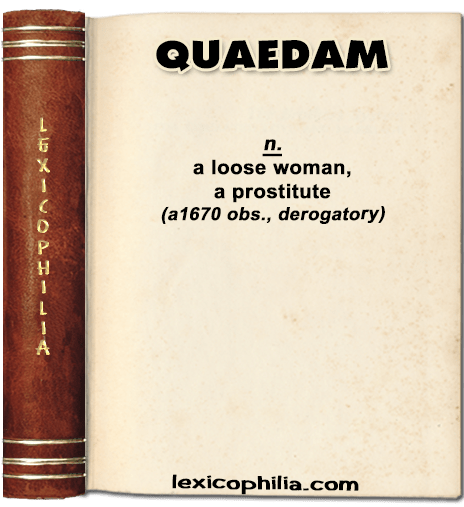
Word of the Day: QUAEDAM

ETYMOLOGY
from Latin quaedam (a certain woman), feminine singular of quidam (somebody)

EXAMPLE
“… So this Piece of his is very sweet in the Composure, and yet very tart against the sinfulness of vain Attire; wherein wanton Quaedams in those days came to that excess, that they delighted altogether in the Garb, and Habit, and roisterly Fashions of Men: This Sermon the King did greatly approve, as a fit Antidote against such corrupt Manners, and commanded it to be Printed. For the Doctor himself never wrote any thing, with intention to let the World see it in the Press, unless necessity constrain’d him. …”

From: Scrinia Reserata a memorial offer’d to the great deservings of John Williams, D. D., who some time held the places of Ld Keeper of the Great Seal of England, Ld Bishop of Lincoln, and Ld Archbishop of York
By John Hacket, 1693

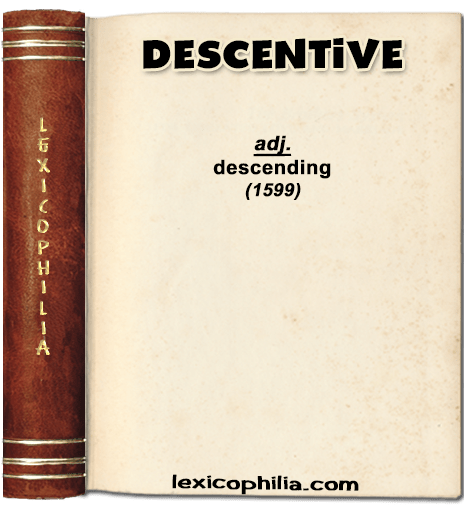
Word of the Day: DESCENTIVE

ETYMOLOGY
from descent + -ive

EXAMPLE
“… howsoeuer I purpose not in the like nice respect to leape ouer the laudable petigree of Yarmouth, but will fetch her from her swadling clouts or infancy, & reueale to you when and by whom she was first raught out of the oceans armes, and start vp and aspired to such starry sublimitie ; as also acquaint you with the notable immunities, franchises, priuileges she is endowed with beyond all her confiners, by the discentiue line of kings from the conquest. …”

From: Lenten Stuffe
By Thomas Nashe, 1599
The Praise of the Red Herring

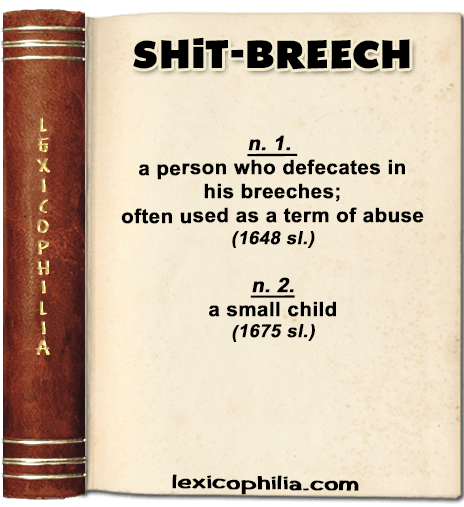
Word of the Day: SHIT-BREECH

ETYMOLOGY
from shit + breech

EXAMPLE
“… Reverend Alderman Atkins (the shit-breech) his speech,: to Mr. Warner the venerable Mayor of London, the wise aldermen, and most judicious Common-Councell men, in relation to the present affaires in Kent, Essex, and Surrey, concerning the Scots invasion, and His Majesties interest. Published for the honour of my Lord Mayor and Common-Councell men. …”

From: Title

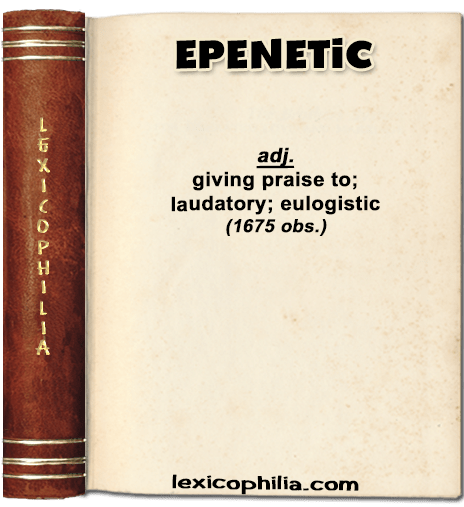
Word of the Day: EPENETIC

ETYMOLOGY
from Greek ἐπαινετικός, from ἐπαινεῖν (to praise)

EXAMPLE
“… another thing yet more considerable is conduct and design in whatever kind of Poetry, whether the Epic, the Dramatic, the Lyric, the Elegiac, the Epaenetic, the Bucolic , or the Epigram; under one of which all the whole circuit of Poetic design, is one way or other included; …”

From: Theatrum Poetarum, or, A Compleat Collection of the Poets especially the most eminent, of all ages, the antients distinguish’t from the moderns in their several alphabets
By Edward Phillips, 1675

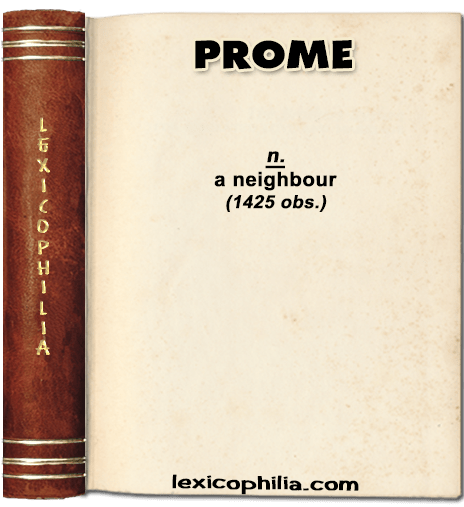
Word of the Day: PROME

ETYMOLOGY
from Old French promeproesme, and Middle French proisme (near), also as (n.) a neighbour, from Latin proximus (nearest)

EXAMPLE
“… First sal ye luue god wid al yure herte and wid al yure saul and wid al yure uertu, And ti prome als ti-self; sua ah ye at do …”

From: Three Middle-English versions of the Rule of St. Benet, a1425
By Saint Benedict, Abbot of Monte Cassino.
Edited by Ernst Albin Kock
Early English Text Society edition, 1902

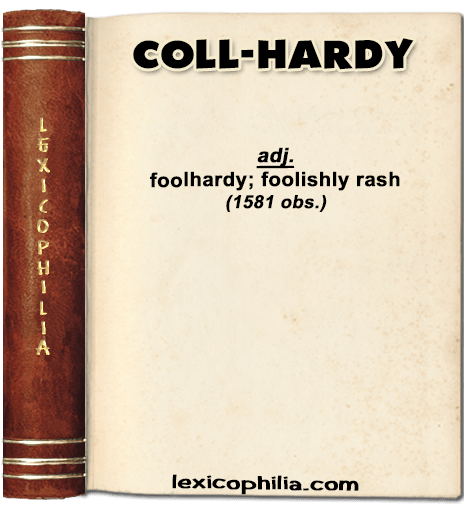
Word of the Day: COLL-HARDY

ETYMOLOGY
perhaps from coll (a fool, simpleton, dupe) + hardy,
though the dupe or simpleton is not exactly the type of the ‘hardy’ fool

EXAMPLE
“… Is this the profession of a Byshop? is this the Diuinitie of Osorius? Downe with that Pecockes tayle, away with this arrogancie: be no more so collhardy, and write hereafter more aduisedly, and take better regard to your penne, lest you bryng your name into odious contempt with all Christendome. …”

From: Against Ierome Osorius Byshopp of Siluane in Portingall and against his slaunderous inuectiues An aunswere apologeticall: for the necessary defence of the euangelicall doctrine and veritie,
By Walter Haddon and John Foxe
Translated by James Bell, 1581