Word of the Day

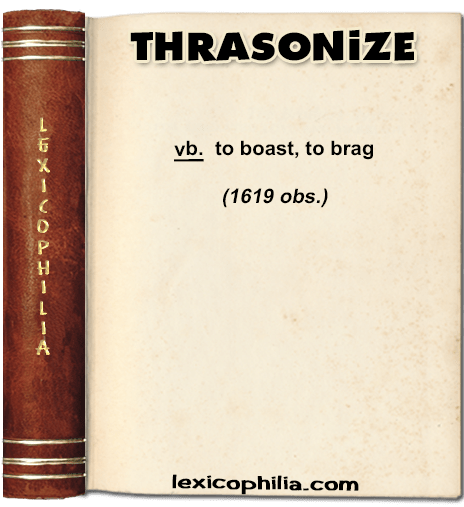
Word of the Day: THRASONIZE


ETYMOLOGY
from Latin Thrason-, Thraso Thraso, braggart soldier in the comedy Eunuchus by Terence


EXAMPLE
“…Warres austere God, with stout Achilles lance,
And wrinkled browes, doth Thrasonize it, rage:
Cornuted Phoebe, in her coach, doth prance:
Bacchus with grapes, doth stretch it on the stage:
Whiles this cup-saint, too lavish and profuse,
Embrews his temples in their liquid juice…”

From: ‘Ixions Wheele’ in Follie’s Anatomy,
By H. Hutton, 1619
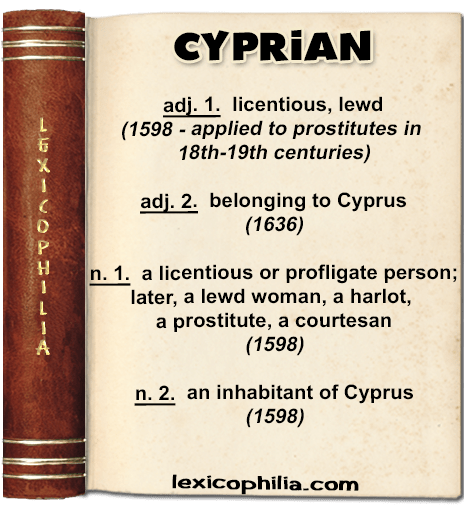
Word of the Day: CYPRIAN


ETYMOLOGY
from Latin Cyprius (of Cyprus) + -an;
in French cyprien


EXAMPLE
“…Shall Curio streake his lims on his dayes couch,
In Sommer bower? and with bare groping touch
Incense his lust, consuming all the yeere
In  Cyprian dalliance, and in Belgick cheere?
Shall Faunus spend a hundred gallions,
Of Goates pure milke, to laue his stallions,
As much Rose iuyce? O bath! ô royall, rich
To scower Faunus, and his salt proude bitch!
…”

From: The Scourge of Villanie
By John Marston, 1598

Word of the Day: POTHERY


ETYMOLOGY
from pother (disturbance, turmoil, bustle; noise, tumult) + -y


EXAMPLE
“…Meer Heat and Cold are very different things from that Pothery and Sultry, that Frosty and Congealing Weather, which alternately in Summer and Winter, at the Line and the Poles we usually now feel….”

From: A New Theory of the Earth
By William Whiston, 1696

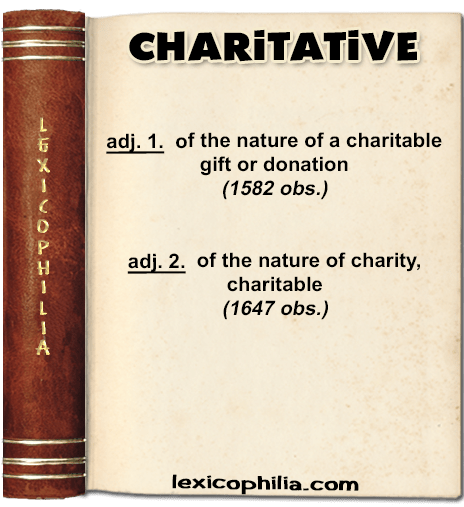
Word of the Day: CHARITATIVE


ETYMOLOGY
from Old French charitatif-ivecaritatif-ive, medieval Latin caritativus (charitable)


EXAMPLE
“…And  for  that  this  only  controversy  is  the  cause  of  this visitation,  I  do  mean  that  it  shall  be  merely  charitative,  and not  to  burden  the  clergy  of  any  procurations  as  yet;  and withal  not  to  trouble  your  lordship  much  longer  about  this matter  there,  than  you  shall  be  occasioned  otherwise  to  tarry for  the  speeding  of  the  visitation  of  the  church…”

From: The Remains of Edmund Grindal, 1843

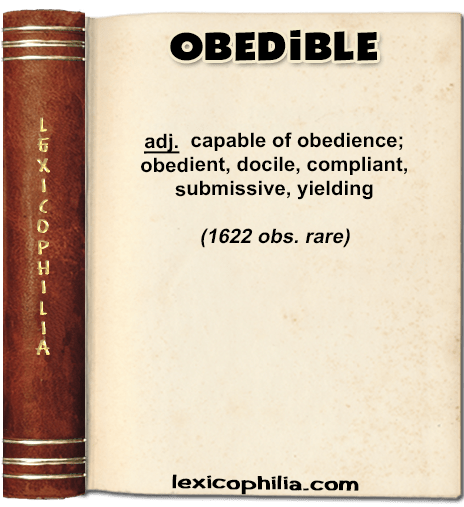
Word of the Day: OBEDIBLE


ETYMOLOGY
from Latin oboedire (to obey) + -bilis (-ble)


EXAMPLE
“…though Spirits have nothing material in their nature which that fire should work upon, yet by the judgment of the Almighty Arbiter of the world, justly willing their torment, they may be made most sensible of pain, and, by the obedible submission of their created nature, wrought upon immediately by their appointed tortures; besides the very horrour which ariseth from the place whereto they are everlastingly confined?…”

From: Contemplations upon the Remarkable Passages in the Life of the Holy Jesus
By Joseph Hall, 1623

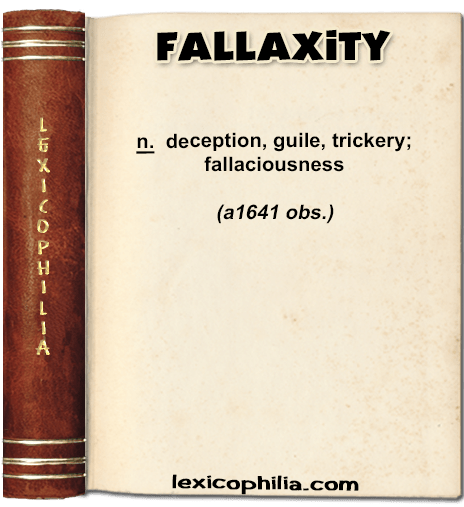
Word of the Day: FALLAXITY


ETYMOLOGY
from Latin fallax: from fallere (to deceive) + -ity


EXAMPLE
“...saying that then it shall appear before his Counsell the great deceit fallaxity and crafty waies cast and invironed to destroy and holy to an nyntyssement of your honor for ever…”

From: The Berkeley Manuscripts
The Lives of the Berkeleys
Lords of the Honour, Castle and Manor of Berkeley
In the County of Gloucester, From 1066 to 1618
John Smyth, a1641

Word of the Day: MUBBLE FUBBLES


ETYMOLOGY
of uncertain origin; possibly imitative


EXAMPLE
“…for there is no more sullen beast, than a he drab. Ile make him pull his powting croscloath over his beetle browes for melancholie, and then my next booke, shall be Martin in his mubble fubbles…”

From: Pappe with a Hatchet: 
Being a Reply to Martin Mar-prelate 
By John Lyly, 1589

Word of the Day: MINACIOUS


ETYMOLOGY
from Latin minac-minax (threatening), from minae (threats) + -ax + -ous


EXAMPLE
“…or with a pleasant horrour and chilness look upon some silent Wood, or solemn shady Grove; whether the face of Heaven smile upon us with a chearfull bright azure, or look upon us with a more sad and minacious countenance, dark pitchy Clouds being charged with Thunder and Lightning to let fly against the Earth; whether the Aire be cool, fresh and healthful, or whether it be soultry, contagious and pestilential, so that while we gasp for life we are forc’d to draw in a sudden and inevitable Death…”

From: An Explanation of the Grand Mystery of Godliness
By Henry More, 1660