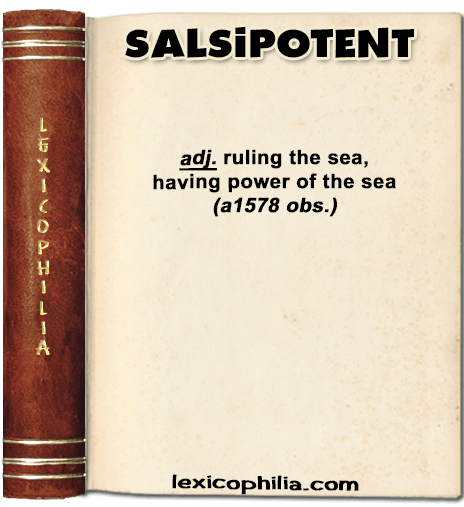
Word of the Day: SALSIPOTENT

ETYMOLOGY
from Latin salsipotentem, a false reading for salipotentem,
from salum (salt water) + potentem (having great authority or influence)

EXAMPLE
“…whearunto he made hiz fish to swim the swifter, and hy then declared: how the supream salsipotent Monarch Neptune, the great God of the swelling Seaz, Prins of profunditees, and Soouerain Segnior of all Lakez, freshwaterz, Riuerz, Créekes, and Goolphs…”

From: A Letter whearin part of the Entertainment vntoo the Queenz Maiesty at Killingwoorth Castl in Warwik Sheer
By William Patten, a1578
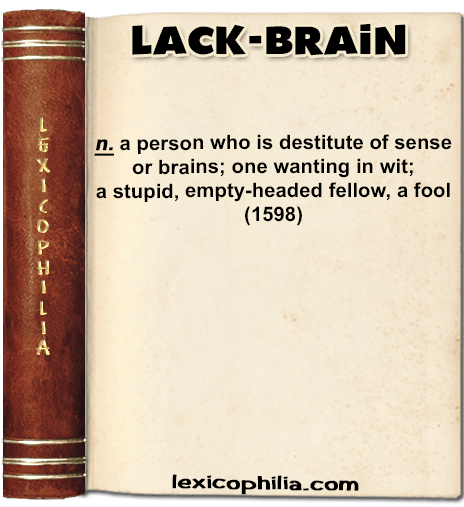
Word of the Day: LACK-BRAIN

ETYMOLOGY
from lack + brain

EXAMPLE
“…Say you so, say you so, I say vnto you againe, you are a shallow cowardly hind, and you lie: what a lacke braine is this? by the Lord our plot is a good plot, as euer was laid, our friends true and constant: a good plot, good friends, and ful of expectation: an excellent plot, verie good friends; what a frosty spirited rogue is this?…”

From: Henry IV, Part I
By William Shakespeare, 1598

Word of the Day: POLITIZE

ETYMOLOGY
from polity (a particular form of government or political organization),
from obsolete French politie, from Latin polītīa (state, government) + –ize

EXAMPLE
“…Matters of state we vse to politize,
Procrastinating for aduantage great,
LOVE, lingring hates, and lothes to temporize,
Delaie’s too olde, for his orewarmed heate:
Ah, doe not driue me of thus (still) in vaine,
Still for to lose tis much, once let me gaine
…”

From: Alba The Months Minde of a Melancholy Louer
By Robert Tofte, 1598

Word of the Day: DISMARRY

ETYMOLOGY
from 16th century French desmarier (‘to diuorce, vnwed, or vnmarrie’, Cotgrave),
from des- (dis-)  + marier (to marry)

EXAMPLE
“…And he was heyre to his father, and had fayre herytages, and was lykelye to enjoye more; howebeit, agaynst the yonge mannes mynde he was dismaryed, and maryed agayne to another gentylwoman, at the pleasure of the duke of Burgoyne and of the lorde de la Tremoyle…”

From: The Cronycle of Syr John Froissart
Translated out of French by Sir John Bourchier Lord Berners, 1525

Word of the Day: CLAWBACK

ETYMOLOGY
from ‘to claw the back of‘ (to flatter, fawn upon)

EXAMPLE
“…Yea, trouble not your self sir, ye may hauke and hunt, & take youre pleasure. As for the guiding of your kingdom and people, let vs alone with it.
These flattering clawbackes ar original rotes of all mischief
…”

From: The Second Sermon of Maister Hughe Latimer, which be Preached before King Edward
By Hugh Latimer, 1549

Word of the Day: INCREPATE

ETYMOLOGY
from Latin increpāt-, ppl. stem of increpāre (to make a noise at, scold, chide),
from in- (in-) + crepāre (to make a noise, creak, etc.)

EXAMPLE
“…Yes, Jonas is passionate, but God doth oppose him; he is eager upon a cruell bent, but God doth increpate, and interrogate him…”

From: God’s plea for Nineveh,
or, London’s Precedent for Mercy Delivered in Certain Sermons within the city of London
By Thomas Reeve, 1657

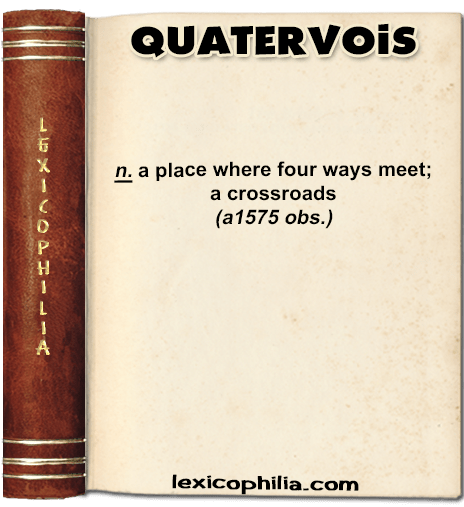
Word of the Day: QUATERVOIS

ETYMOLOGY
after French quatre (four) + voie (way)

EXAMPLE
“…Of these conduits two are speciall, the one of them standeth and is within the cemiterie or churchyard of the cathedrall church of the said citie, and is called saint Peters conduit: the other being of great antiquitie standeth in the middle of the citie, at the méeting of foure principall streets of the same, and whereof somtimes it tooke his name, being called the conduit at Quatrefois or Carfox; but now the great conduit…”

From: Raphael Holinshed’s Chronicle
By Abraham Fleming, 1587

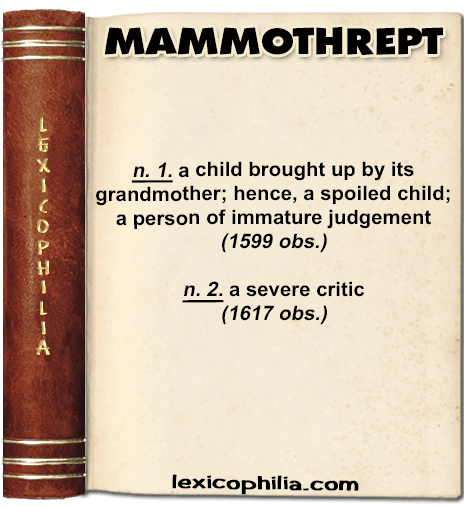
Word of the Day: MAMMOTHREPT

ETYMOLOGY
from  Latin mammothreptus, from Greek µαµµόθρεπτος (brought up by one’s grandmother),
from µάµµη (grandmother) + θρεπτός (vbl. adj.), from τρέϕειν (to bring up)

EXAMPLE
“…Amor. Nay play it I pray you, you do well, you do well: how like you it Sir?
Hed. Very well in troath.
Amor. But very well? O you are a meere Mammothrept in iudgement then; why do you not obserue how excellently the Ditty is affected in euery place? that I do not marry a word of short quantity, to a long Note, nor an zscending Sillable to a discending Tone
…”

From: The Fountaine of Selfe-Loue;
or, Cynthias Reuels
By Benjamin Jonson, 1601

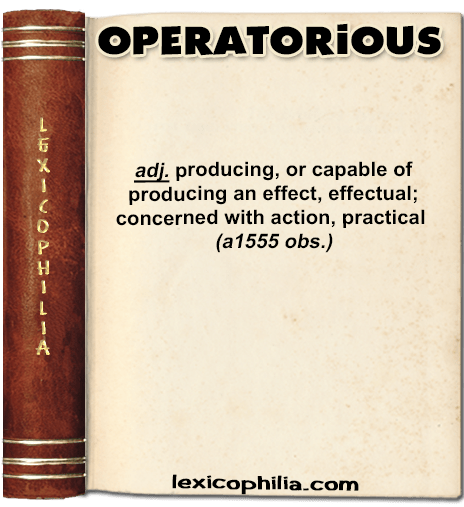
Word of the Day: OPERATORIOUS

ETYMOLOGY
from Latin operatorius (creating, forming) + -ous

EXAMPLE
“…For no Lesse are they effectuall to transubstantiate the cup, then their wordes spoken of the bread are operatorius & myghty to transubstātiate the bread. For as they say of the bread, Thys is my body, so say they of the Cup, This cup is the new testament…”

From: Two Notable Sermons
By John Bradford, 1574