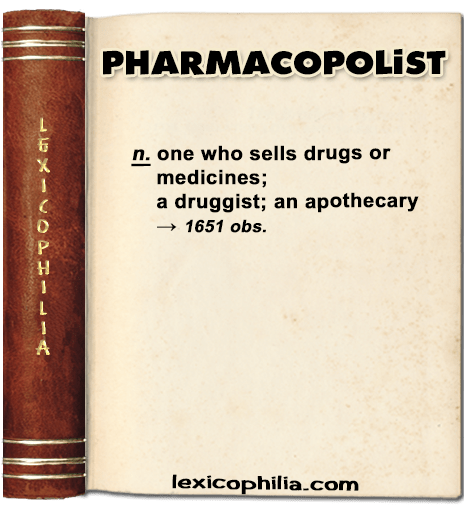
Word of the Day: PHARMACOPOLIST

ETYMOLOGY
from Latin pharmacopola, (from Greek ϕαρµακοπώλης (pharmakopoles) (dealer in drugs)) + -ist

EXAMPLE
“… That Science then, which enables men to look thorow the shop of medicine, the topick tabernacle of naturall powers, and teaches to unlock bodies that are shut, and to draw forth their hidden vertues, is not peculiar to the family of Pharmacopolists, nor truly is the Pharmaceutick part a hand-maid to it (as is the talk of ignorants) but is a powerfull Tecmarsis of naturall history.…”

From: Matæotechnia Medicinæ Praxeōs, The vanity of the craft of physick, or, A new dispensatory wherein is dissected the errors, ignorance, impostures and supinities of the schools in their main pillars of purges, blood-letting, fontanels or issues, and diet, &c., and the particular medicines of the shops
By Noah Biggs, 1651
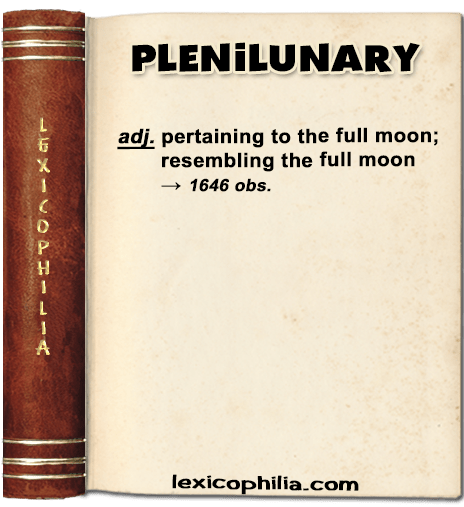
Word of the Day: PLENILUNARY

ETYMOLOGY
from pleni- (full) + lunary (pert. to the moon), after Latin plenilunium (full moon)

EXAMPLE
“… whereunto if we adde the two Aegyptian dayes in every moneth, the interlunary and pleniluary exemptions, the Eclipses of Sunne and Moone, conjunctions and oppositions Planeticall, the houses of Planets, and the site of the Luminaries under the signes, (wherein some would induce a restraint of Purgation or Phlebotomy) there would arise aboue an hundred more; …”

From: Pseudodoxia Epidemica, or, Enquiries into very many received tenents and commonly presumed truths;
By Thomas Browne, 1646

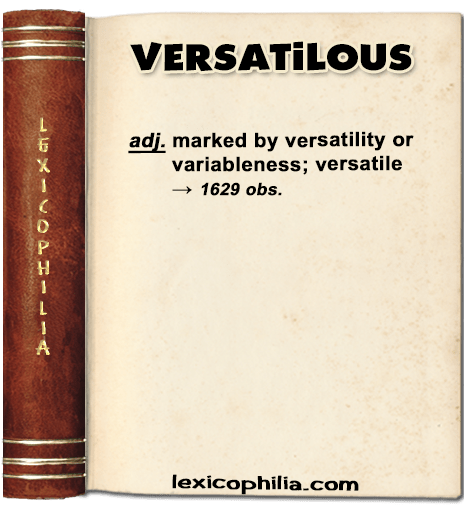
Word of the Day: VERSATILOUS

ETYMOLOGY
from Latin versatilis (versatile) + -ous

EXAMPLE
“… But the grounds of Diuinity in this point in hand, are farre more demonstratiue and certaine, than that of Copernicus his Philosophy. For he can finde no certaine demonstration of the heauens motion, but that he can stoppe with his versatilous wit; no more then my braine, earthy as it is, can be moued to beleeue his earths motion. …”

From: Truth’s Triumph ouer Trent: or, The Great Gulfe betweene Sion and Babylon
By Henry Burton, 1629

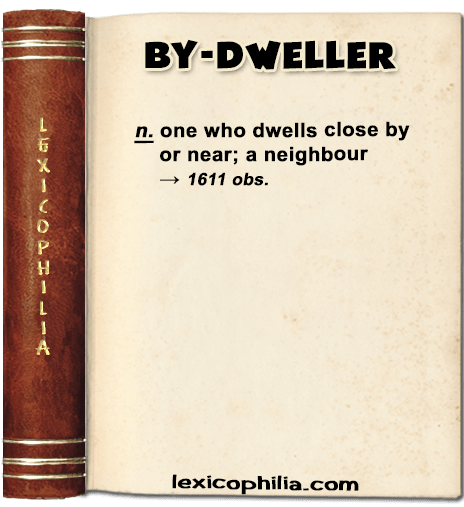
Word of the Day: BY-DWELLER

ETYMOLOGY
from by- + dweller

EXAMPLE
“… Their number encreasing, and doings outragious, Sir Edmund Windam Knight, at that time high Shiriffe of the Shire, made proclamation among them in the Kings
name to depart, which if they did not foorthwith, he pronounced them Traitors, but had not his Horse beene the swifter, he had beene either taken or slain, thereupon their terror began to be fearefull, & themselues to be furnished with weapons, Armour, and Artillery, daily brought them in abundance by the
By-dwellers, besides store of victuals to maintaine their Campe. ….”

From: The History of Great Britaine under the Conquests of ye Romans, Saxons, Danes and Normans. Their originals, manners, warres, coines & seales…
By John Speed, 1611

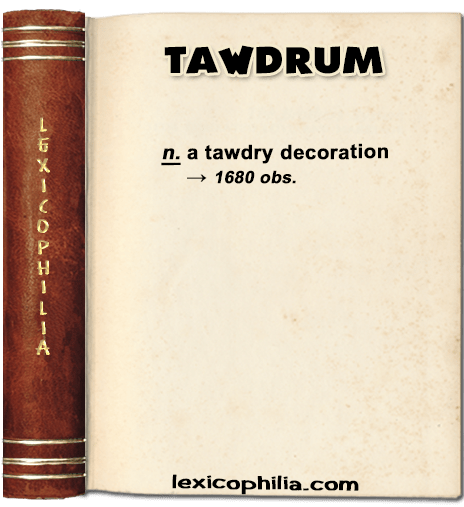
Word of the Day: TAWDRUM

ETYMOLOGY
from tawdry, with Latin ending -um 

EXAMPLE
“… Young Woman, young Woman, this is no time to think of Trifles, and gew gaws; the best dress is that of Repentance, let your Conscience be clean and neat within, and no matter for Lace and Tawdrums; dress up your Soul I say. …”

From: The Revenge, or, A Match in Newgate a Comedy
Usually attributed to writer, Aphra Behn, 1680

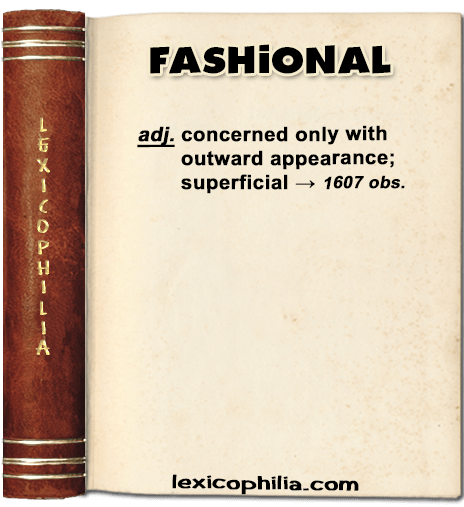
Word of the Day: FASHIONAL

ETYMOLOGY
from fashion (n.) + -al

EXAMPLE
“… I ought you a letter in verse before by mine owne promise, & now that you thinke you have hedged in that debt by a greater by your letter in verse I thinke it now most seasonable and fashionall for mee to break. At least, to write presently were to accuse my selfe of not having read yours so often as such a letter deserves from you to mee. …”

From: Poems
By John Donne, 1633
Letters‘, a1607

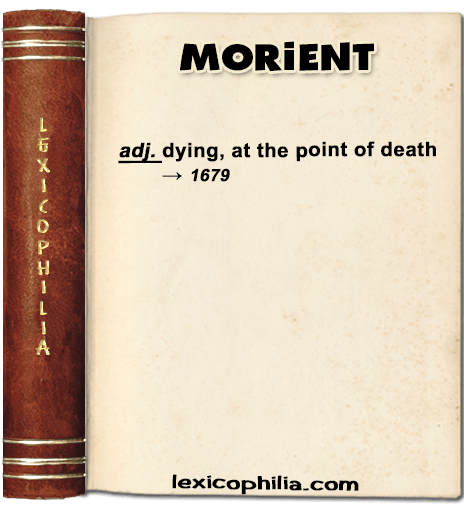
Word of the Day: MORIENT

ETYMOLOGY
from Latin morientem, present participle of mori (to die), cognate with mors (death) and mortuus (dead)

EXAMPLE
“… we see him (saith he) in our Day, by Luther, Calvin, Perkins, &c. who unmask’d him; and he adds a 6th Period, to wit, Morient, saying, If we do not, yet our Posterity shall see him die, for God saith, that his day is coming, …”

From:  A Distinct Discourse and Discovery of the Person and Period of Antichrist
By Christopher Ness, 1679

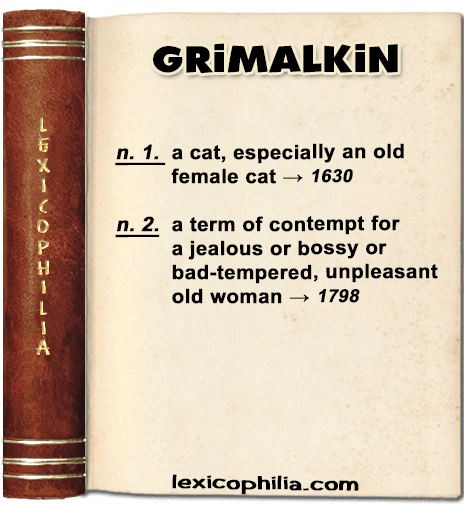
Word of the Day: GRIMALKIN

ETYMOLOGY
? Shakespeare’s Gray-Malkin, in “Macbeth,” 1605 = Gray cat

EXAMPLE
“… Your Muses, th’one a Youth, and one an Infant,
Gaue me two Panegericks at one Instant:
The first Pen, the first line it pleas’d to walke in,
Did make my Art a Rat, and like
Grimalkin,
Or a kinde needfull Vermin-coursing Cat.
By Art I play, but will not care your Rat.
I thanke you that you did so soone determine,
To Anagram my Art into a Vermine,
For which I vow, if e’re you keeps a Dayrie,
Of (now and then) a Cheese I will impaire yee.
…”

From: All the vvorkes of Iohn Taylor the water-poet
By John Taylor, 1630

PRONUNCIATION
grim-AL-kin

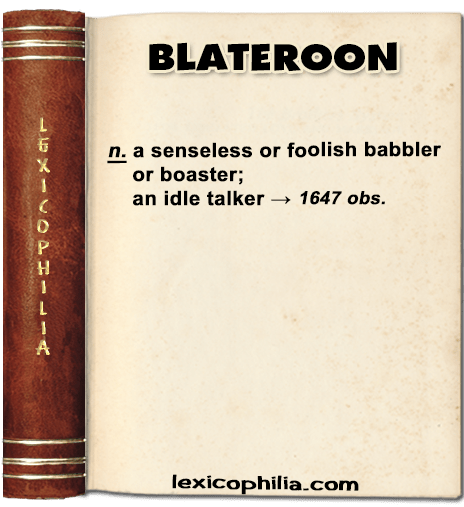
Word of the Day: BLATEROON

ETYMOLOGY
from Latin blatero-onem (babbler), from blaterare

EXAMPLE
“… I will endeavour to lose the memory of him, and that my thoughts may never run more upon the fashion of his face, which vou know he hath no cause to brag of; I hate such blateroons:
Odi illos ceu claustra Erebi
I thought good to give you this little mot of advice, because the Times are ticklish, of committing- secrets to anv, tho’ not to — Your most affectionate Friend to serve you,
j. H.
…”

From: A New Volume of Letters
By James Howell, 1647