Word of the Day: PORNERASTIC

ETYMOLOGY
from Greek πορνo- (porno- comb. form) + ἐραστής (lover) + –ic

EXAMPLE
“…We hear nothing of those petit creve vices, those pornerastic habits in high places, those Diamond-necklace scandals, those unmentionable gambols of the Porphyro-geniti, which are too often thrust before our eyes in fiction, and indeed in fact…”

From: The Fortnightly Review
Edited by John Morley,
Vol. VII New Series, January to June, 1870
The Romance of the Peerage
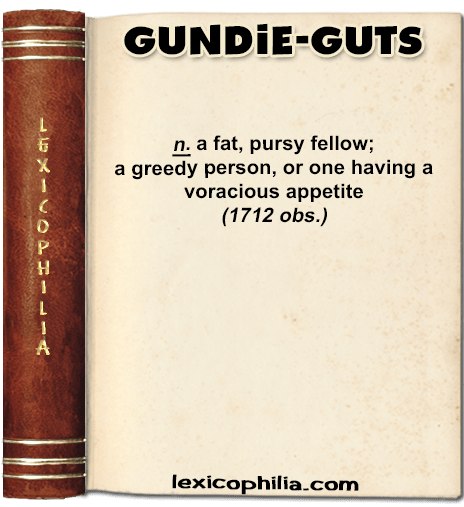
Word of the Day: GUNDIE-GUTS

ETYMOLOGY
from Scottish gundie (greedy, voracious) + guts

EXAMPLE
“…In short, these quarrels grew up to rooted aversions; they gave one another nick-names: she called him gundy-guts, and he called her lousy Peg, though the girl was a tight clever wench as any was, and through her pale looks you might discern spirit and vivacity, which made her not, indeed, a perfect beauty, but something that was agreeable…”

From: John Bull
By John Arbuthnot, 1712

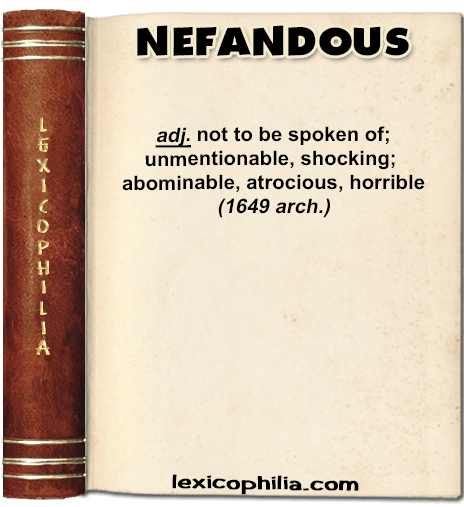
Word of the Day: NEFANDOUS

ETYMOLOGY
from Latin nefandus (wicked, impious, abominable),
from ne- (not) + fandus (‘to be spoken’), gerundive of fārī (to speak) + -ous 

EXAMPLE
“…and it was for such things that savourd of a forreign clyme, and of some soft Levantine spirit rather than of a Druinian; there was a complication of many nefandous crimes, Sodomy and rap met in him with other base libidinous acts, and those displayed and prov’d with hatefull and horrid circumstances…”

From: Δενδρολογια.
Dodona’s Grove, Or The Vocall Forest
By James Howell, 1649

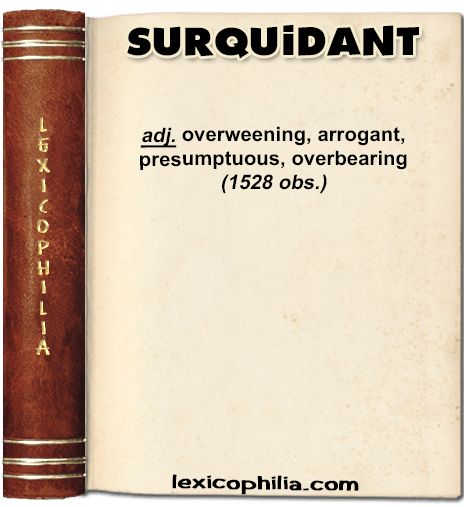
Word of the Day: SURQUIDANT

ETYMOLOGY
from Old French surcuidant (present participle of surcuidier
from popular Latin supercōgitāre ,
from super- (super- prefix) + cōgitāre (to think, to cogitate)

EXAMPLE
“…and yet they were but febly enformed in maister Porphiris problemes, and haue waded but weakly in his thre maner of clerkly workes, analeticall, topicall, and logycall: howbeit they were puffed so full of vaynglorious pompe and surcudant elacyon, that popholy and peuysshe presumpcion proyoked them to publysshe and to preche to people imprudet perilously…”

From: Honorificatissimo: Replycacion agaynst Yong Scolers
By John Skelton, 1528

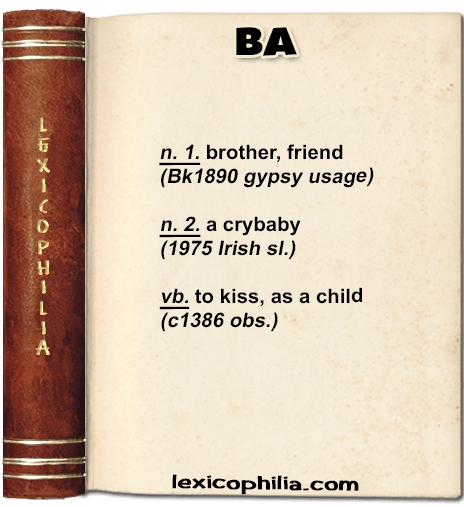
Word of the Day: BA

ETYMOLOGY
for the verb: probably a nursery or jocular word, imitating the action of the lips in an infant’s kiss; 
Old French has baerbeer (to open the mouth, to gape);
also, possibly a contracted form of basse (to kiss)

EXAMPLE (for verb)
“…Thanne wolde I seye, “Goode lief, taak keep
How meekly looketh Wilkyn, oure sheep!
Com neer, my spouse, let me ba thy cheke!
Ye sholde been al pacient and meeke
…”

From: The Wife of Bath’s Prologue
By Geoffrey Chaucer, c1386