Word of the Day

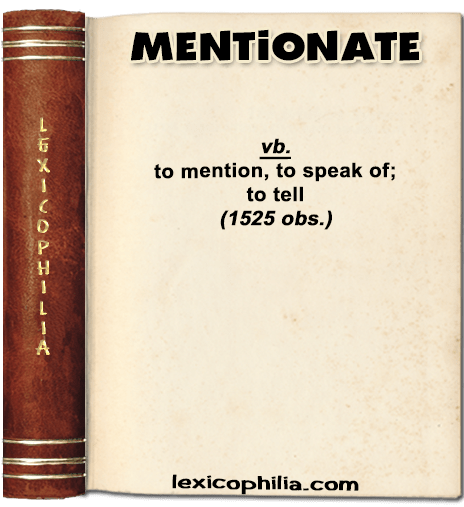
Word of the Day: MENTIONATE


ETYMOLOGY
from Latin mentionatus, pa. pple. of mentionare (to make mention of)


EXAMPLE
“…Ffinally,  in  my  moste  humble  wise,  eftsones  I thanke  your  Grace  for  your  singular  goodenes  afor mentionate  both  concernyng  me  and  also  the  Commons…”

From: Original Letters: Illustrative of English History
Edited by Henry Ellis, 1846
Letter CXXXI. Archbishop Warham to Cardinal Wolsey; c1525
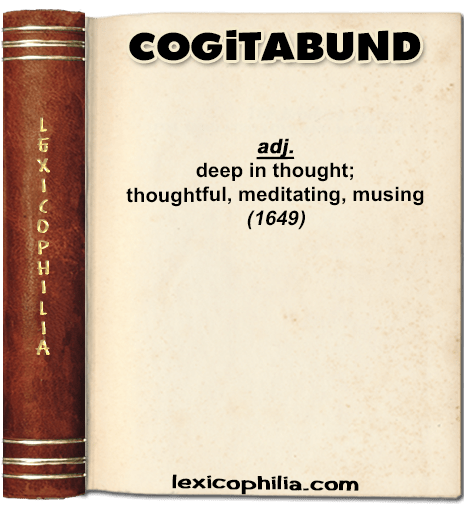
Word of the Day: COGITABUND


ETYMOLOGY
from Latin cogitabundus (thinking), from cogitare (to think)


EXAMPLE
“…To turn the apple of the eye towards the Nose, is their peculiar action who are Sowre and Severe; for, such are of a Contuitive, Grave, and Cogitabund aspect, such as is seen in those who with some Tragicall and Goblin-like look would affright and scare others…”

From: Pathomyotamia
By John Bulwer, 1649

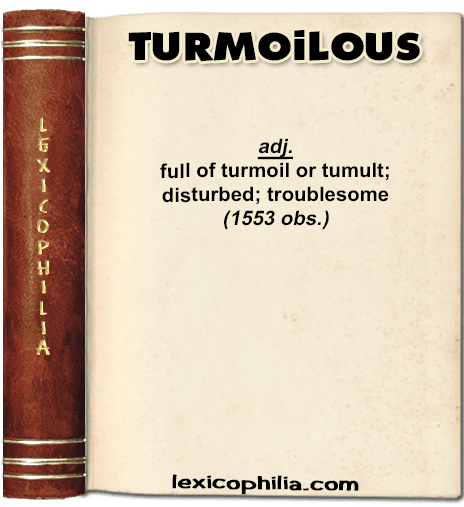
Word of the Day: TURMOILOUS


ETYMOLOGY
from turmoil + -ous


EXAMPLE
“…but trueth hys frende more then they bothe, euen so I thinke it no iniurye nor contumelye to Saynct Augustyne, yf the same were sayde of hym also geuynge hym otherwyse hys dewe commendacions, as he was surelye an excellent man, of dyuyne wytte, and knowledge, and so trauayled in settynge foorth Christes true Relygion in those turmoylous dayes, in perpetual combatte, agaynste learned heretykes and Prynces of the worlde, that he is worthelye called a Doctour and Pyller of Christes Churche…”

From: A Treatyse of the Newe India with other New Founde Landes and Islandes
By Sebastian Münster
Translated by Richard Eden, 1553

Word of the Day: OPSIGAMY


ETYMOLOGY
from Greek ὀψιγαµία (opsigamia, marriage late in life),
from ὀψίγαµ-ος (late-married),
formed on ὀψέ, ὀψι– (late) + γάµος (marriage)


EXAMPLE
“…Nor is there any danger of Donald’s being flogged for opsigamy by the Highland nymphs, as the Spartans were of old. Marriage is here as much matter of course as eating and drinking; and as the sexes are more truly balanced than in Arabia, no pining damsel need sing, “Oh what will I do for a man…”

From: The Highlands and Western Isles of Scotland
By John Macculloch, 1824

Word of the Day: JARGOGLE


ETYMOLOGY
of unknown origin;
possibly a confused extension of jargon (n.)


EXAMPLE
“…Whether all you say have any thing more in it than this, I appeal to my readers: and should willingly do it to you, did not I fear, that the jumbling of those good and plausible words in your head, “of sufficient evidence, consider as one ought,” &c. might a little jargogle your thoughts, and lead you hoodwinked the round of your own beaten circle…”

From: The Works of John Locke
Vol. 5 Four Letters concerning Toleration
A Third Letter for Toleration
By John Locke, 1692

Word of the Day: STULTITIOUS


ETYMOLOGY
for adj. 1: from Latin stultitia (folly),
from stultus (foolish)


EXAMPLE
“…In Wales in diuers places is vsed these two stulticious matters, the fyrste is, that they wyl sell their lams, and theyr calues, and theyr corne the whyche is not sowen, and all other newynges, a yere before that they be sure of any newynge; and men wyl bye it, trustynge vppon hope of suche thynges that wyl come…”

From:
The Fyrst Boke of the Introduction of Knowledge
By Andrew Boorde, 1549

Word of the Day: SITIBUND


ETYMOLOGY
from Latin sitibundus (thirsty),
from Latin sitio (to be thirsty) + abundo (to abound)


EXAMPLE
“…The spas of Germany turned the tide towards Kissingen, Wildbad, and Carlsbad; and now Vichy will be the Thule of the sitibund Britishers who like to drink mineral water in good company, and now learn that they are certain to find both in perfection at Vichy…”

From:
The Mineral Springs of Vichy
By Augustus Bozzi Granville, 1859