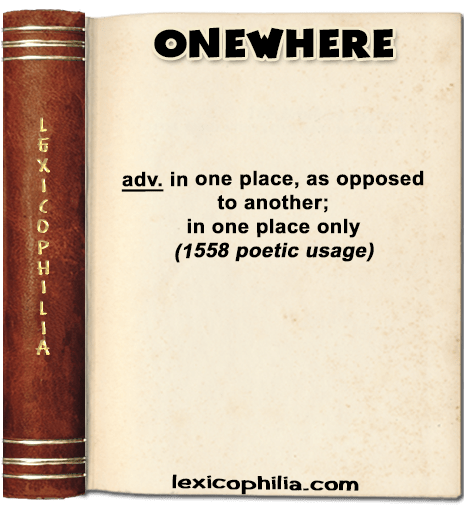
Word of the Day: ONEWHERE


ETYMOLOGY
from one + where, after somewherenowhere


EXAMPLE
“…if we translate the Hebrew or the Greek word once by purpose, never call it intent; if onewhere journeying, never traveling, if one where think, never suppose; if one where pain, never ache; if one where joy, never gladness…”

From: Bible (King James)
Translator Miles Smith, 1611

Word of the Day: MAUMISH


ETYMOLOGY
possibly from maum (mellow, soft, esp. over-ripe) + ish 


EXAMPLE
“…but she fed more vpon fancie, than glutted hir selfe with any cates there presente: more vpon daintie deuices, than any parcell of repast: for this meate forsooth was mawmish, & this melancholie: this dish would driue hir to drincke, and this cause hir to drie…”

From: Narbonus The Laberynth of Libertie
By Austin Saker, 1580

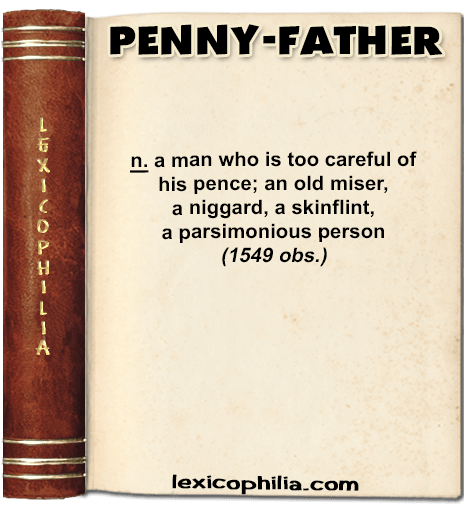
Word of the Day: PENNY-FATHER


ETYMOLOGY
from penny + father


EXAMPLE
“…This skapethrifte, throweth his good{is} against the walles. That pennie father, skrapeth it togethers, bothe by God, and by the diuell…”

From: The Praise of Folie
Moriæ encomium a booke made in Latine by that great clerke Erasmus Roterodame,
Translated by Thomas Chaloner Knight, 1549

Word of the Day: DEROGATORIOUS


ETYMOLOGY
from Latin derogatorius derogatory + -ous


EXAMPLE
“…if the said archbishop intermeddled after the said provocation, his doings were derogatorious not only to the dignity of the patriarche but to the supremacy of the Pope and to the authority also of the general Counsell…”

From: A Treatise on The Pretended Divorce Between Henry VIII and Catharine of Aragon
By Nicholas Harpsfield, a1575
Modernized Text By Nicholas Pocock, 1878

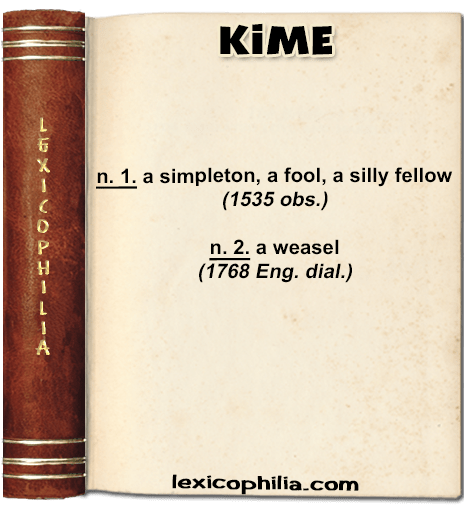
Word of the Day: KIME


ETYMOLOGY
of uncertain origin


EXAMPLE
“…The Emperour yaf the Pope somtyme
So hyghe lordshyp hym aboute,
That at the laste the sely kyme
The proude Pope putte hym out!
So of thys realme is in doute,
But lordes be ware and them defende;
For nowe these folke be wonder stoute:
The kynge and lordes nowe thys amende!
…”

From: The Ploughman’s Tale, c1535

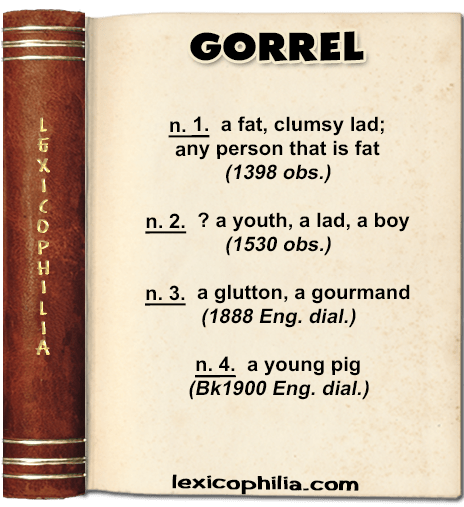
Word of the Day: GORREL


ETYMOLOGY
from Old French gorelgorreau (a pig, hog);
related to Old French gore (sow): of unknown origin.


EXAMPLE (for n. 1.)
“…Crampe that comyth of replycyon fallyth ofte to fatte men and flesshly and well fedde and gorrelles…”

From: Bartholomew de Glanville’s De Proprietatibus Rerum,
Translated by John Trevisa, 1495