Word of the Day: HIRPLE


ETYMOLOGY
of unknown origin;
the coincidence in sound and sense with Greek ἕρπειν from ἕρπω (hérpō) (to move slowly),
is noticeable.


EXAMPLE
“…The bull: the beir: the bugill: and the bair:
The wodwys: vildcat: and the wild wolfyne:
The hardbakkit hurcheoun: and the hirpland hair:
Baith otter and aip: and pennit porcupyne.
The gukit gait: the selie scheip the swyne:
The bauer bakon and the balterand brok:
The fowmart, with the fyber furth can flok
…”

From: The Morall Fabillis of Esope the Phrygian
“The taill of the sone & air of the forsaid foxe”
Robert Henryson, a1500
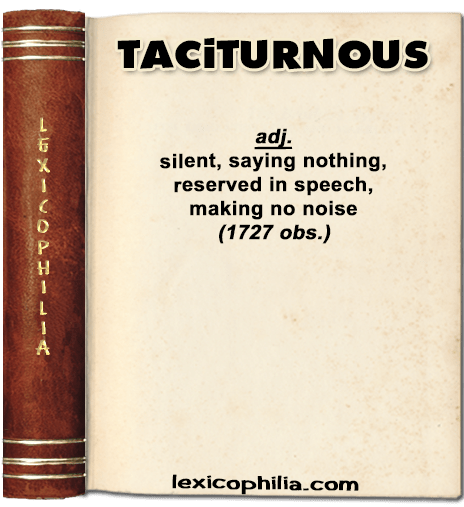
Word of the Day: TACITURNOUS


ETYMOLOGY
from Latin taciturnus (taciturn) + -ous


EXAMPLE
“…The Legate was more taciturnous, and seldom entered into conversation with the Embassador, who, very prudently, forbore to ask questions about China in his presence…”

From: An Historical Account of the Embassy to the Emperor of China
By Earl George Macartney Macartney, 1797

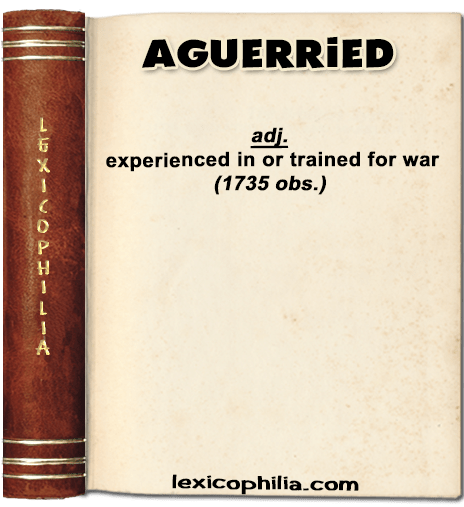
Word of the Day: AGUERRIED


ETYMOLOGY
from French aguerri, (to accustom to war) + -ed


EXAMPLE
“…But, said he, we have an army to defend us in case of an invasion; an army maintain’d in time of peace, and the best aguerried of any troops in Europe that have never seen an enemy…”

From: Letters from a Persian in England to his Friend at Ispahan
By George Lyttelton, 1735

Word of the Day: GRACILENT


ETYMOLOGY
from Latin gracilentus (slender, thin),
from gracilis (gracile, gracefully slender) + -entus


EXAMPLE
“…his old  scratch-wig  awry,  and  his  garments  sadly  bespeaking wretchedness;  we  think  we  can  see  him, with  this  outward  repulsiveness  of  appearance,  sitting down  to  give  a  gracilent  opinion  of  the  canine species…”

From: The Ladies’ Repository
A Monthly Periodical Devoted to Literature and Religion, January, 1852
“Thoughts on a Canine Subject”
By James Pummill

Word of the Day: SITIBUND


ETYMOLOGY
from Latin sitibundus (thirsty),
from Latin sitio (to be thirsty) + abundo (to abound)


EXAMPLE
“…The spas of Germany turned the tide towards Kissingen, Wildbad, and Carlsbad; and now Vichy will be the Thule of the sitibund Britishers who like to drink mineral water in good company, and now learn that they are certain to find both in perfection at Vichy…”

From:
The Mineral Springs of Vichy
By Augustus Bozzi Granville, 1859

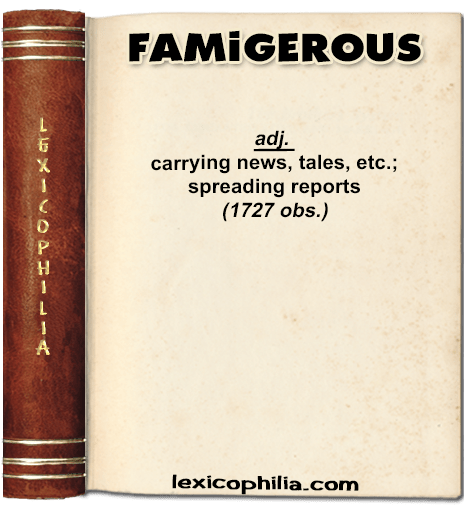
Word of the Day: FAMIGEROUS


ETYMOLOGY
from Latin famigerare; formed on fama (a being much talked about, report) + gerere (to carry)


EXAMPLE
“…Renowned Sir, I made bold to beautify and embellish this worthless contemned work I am upon, with the oriental lustre of your eminent and deservedly most famigerous name: for which presumption I intended to crave your pardon, and behold! I am prevented, not with your absolution only, but with a grateful acceptance…”

From: The Whole Works of the Rev. John Lightfoot
Edited by the Rev. John Rogers Pitman, Volume XIII. 1824
Letters to and from Doctor Lightfoot. Letter XXVII.

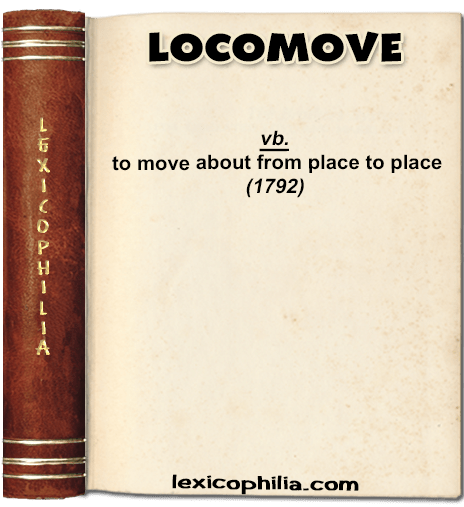
Word of the Day: LOCOMOVE


ETYMOLOGY
from Latin loco, ablative of locus (the place in which something is situated or occurs) + move


EXAMPLE
“…A Journey in a Postchaise
To his Brother
Passenham, July 16, 1792

Dear Brother, – It is high time you should know something about us and our locomotions. To-morrow morning, at six of the clock, we begin to loco-move towards Bitteswell
…”

From: Recreations and Studies of a Country Clergyman of the Eighteenth Century
By Thomas Twining (letter)

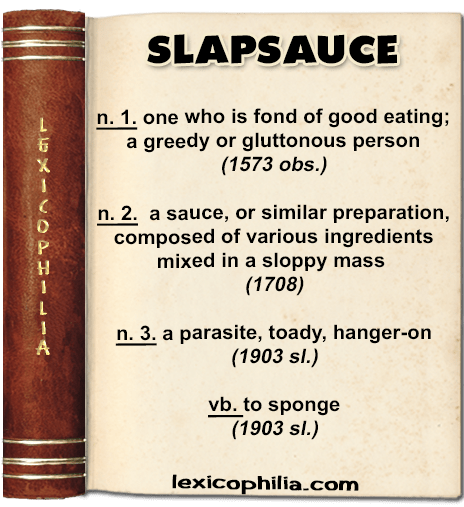
Word of the Day: SLAPSAUCE


ETYMOLOGY
from slap (to lap → Eng. dial.) + sauce


EXAMPLE
“…At dinner and supper the table doth craue
good fellowly neighbour good manner to haue.
Aduise thee well therefore, ere tongue be too free,
or slapsauce be noted too saucie to bee…”

From: Points of Huswifrie
In Fiue Hundreth Points of Good Husbandry
By Thomas Tusser, 1573