ETYMOLOGY
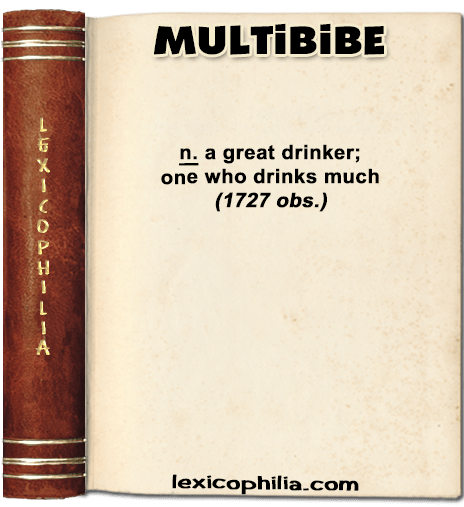
from Latin multibibus, from multi- + -bibus drinking, bibĕre to drink
EXAMPLE
Now and then I turned aside to avoid some noisy multibibe as he reeled homewards.
ETYMOLOGY
from Latin multibibus, from multi- + -bibus drinking, bibĕre to drink
EXAMPLE
Now and then I turned aside to avoid some noisy multibibe as he reeled homewards.
ETYMOLOGY
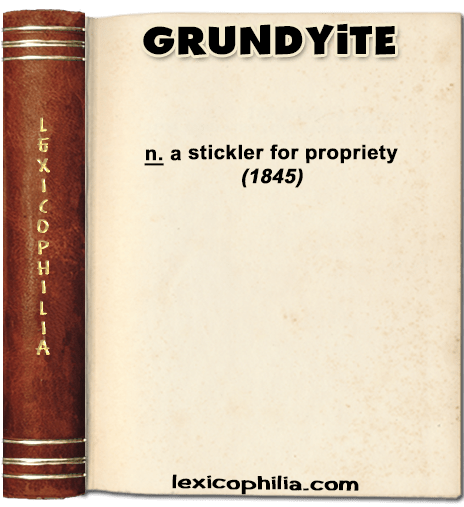
after Mrs. Grundy, a character mentioned in the play Speed the Plough (1798) by Thomas Morton (1764?-1838), English playwright
EXAMPLE
“…Meantime there is some meaning in having a gentleman and a classic at the head of affairs, who may now and then direct the stream of public bounty to us, poor devils, whom the Grundyites would not only remunerate, but kick out of society as barely respectable…”
From: Alfred Lord Tennyson: A Memoir
Letters 1842-1845
By Alfred Tennyson, 1897
ETYMOLOGY
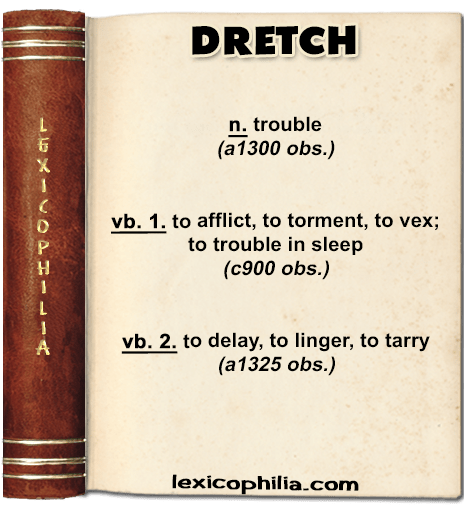
from Old English drecc(e)an: unknown in the other Germanic languages
EXAMPLE
“…Sir sayd sir Bors after ye were departed from vs we alle that ben of youre blood and youre well wyllers were soo dretched that somme of vs lepte oute of oure beddes naked & some in their dremes caughte naked swerdes in their handes therfor said sir Bors we deme there is some grete stryf at hand…”
From: Le Morte Darthur
By Sir Thomas Malory, 1470

ETYMOLOGY
blend of doited (having the faculties impaired by age) and petrified
EXAMPLE
“…“What passed, say ye? O, there wasna muckle: I was in a great passion, but she was dung doitrified a wee. When she gaed to put the key i’ the door, up it flew to the fer wa’. ‘Bless ye, jaud, what’s the meaning o’ this?’ quo she. ‘Ye hae left the door open, ye tawpie!’ quo she.…”
From: The Private Memoirs and Confessions of a Justified Sinner
By James Hogg, 1824
ETYMOLOGY
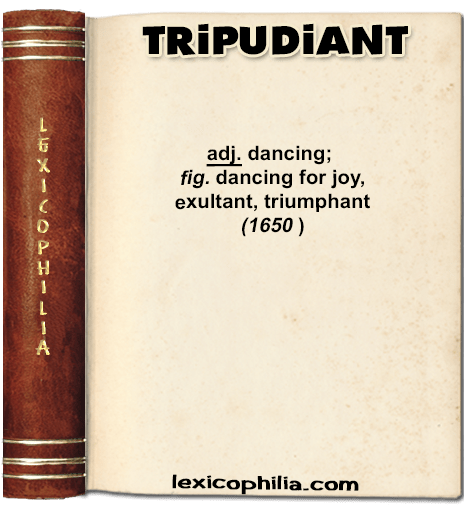
from Latin tripudiāntem, pres. pple. of tripudiare from tripudium (a beating the ground with the feet, a leaping or dancing, a religious dance)
EXAMPLE
“…All which I mention with a kinde of tripudiant joy, and exultation of spirit, belonging so skilfull a Pilot…”
From: An Exposition vvith Notes, On The whole Fourth Chapter To The Romanes
By W. Sclater, 1650
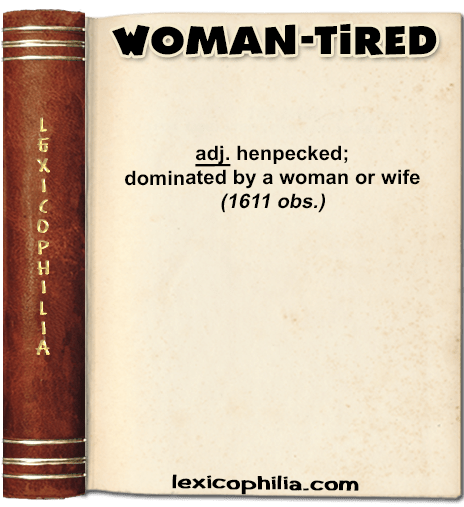
ETYMOLOGY
from woman + tired
EXAMPLE
“…Thou dotard, thou art woman-tyr’d; vnroosted
By thy dame Partlet heere. Take vp the Bastard,
Take’t vp, I say; giue’t to thy Croane….”
From: The Winter’s Tale
By William Shakespeare, a1616

ETYMOLOGY
from Greek anthos (flower) + mania (madness)
EXAMPLE
“…I had a little garden, too, of my own, which generated the intense love of flowers that has procured for me the kindred title of an anthomaniac…”
From: The Moneyed Man,
Or, The Lesson of a Life
By Horace Smith, 1814
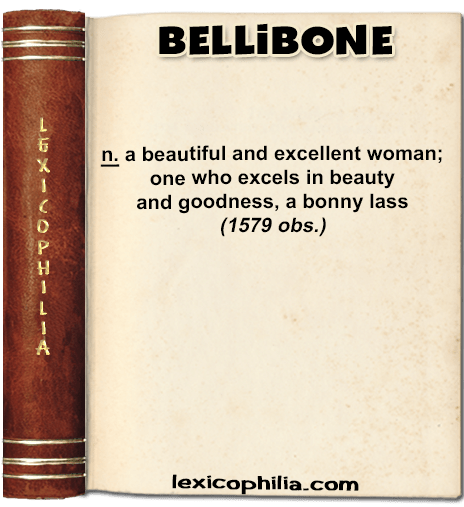
ETYMOLOGY
possibly a corruption of French belle bonne or belle et bonne (fair and good);
if not a humorous perversion of bonnibel (fair maid, bonny lass)
EXAMPLE
“…PERIGOT. The while my Flock did feed thereby,
WILLY. The while the Shepherd self did spill:
PERIGOT. I saw the bouncing Bellibone;
WILLY. Hey ho Bonnibel!
PERIGOT. Tripping over the Dale alone,
WILLY. She can trip it very well…”
From: The Shepheardes Calender
VIII: August
By Edmund Spenser, 1579

ETYMOLOGY
from Latin philoxenia (love of strangers; eagerness to show hospitality);
or: from Greek ϕιλοξενίζειν from ϕιλόξενος (philoksenos) (loving hospitality or strangers), from ϕιλο- (philo-) + ξένος (xenos) (stranger) + -ia (-y)
EXAMPLE
“…for by this philoxeny, the virtue inclining and disposing the mind to the entertainment of strangers, is in the first place intended…”
From: An Exposition of the Epistle to the Hebrews
By John Owen, 1814

ETYMOLOGY
from rake (vb.) + shame (n.).; perhaps suggested by rake-hell
EXAMPLE
“…An vgly monster of men, with a face as grieslie as a Beare, came vnto him, accompanied with a traine of rakeshames…”
From: Honours Conquest: wherein is conteined the famous hystorie of Edward of Lancaster
By Henry Roberts, 1598
 Lexicophilia