
ETYMOLOGY
adj. 1: ? from side (adj.) + -y
adj. 2: from side (pretentiousness, swagger, conceit )
PRONUNCIATION
SIGH-dee
EXAMPLE
She is such a sidy woman – happy one minute, then angry the next.
ETYMOLOGY
adj. 1: ? from side (adj.) + -y
adj. 2: from side (pretentiousness, swagger, conceit )
PRONUNCIATION
SIGH-dee
EXAMPLE
She is such a sidy woman – happy one minute, then angry the next.

ETYMOLOGY
from French berseaux (cradle) + –trix a feminine ending
EXAMPLE
“…High rewards, as was then customary, were bestowed on the messenger who attended the child, and on the bersatrix who rocked the cradle of the infant hero…”
From: A History of the Life of Edward the Black Prince,
By George Payne Rainsford James, 1836
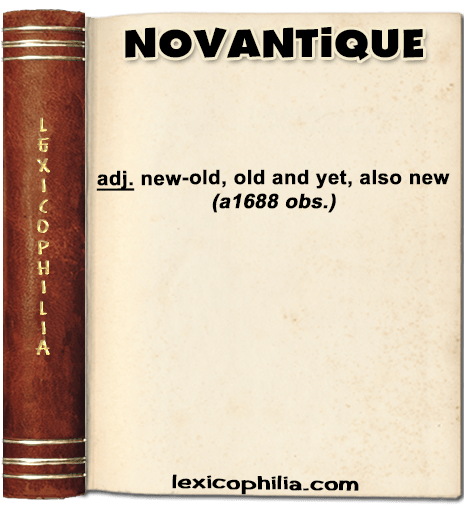
ETYMOLOGY
from Latin novus (new) + antique
EXAMPLE
“…yet as they will not counterbalance the weight of those other arguments that militate on the contrary side, so they will without any difficulty be answered by the assertors of this Novantique philosophy…”
From: Treatise Concerning Eternal and Immutable Morality
By Ralph Cudworth, a1688
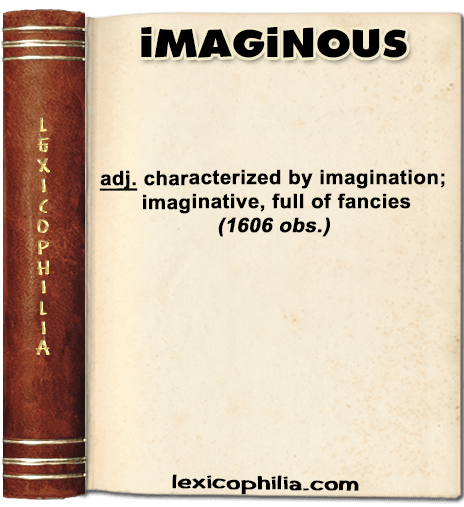
ETYMOLOGY
? from Latin imago, imaginem (image) + -ous,
or ? from imagine (vb.) + -ous
PRONUNCIATION
uh-MAJ-uh-nuhss
EXAMPLE
“…I oft haue heard there is a kind of cure
To fright a lingring Feuer from a man
By an imaginous feare, which may be true,
For one heate (all know) doth driue out another,
One passion doth expell another still,
And therefore I will vse a fainde deuice
To kindle furie in her frozen Breast,
That rage may fire out griefe, and so restore her
To her most sociable selfe againe…”
From: Monsieur D’Oliue
By George Chapman, 1606
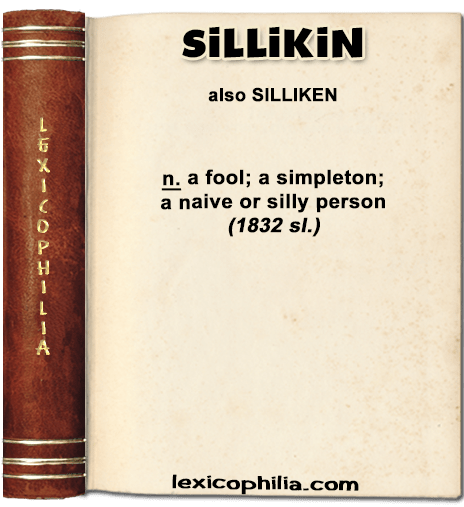
ETYMOLOGY
from silly (adj.) + -kin
EXAMPLE
“…In every small band, or knot of young thieves, there will always be found one or two sillikins, as they denominate those whom they can persuade to be foremost in any undertaking, by taunts of cowardice and threats of dissolving partnership…”
From: Fraser’s Magazine for Town and Country
Volume VI, August to Decemeber, 1832
The Schoolmaster’s Experience in Newgate
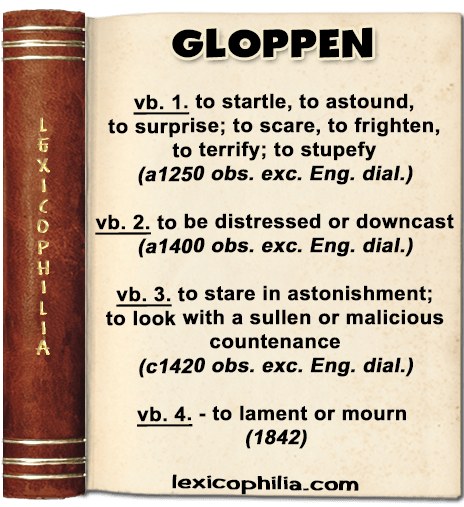
ETYMOLOGY
from Old Norse glupna (to be downcast);
a root of identical form appears in Old Frisian glûpa, Middle Low German glûpen (to lie in wait for), Dutch gluipen (to watch slily, to sneak), Old Swedish glupa (to gape, swallow), Swedish glupande, Danish glubende (ravenous, fierce);
whether there is any etymological connection is uncertain
ETYMOLOGY
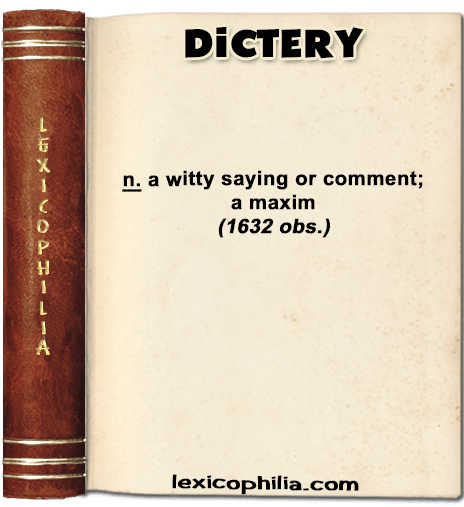
from Latin dicterium (a witty saying, bon-mot), of uncertain origin
EXAMPLE
“…I took a snatch where I could get it; nay more, I railed at marriage downright, and in a public auditory, when I did interpret that sixth Satire of Juvenal, out of Plutarch and Seneca, I did heap up all the dicteries I could against women; but now recant with Stesichorus…”
From: The Anatomy of Melancholy
By Robert Burton, 1632

ETYMOLOGY
from spill- (comb. form in the sense spoilt) + time
EXAMPLE
“…That fynden þe þy fode? for an ydel man þow semest,
A spendour þat spende mot oþer a spille-tyme,
Oþer beggest þy bylyue a-boute at menne hacches,
Oþer faitest vp-on frydays · oþer feste-dayes in churches…”
From: The Vision of William concerning Piers the Plowman
By William Langland, 1393

ETYMOLOGY
formed by compounding, from loose
EXAMPLE
“…His dam was for certain some loose clackt bitch or other; and he is so far from being tongue tyed, that he walks quite cantipodes to the precept here, see and say nothing…”
From: Confused Characters of Conceited Coxcombs:
Or, A Dish of Traitorous Tyrants
By K.W., 1661
ETYMOLOGY
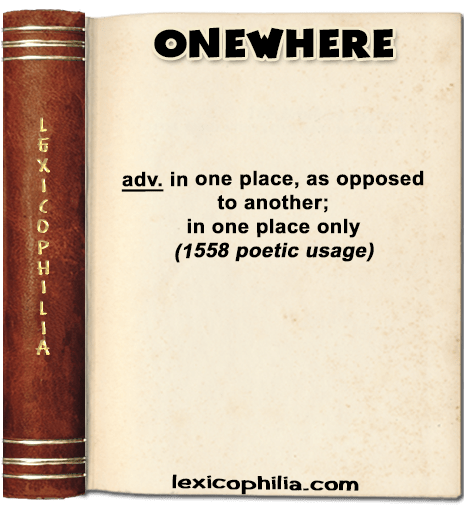
from one + where, after somewhere, nowhere
EXAMPLE
“…if we translate the Hebrew or the Greek word once by purpose, never call it intent; if onewhere journeying, never traveling, if one where think, never suppose; if one where pain, never ache; if one where joy, never gladness…”
From: Bible (King James)
Translator Miles Smith, 1611
 Lexicophilia