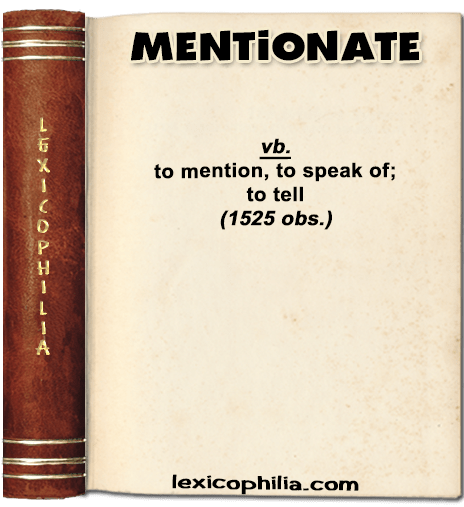
Word of the Day: MENTIONATE


ETYMOLOGY
from Latin mentionatus, pa. pple. of mentionare (to make mention of)


EXAMPLE
“…Ffinally,  in  my  moste  humble  wise,  eftsones  I thanke  your  Grace  for  your  singular  goodenes  afor mentionate  both  concernyng  me  and  also  the  Commons…”

From: Original Letters: Illustrative of English History
Edited by Henry Ellis, 1846
Letter CXXXI. Archbishop Warham to Cardinal Wolsey; c1525
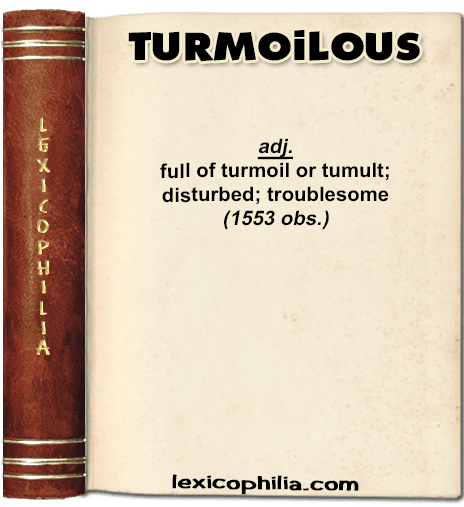
Word of the Day: TURMOILOUS


ETYMOLOGY
from turmoil + -ous


EXAMPLE
“…but trueth hys frende more then they bothe, euen so I thinke it no iniurye nor contumelye to Saynct Augustyne, yf the same were sayde of hym also geuynge hym otherwyse hys dewe commendacions, as he was surelye an excellent man, of dyuyne wytte, and knowledge, and so trauayled in settynge foorth Christes true Relygion in those turmoylous dayes, in perpetual combatte, agaynste learned heretykes and Prynces of the worlde, that he is worthelye called a Doctour and Pyller of Christes Churche…”

From: A Treatyse of the Newe India with other New Founde Landes and Islandes
By Sebastian Münster
Translated by Richard Eden, 1553

Word of the Day: STULTITIOUS


ETYMOLOGY
for adj. 1: from Latin stultitia (folly),
from stultus (foolish)


EXAMPLE
“…In Wales in diuers places is vsed these two stulticious matters, the fyrste is, that they wyl sell their lams, and theyr calues, and theyr corne the whyche is not sowen, and all other newynges, a yere before that they be sure of any newynge; and men wyl bye it, trustynge vppon hope of suche thynges that wyl come…”

From:
The Fyrst Boke of the Introduction of Knowledge
By Andrew Boorde, 1549

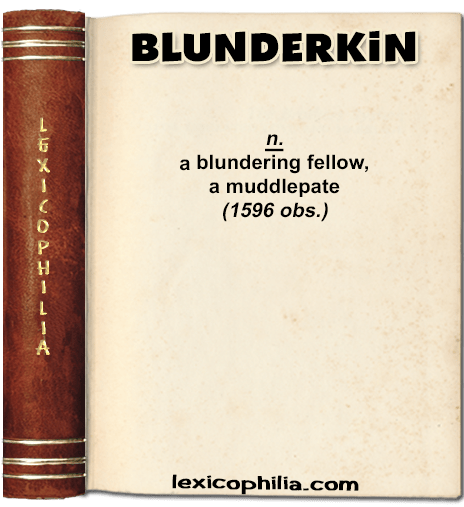
Word of the Day: BLUNDERKIN


ETYMOLOGY
from blunder, taken in sense of ‘blunderer’ + -kin


EXAMPLE
“…I vtterly despaire of them, or not so much despaire of them, as count them a paire of poore ideots, being not only but also two brothers, two blockheads, two blunderkins, hauing their braines stuft with nought but balder-dash, but that they are the verie botts & the glanders to the gentle Readers…”

From: Haue with you to Saffron-Walden; or, Gabriell Harueys Hunt is Vp
By Thomas Nashe, 1596

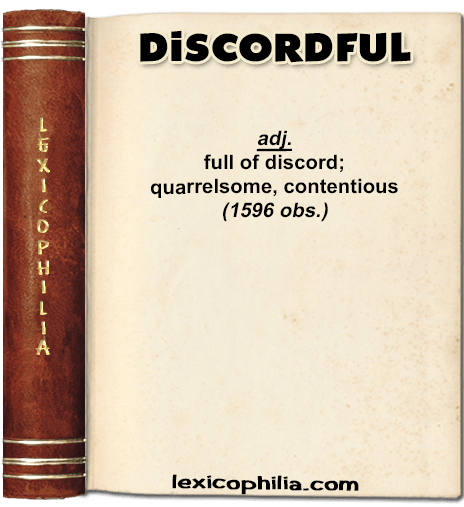
Word of the Day: DISCORDFUL


ETYMOLOGY
from discord + -ful


EXAMPLE
“…Thus as they marched all in close disguise,
Of fayned loue, they chaunst to ouertake
Two knights, that lincked rode in louely wise,
As if they secret counsels did partake;
And each not farre behinde him had his make,
To weete, two Ladies of most goodly hew,
That twixt themselues did gentle purpose make
Vnmindfull both of that discordfull crew,
The which with speedie pace did after them pursew
…”

From: The Second Part of The Faerie Queene
By Edmund Spenser, 1596

Word of the Day: EUCLIONISM


ETYMOLOGY
from Euclionem, the name of a miser, the chief character in Plautus’ Aulularia + -ism


EXAMPLE
“…Yea in the worde of one no more wealthy then hee was, wealthy saide I, nay I’le befworne hee was a grande iurie man in respect of me, those graybeard Huddle-duddles and crusty cum-twangs, were strooke with such stinging remorse of their miserable Euclionisme and sundgery, that hee was not yet cold in his graue but they challenged him to be borne amongst them, and they and sixe citties more, entred a sharpe warre aboute it, euery one of them laying claime to him as their owne, and to this effect hath Bucchanan an Epigram….”

From: Lenten Stuffe
By Thomas Nashe, 1599

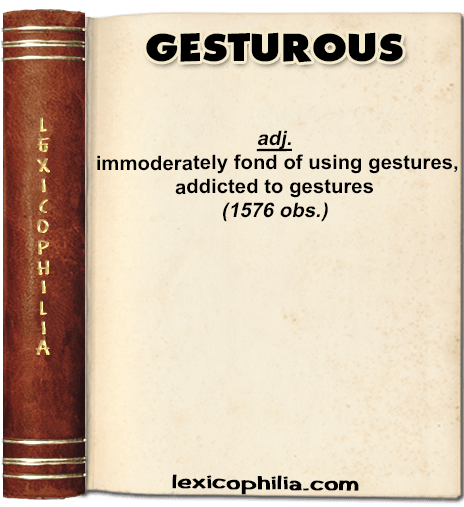
Word of the Day: GESTUROUS


ETYMOLOGY
from gesture + -ous


EXAMPLE
“…vvhich hath learned to spoyle & deuour folk to make vvidovves, destroy their houses, & make their Cities desert. Some be as foyinge, gesturous, and counterfeicting of any thing by ymitacion as Apes. Some Forlyke, are suttle, wylie, deceiptfull, and crafty to entrappe and catche the innocent at aduauntage…”

From: The Touchstone of Complexions
By Levinus Lemnius
Translated by Thomas Newton, 1576

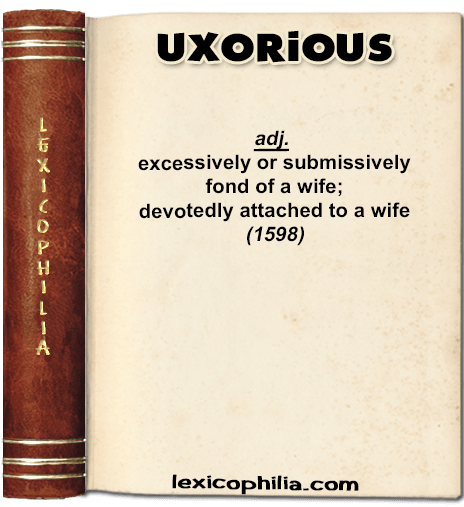
Word of the Day: UXORIOUS


ETYMOLOGY
from Latin uxorius (from uxor (wife))


EXAMPLE
“…And gripe their wast within a narrow span:
Fond Caenis that would’dst wish to be a man;
Whose mannish Hus-wiues like their refuse state,
And make a drudge of their vxorius mate,
Who like a Cot-queene freezeth at the rocke,
Whiles his breach’t dame doth man the forren stock
…”

From: Virgidemiarum. The three last bookes
By Joseph Hall, 1598


PRONUNCIATION
uk-SOR-ee-uhss

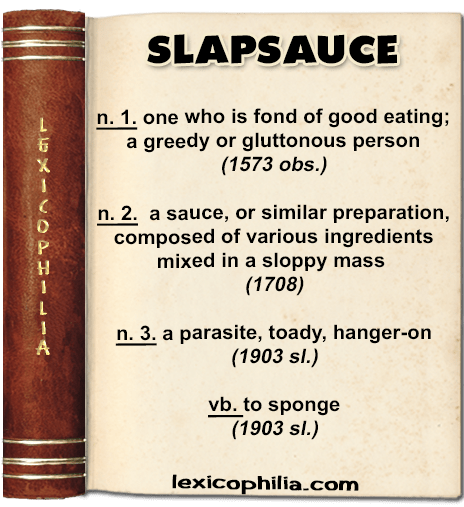
Word of the Day: SLAPSAUCE


ETYMOLOGY
from slap (to lap → Eng. dial.) + sauce


EXAMPLE
“…At dinner and supper the table doth craue
good fellowly neighbour good manner to haue.
Aduise thee well therefore, ere tongue be too free,
or slapsauce be noted too saucie to bee…”

From: Points of Huswifrie
In Fiue Hundreth Points of Good Husbandry
By Thomas Tusser, 1573

Word of the Day: UNFORTUNABLE


ETYMOLOGY
from un- + fortunable (favoured by fortune, fortunate → obs.)


EXAMPLE
“…Is not the Realme of Scotland rich ynough to nourish and to bring hir vp? by God, this manner of doing of king Lisuard is so vnfortunable and so farre out of reason, that I had rather die a hudreth fold (if it were possible) than not to be reuenged: and already I haue sent to my father to prouide therefore…”

From: Amadis de Gaula 
Translated out of French into English by Thomas Paynell, 1567